Menzies Leadership Foundation
Co-designing a picture of civility
Strengthening social cohesion has become a national priority in Australia, from federal policy down to local community work. The Menzies Leadership Foundation set out to add something to that effort: bring thirteen organisations already working on civility into one room and help them build together. Over six months we conducted research with each organisation, facilitated five meetings, and turned what we heard into shared frameworks, an interactive conditions map, and a picture of the system that members, funders and the wider field could use.
Outcomes
- A shared language and a single map of the system that all thirteen organisations can find themselves in
- Two working frameworks: the four framings of civility, and the four conditions it rests on — capacity, trust, capability and belonging
- Nine concrete proposals — from a live community-data tool to a national community foundation — designed by members and shared across the coalition
- Evidence of where the field's energy actually sits — coordination, funding and decision-making — to steer funders and partners
- Three local pilots under way in Ballarat, Mparntwe and Tasmania
- A joint submission to the Royal Commission, and a public micro-site of the coalition's work now in development with the Menzies Leadership Foundation
Why civility, why now
In January 2026, weeks after the Bondi Beach attack, the federal government established a Royal Commission with a remit that included strengthening social cohesion. The attack was a sudden shock, but the strain it laid bare had been deepening for years. Trust in government, on the Scanlon Institute's annual survey, has fallen to 33 per cent — down from 53 per cent two decades ago. As ASIO's director-general has put it, "you cannot arrest your way to social cohesion." The Menzies Leadership Foundation had been sitting with the question underneath all of this for some time. What actually builds a more civil Australia, and who is already doing it?
Strong work, happening in isolation
In the room sat a community foundation, a federal social cohesion team, a network of 170 local newsrooms, an ethicist, and organisations welcoming new migrants — each with real expertise and its own angle on the same problem. That breadth was also the catch. Members were doing strong work locally and barely knew the others existed nationally, pulling in the same direction with no common language to connect any of it. The Foundation asked us to help the group make meaning together, so all that separate effort could start to add up.
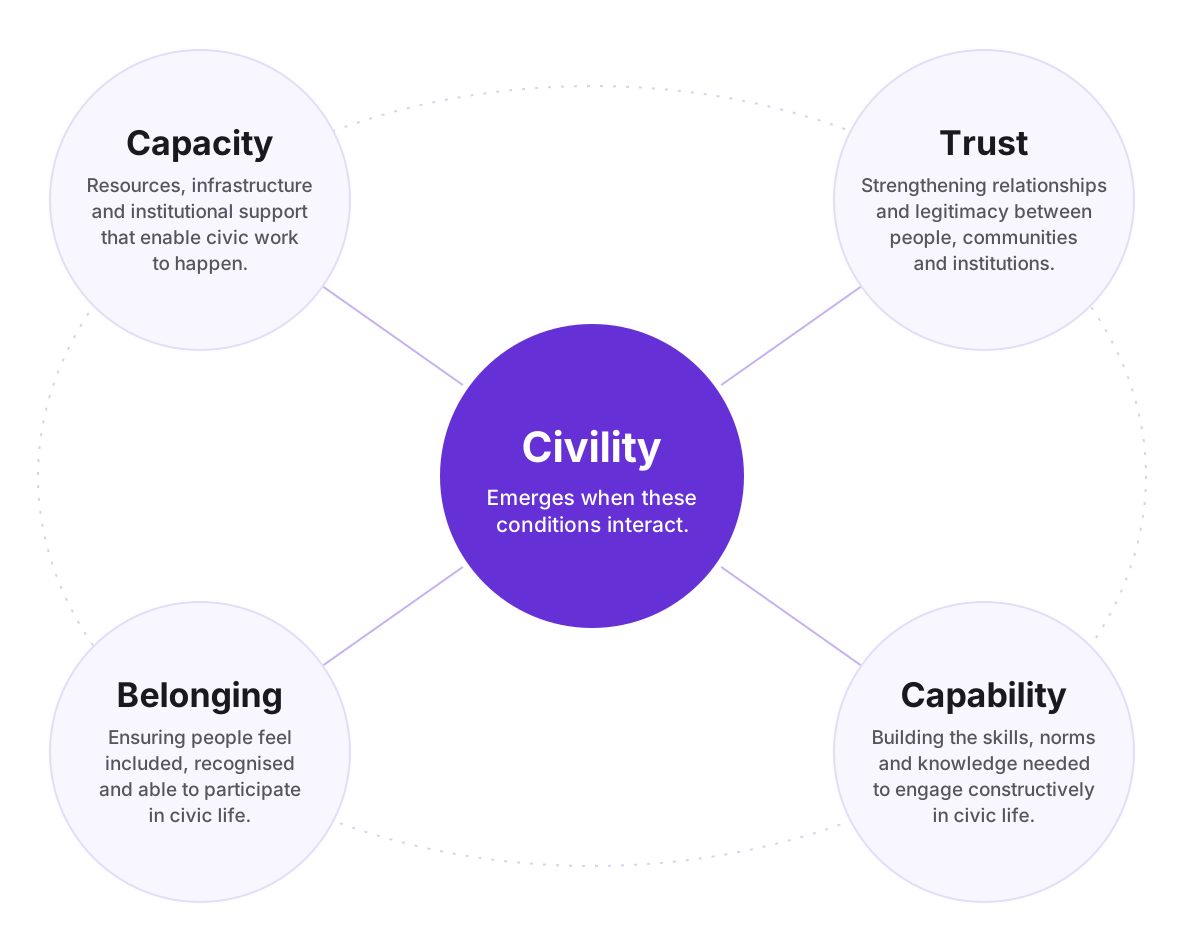
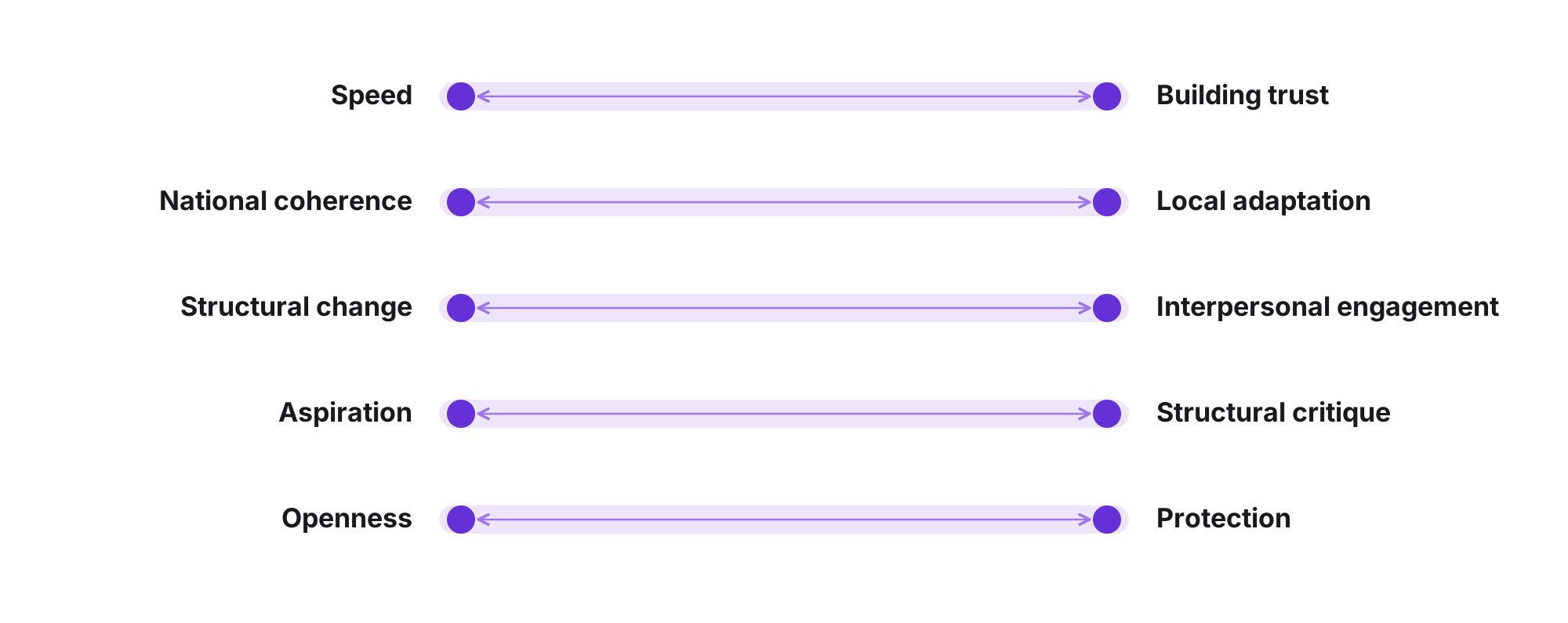
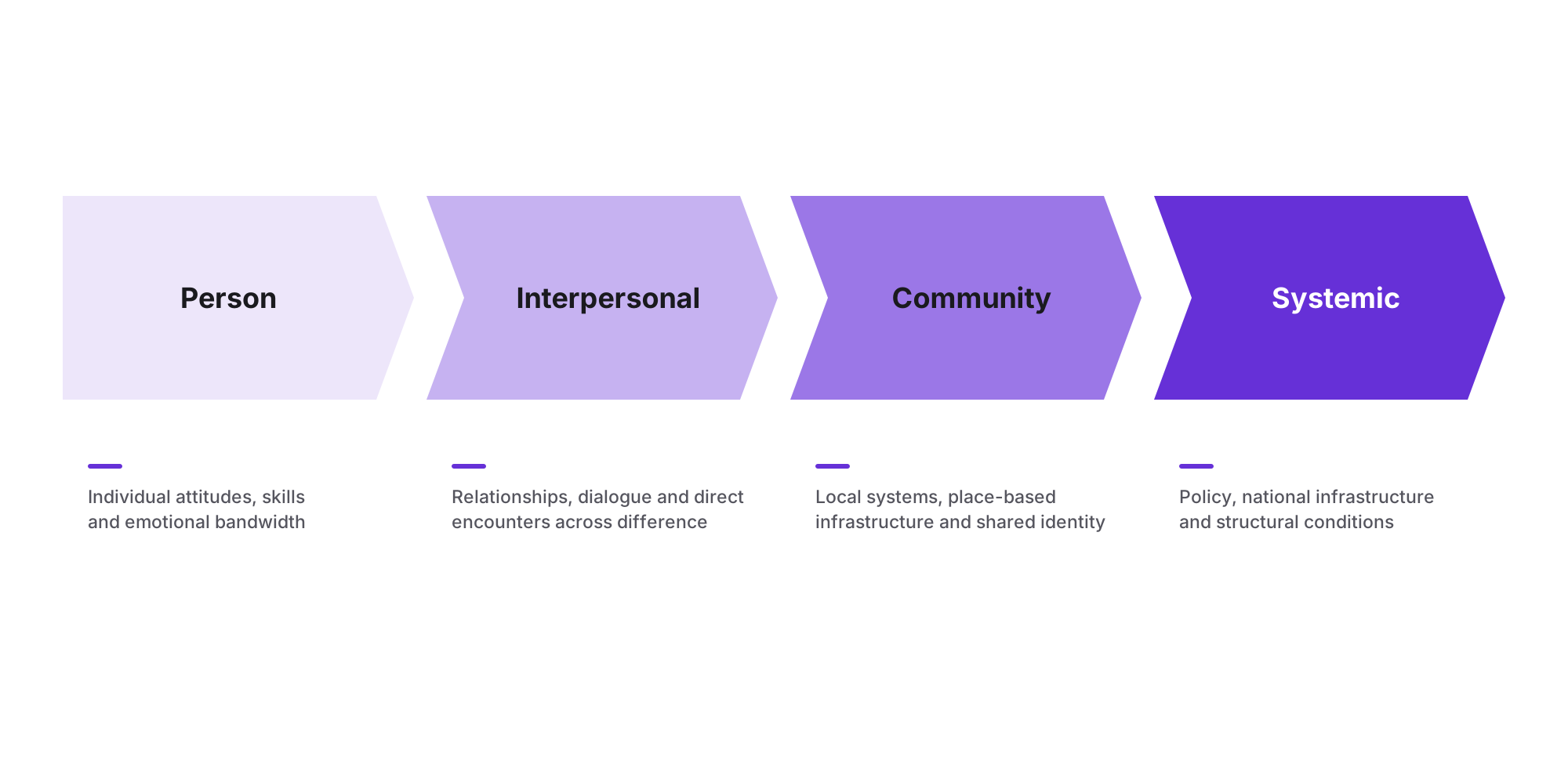
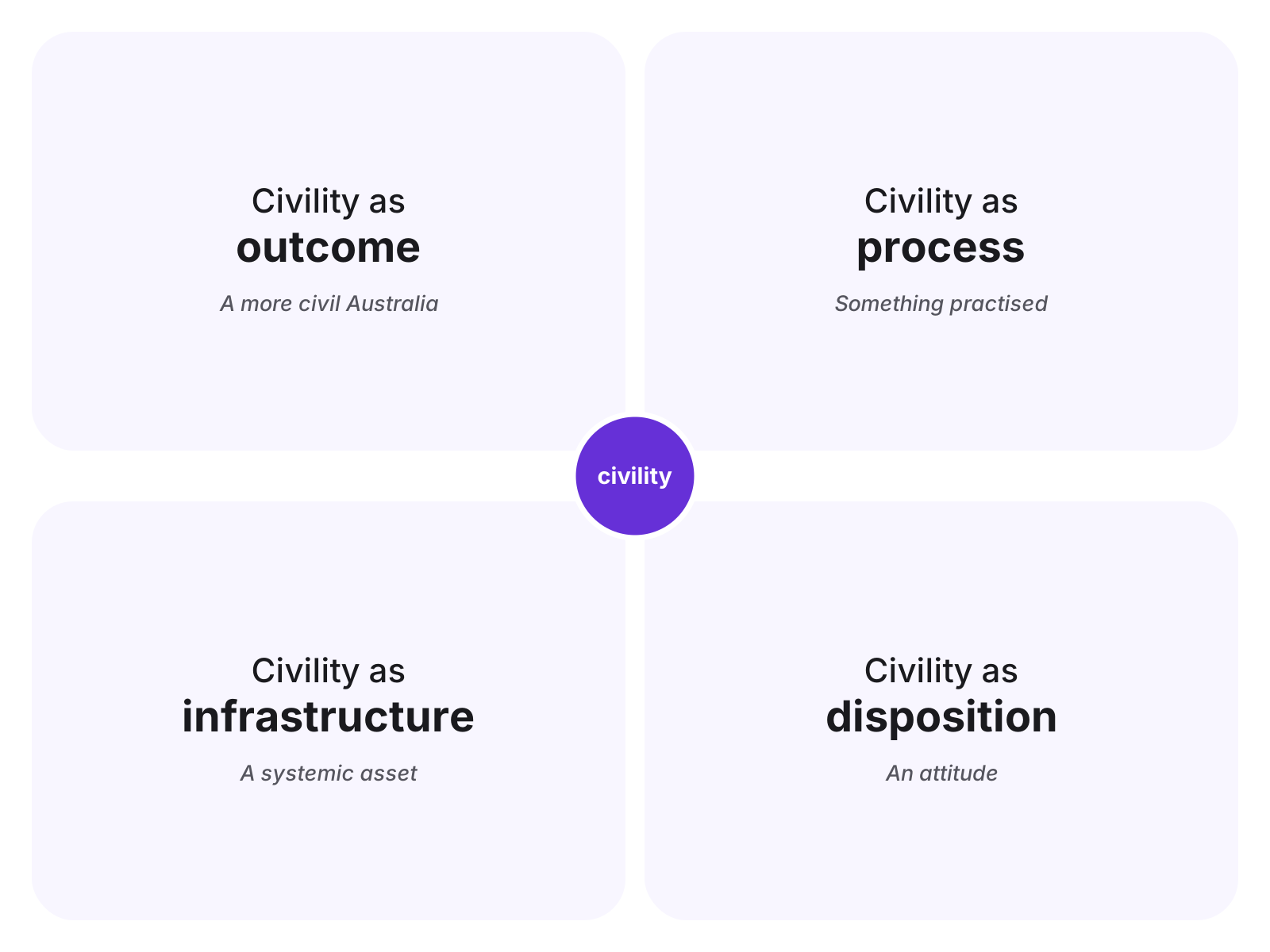
The frameworks the coalition built together: four framings of civility; the four conditions it rests on — capacity, trust, capability and belonging; the tensions members navigate; and the levels the work operates at, from the personal to the systemic.
Listening before defining
Before bringing anyone together, we sat down with each of the organisations for a long, one-on-one conversation. We then played back what we'd heard as a synthesis, and were upfront that if any of it didn't ring true, that reaction was exactly what we wanted to hear. People are honest about a picture of themselves in a way they rarely are in an argument about definitions. Member to member, the answers described the same thing seen from different positions in the system. Our task was to hold those positions together and build a shared picture over the meetings that followed, without forcing everyone onto a single definition.
Civility is four things at once
Four framings of civility kept coming up across the interviews: civility as an outcome, as a process, as a disposition, and as an infrastructure. We put all four up as lenses the group could use at once, and mapped the four conditions sitting underneath them — capacity, trust, capability and belonging. It gave a newsroom network, a leadership foundation and a federal policy team one structure they could all stand on and see their own work inside — with their thirteen worldviews intact.
Nobody has the whole solution, so we have to keep having the difficult conversations.
— Office for Social Cohesion
From understanding to a shared plan
By the fourth meeting the question had shifted from what we mean by civility to what we do about it together. We'd asked each member to bring one concrete proposal — a specific thing they thought could strengthen civility, worked up on a single page — and we ran the meeting as a show-and-tell through all nine. Looking at what they had in common, we sorted the field's needs into four areas: sharing what's happening and what works; coordinating who does what and how it's funded; backing local projects on the ground; and helping good work spread from one place to another. Then we surveyed members on where their organisation's energy actually sat. It was spread fairly evenly across all four, which suggested the picture was describing something real. But asked to choose just one, most landed on coordination — who decides, and where the money comes from.
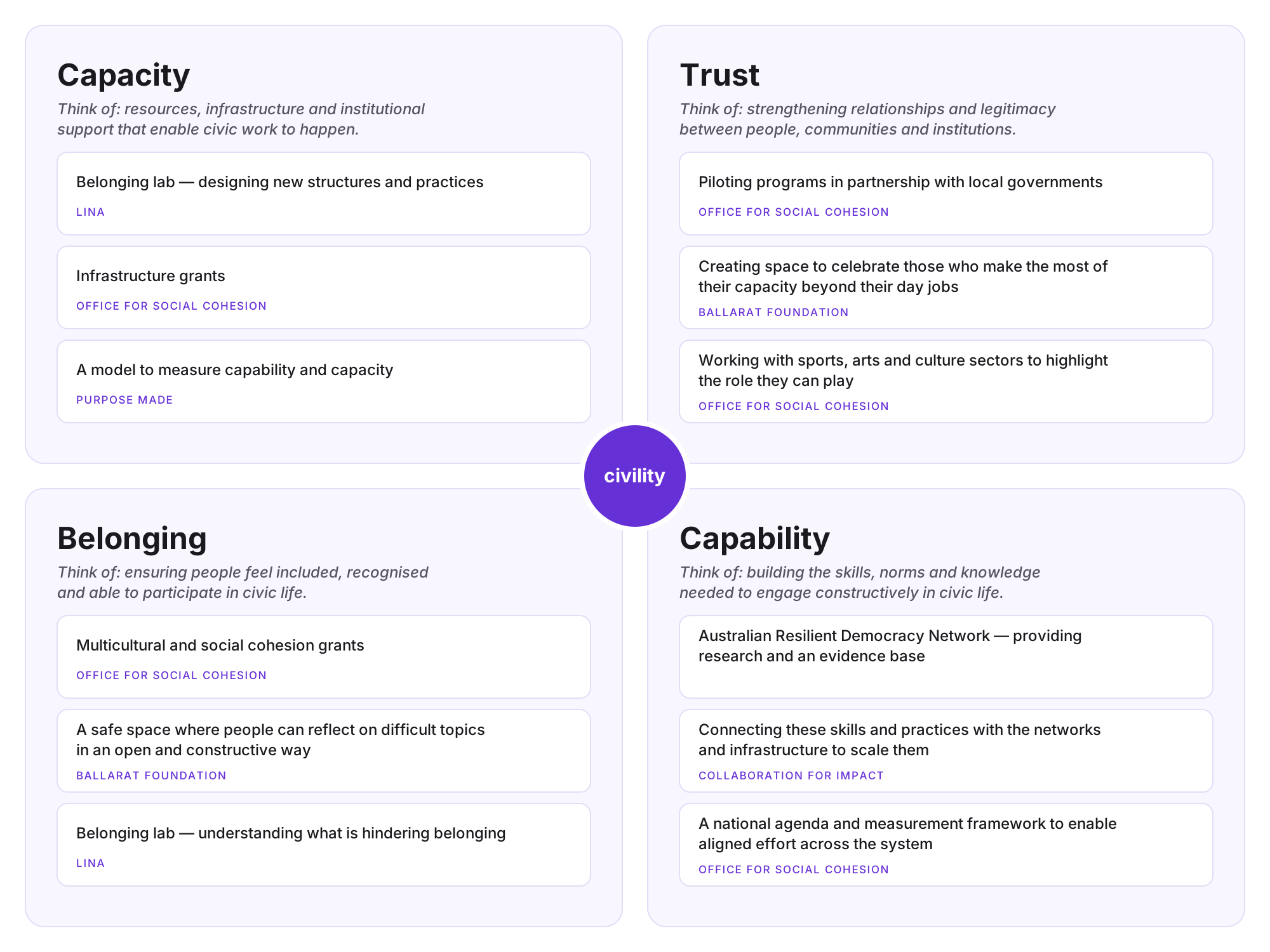
Members’ initiatives mapped against the four conditions — the picture that let organisations see where they sat relative to each other.
A picture the field can use
For anyone funding this kind of work, the biggest gap the coalition found is shared funding and decision-making — the coordination that would let existing projects add up. The coalition finished its first phase with a shared language, the four conditions, the nine proposals members had designed together, and three local pilots under way in Ballarat, Mparntwe and Tasmania. Since the final meeting, the Foundation has joined partners in a submission to the Royal Commission — whose remit covers strengthening social cohesion — and has started building a public micro-site of the coalition's work, with every member seeing it before it goes live. Our work now is pulling six months of conversations, drafts and maps into one account of the work that sits behind both, while the Foundation and members shape what the coalition does next.
The lever is how we reimagine citizen agency and autonomy, and the capital stack that allows us to build the infrastructure in service of that.
— Menzies Leadership Foundation