Department of Justice and Community Safety
Understanding how Victorian communities prevent crime — and what information actually helps
We partnered with the Department of Justice and Community Safety's Community Crime Prevention Unit to understand how Victorians engage with crime prevention information. Through ethnographic research with 27 participants across metro, regional and rural Victoria, we uncovered the key moments when people are most receptive to safety information — and developed a model and personas to help five partner organisations communicate more effectively.
Outcomes
- Delivered a model of crime prevention action mapping key intervention moments across the evaluation cycle
- Created six evidence-based personas spanning metro, regional and rural contexts
- Produced seven strategic recommendations adopted by CCPU and five partner organisations
- Provided a reusable persona template enabling partners to develop their own audience tools
- Informed communication strategies for Victoria Police, Crime Stoppers, Neighbourhood Watch and more
Understanding how communities actually prevent crime
The Community Crime Prevention Unit (CCPU) and five partner organisations — including Victoria Police, Crime Stoppers, and Neighbourhood Watch Victoria — were producing crime prevention information for communities across the state. But they didn't understand how people actually engaged with that information, or what prompted them to change their behaviour. We were asked to explore three questions: how do people use community safety information? How do they learn prevention strategies? And what new information leads to new action?
Visiting Victorians in their homes across the state
We designed a mixed-methods research approach combining desktop review, stakeholder workshops, and in-depth ethnographic interviews. We visited 27 participants across six Local Government Areas — Melbourne, Glen Eira, Ballarat, Mount Alexander, Latrobe and South Gippsland — selected as pairs of high and low crime-incident areas across metro, regional and rural settings. Our interviews explored how people experience crime in their everyday lives, what precautions they take, and where they turn for information and advice.
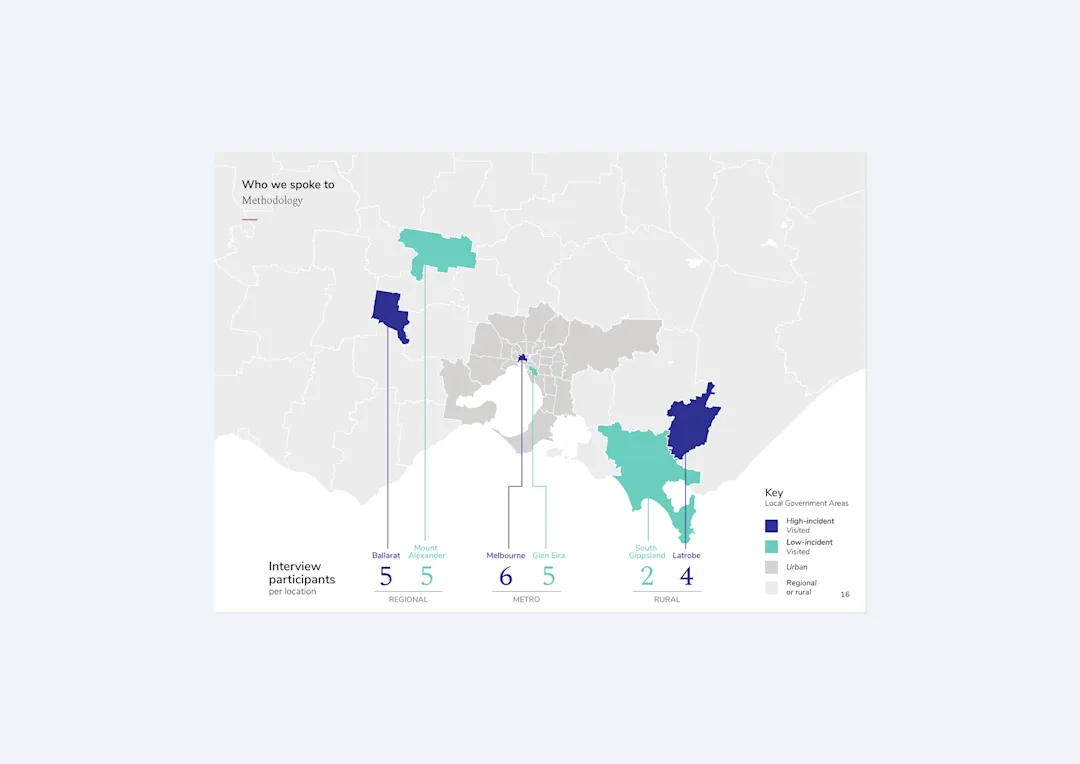
Research participant demographics across 24 interviews with 27 participants spanning metro, regional and rural Victoria
People are always preventing crime — they just don't call it that
We discovered that people constantly evaluate their level of risk and take crime prevention action — locking doors, hiding valuables, avoiding unlit areas. These everyday habits feel like common sense. People only take new action when their context changes: a break-in next door, a child starting school, or learning about an unfamiliar crime like relay car theft. We identified four key motivations driving these behaviours: protect myself, protect my family, protect my stuff, and protect my community.
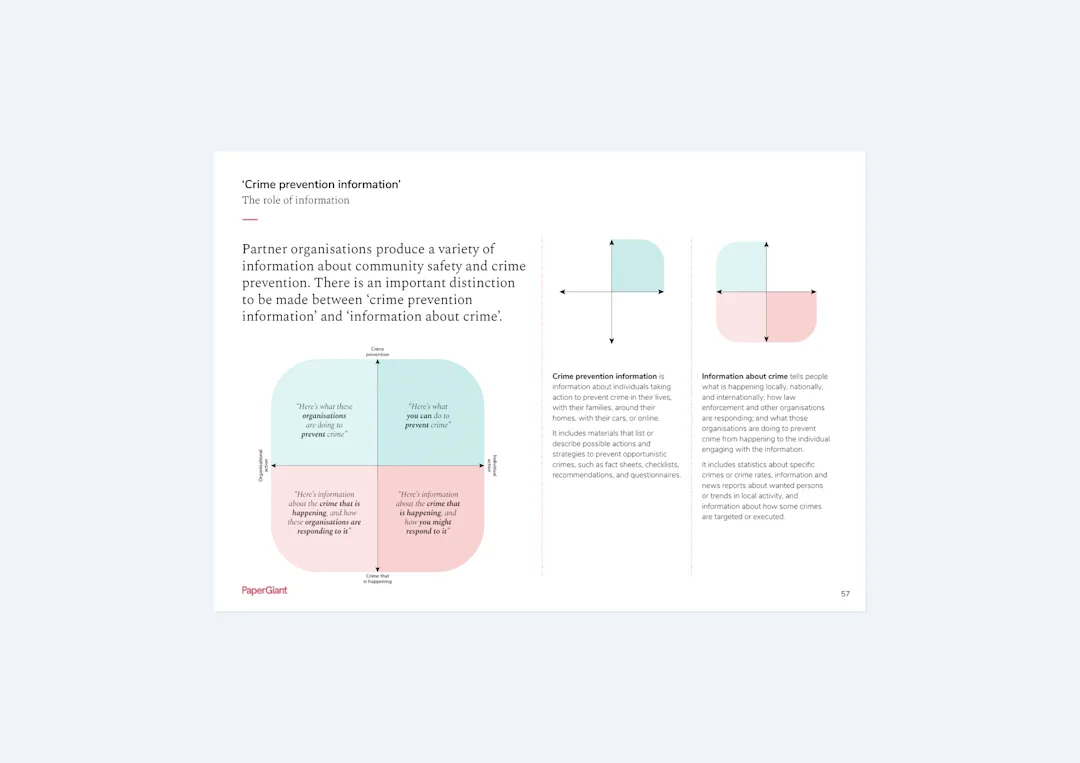
Our model of crime prevention action — mapping key moments where people inform their context, evaluate their situation, and potentially take new action
Creating personas to bring the research to life
Generic crime prevention information doesn't work because it doesn't account for people's lived context. We created six evidence-based personas — from Sammi, a new migrant navigating an unfamiliar city, to Jo, a gallery owner in a close-knit village — each representing different motivations, information sources, and ideas about what's 'normal' when it comes to safety. We designed these as practical planning tools so CCPU and partners could assess their materials and plan new communications from a real person's perspective.
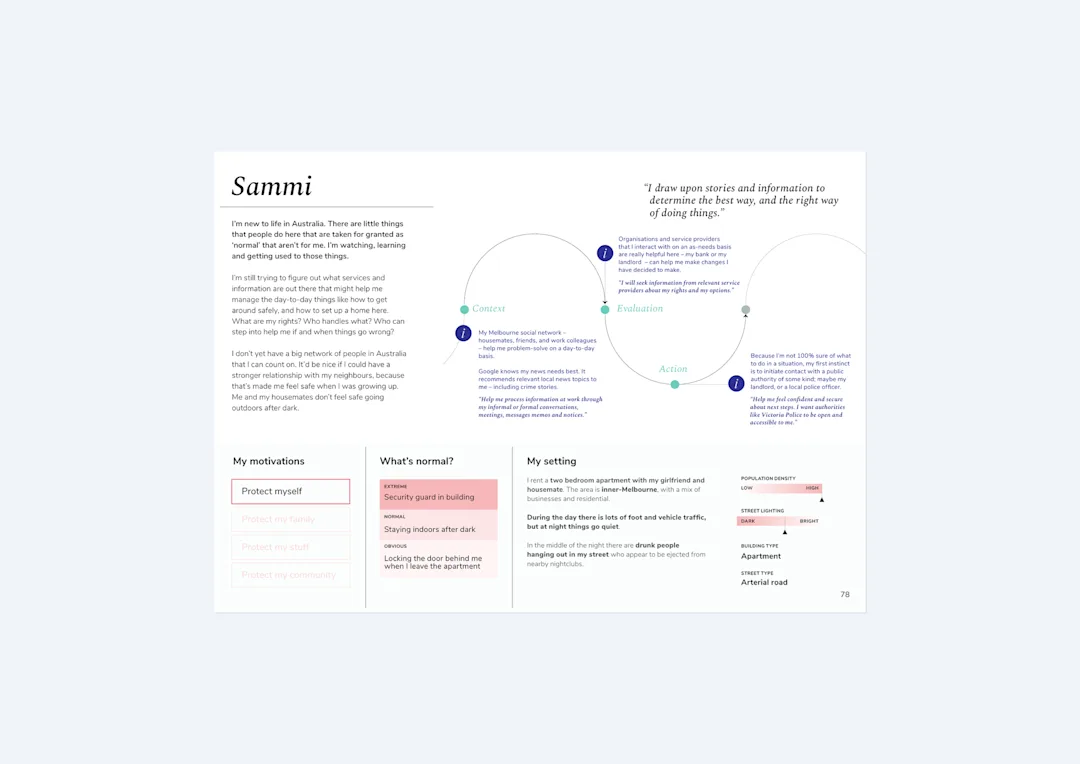
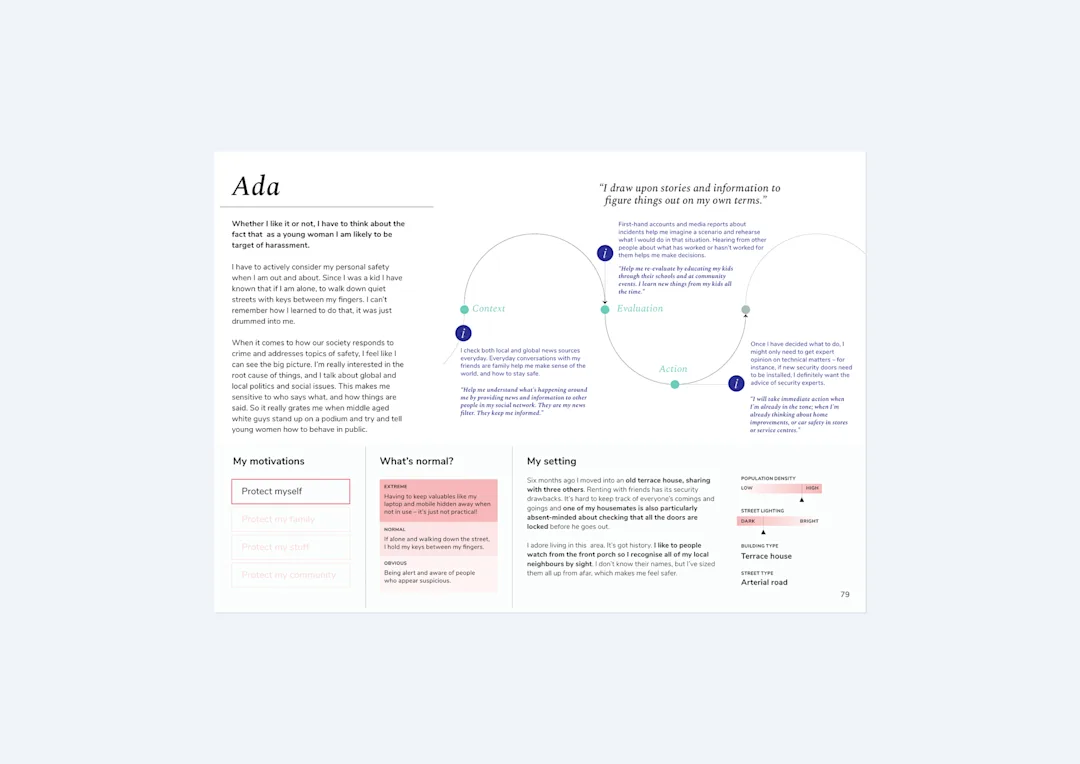
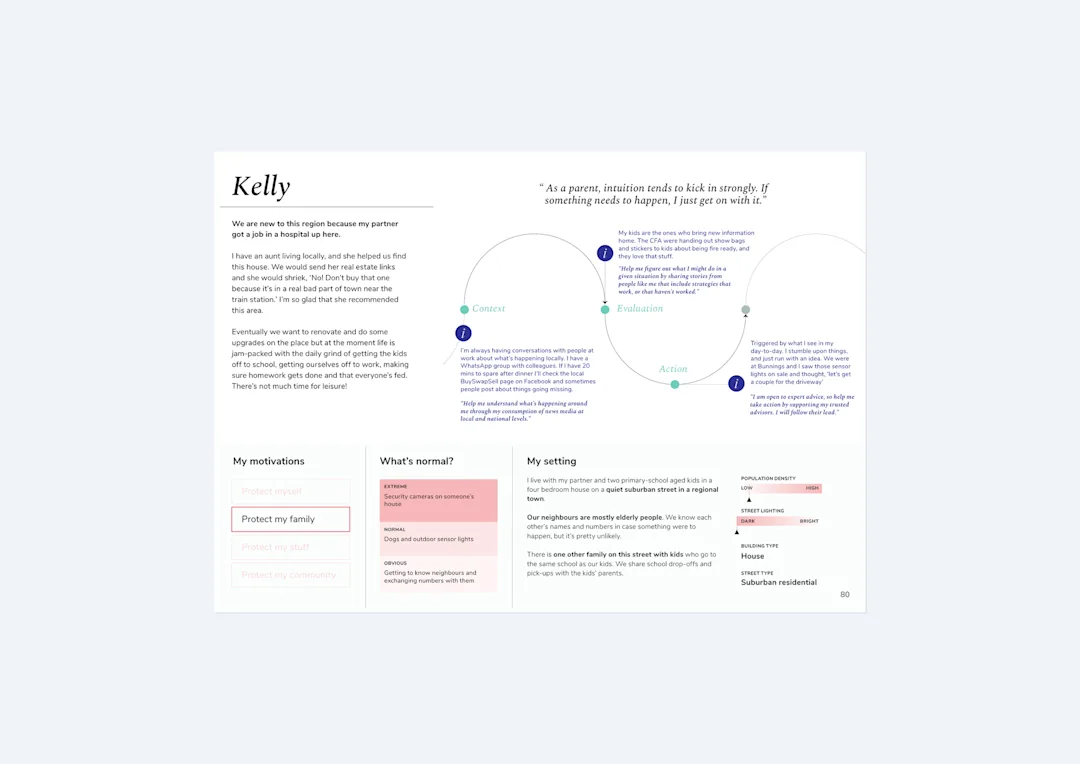
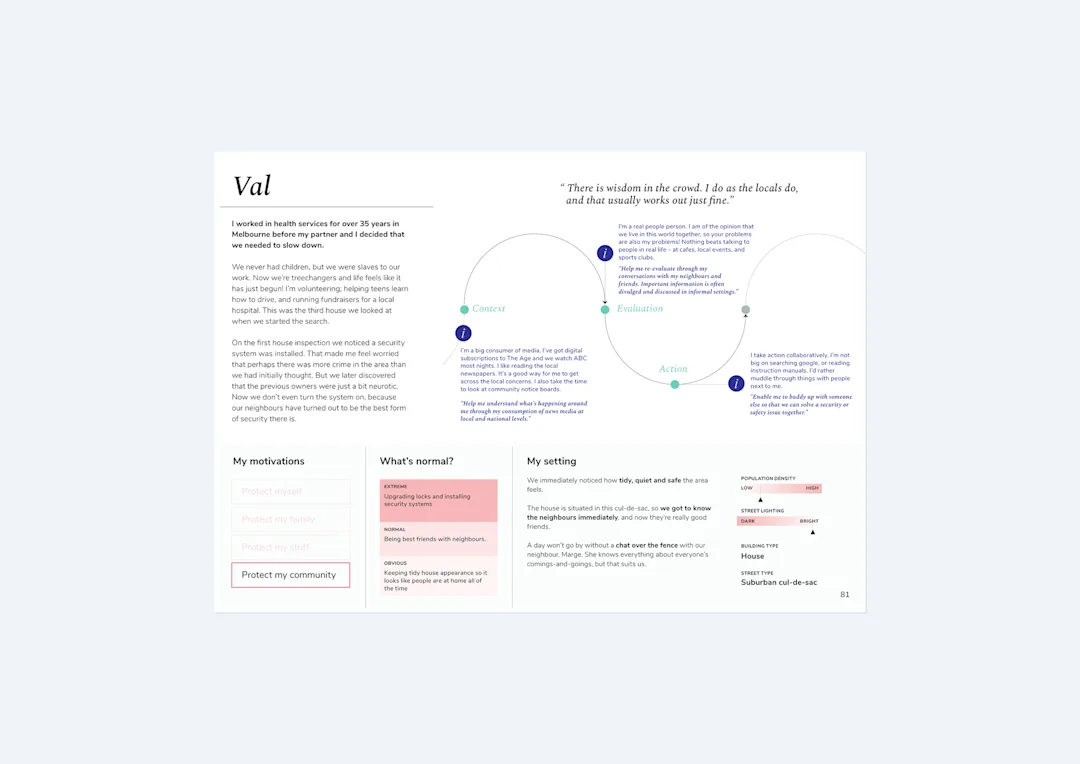
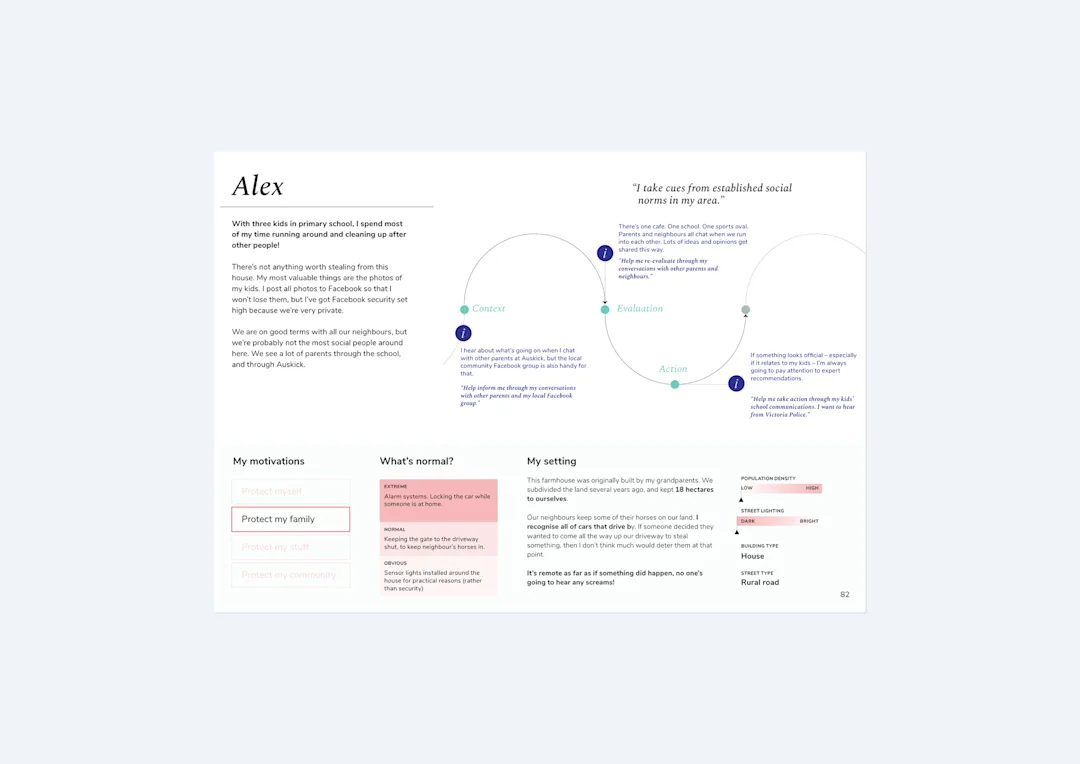
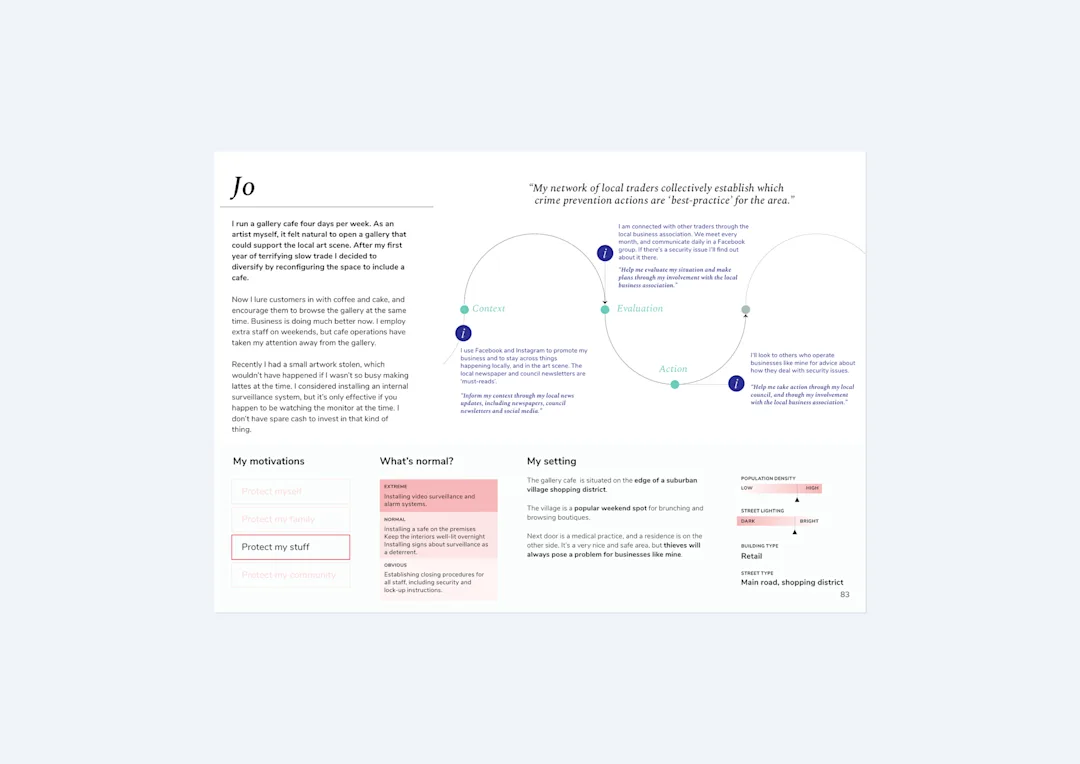
Six evidence-based personas representing different motivations, information sources, and safety contexts across metro, regional and rural Victoria
This is one of the best reports we've seen on this issue
— Project Sponsor
Seven recommendations for smarter community safety communications
Our research informed seven strategic recommendations for CCPU and their partners: consider different information needs across the evaluation cycle, make information accessible at moments of need, create targeted rather than generic campaigns, provide information about unfamiliar crimes, avoid scaring people unnecessarily, produce content for trusted advisors, and use the personas to assess and plan communications. The model and personas gave five partner organisations a shared framework for making strategic decisions about how they reach Victorian communities.