Social research
Social research explores how people live, connect, and experience the systems around them. We use ethnographic methods, participatory workshops, interviews, and surveys to understand communities across cultures, age groups, and vulnerability levels — turning what we hear into thematic analyses, barrier maps, and evaluation frameworks that drive meaningful change.
Understanding people in context
Social research studies how people experience the systems, services, and communities that shape their daily lives. It goes beyond individual opinions to reveal shared patterns — the barriers people face, the workarounds they create, and the moments where systems fall short.
We draw on a range of methods to build this understanding:
- Ethnographic fieldwork embedded in communities and service settings
- Participatory workshops that bring diverse voices into the room
- In-depth interviews across cultures, age groups, and vulnerability levels
- Surveys and mixed-methods approaches scaled to the question at hand
The result is evidence that captures how people actually live — not how policies assume they do.
How we approach social research
We design research that reaches the people whose voices matter most — and who are hardest to hear. Our approach centres on creating safe, culturally responsive spaces where participants shape the conversation, not just respond to it.
What makes our work distinctive is what comes out of it. We don't just hand over transcripts. We produce:
- Thematic analyses that surface root causes, not just symptoms
- Barrier and enabler maps that show where systems help and where they harm
- Evaluation frameworks that track progress on the things communities actually care about
- Actionable recommendations grounded in lived experience
Every output is designed to move from insight to decision.
From local communities to national systems
We work across the full spectrum of social research — from neighbourhood-level engagement to system-wide evaluation. Whether it's a council wanting to understand how its residents experience inclusion, or a national body examining how an entire justice system treats vulnerable people, we adapt our methods to the scale and sensitivity of the question.
This range matters because the best social research meets people where they are. A workshop format that works with community leaders won't work with people navigating trauma. An online survey that reaches thousands can't replace sitting alongside someone in their home. We choose and combine methods to match the context — and the stakes.

When Darebin City Council — Australia’s first Excelling Welcoming City — needed to understand whether diversity was actually creating belonging, we designed culturally responsive research that reached 230 people from communities typically excluded from government consultation.
Turning research into rights-based practice
Social research is most powerful when it doesn't just describe problems — it reshapes how systems respond to them. The insights we gather become the foundation for new policies, redesigned services, and resources that work for the people who need them most.
This is especially true when we're working with people who face compounding disadvantage. Research with communities affected by disability, cultural exclusion, or institutional harm requires more than good questions. It requires methods built on trust, consent, and shared ownership of what the findings mean.
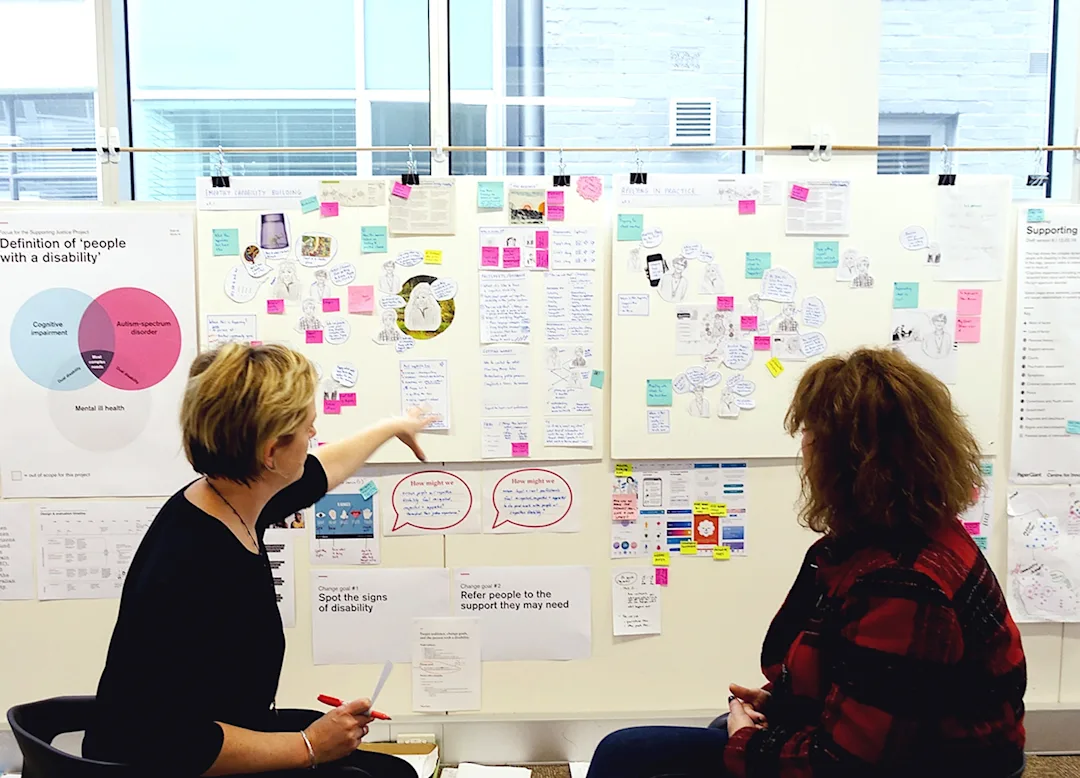
Working alongside RMIT’s Centre for Innovative Justice, we co-created resources with people with disability and legal professionals to fundamentally change how the criminal justice system recognises, supports, and responds to disability.
Evidence that changes systems
Our social research has shaped inclusion strategies, informed justice reform, and given communities a genuine voice in the decisions that affect them. The work produces evidence that organisations can act on immediately — and frameworks they return to as contexts shift.
When research is done well, it doesn't sit on a shelf. It becomes the reference point for how an organisation understands the people it serves. That's what we aim for: research that earns trust, reveals what matters, and creates a foundation for lasting change.
Let’s design research that reaches the people who matter most.


