Darebin City Council
Turning Community Voices into Action on Inclusion
We transformed 230 diverse voices into a roadmap for genuine belonging. Australia's first Excelling Welcoming City asked a critical question: does diversity actually create belonging for those who need it most?
Outcomes
-
230 diverse voices engaged through culturally responsive methods reaching typically excluded communities
-
Evidence identifying workplace discrimination as the primary barrier, affecting 47% of discrimination cases
-
Actionable roadmap with implementation pathways across four inclusion categories based on community priorities
-
Replicable engagement framework that inverts traditional government consultation approaches
-
Community-owned strategy addressing root causes of exclusion rather than surface-level symptoms
Services
- Co-design
- Service Design
The challenge of hidden exclusion
Darebin City Council serves one of Australia's most culturally diverse communities — 60% of residents born overseas, with significant populations speaking languages other than English. Despite achieving welcoming city status, they needed evidence about whether diverse communities genuinely felt included. Without data on community experiences, priorities, and barriers, they couldn't prioritise resources or measure progress toward real inclusion.
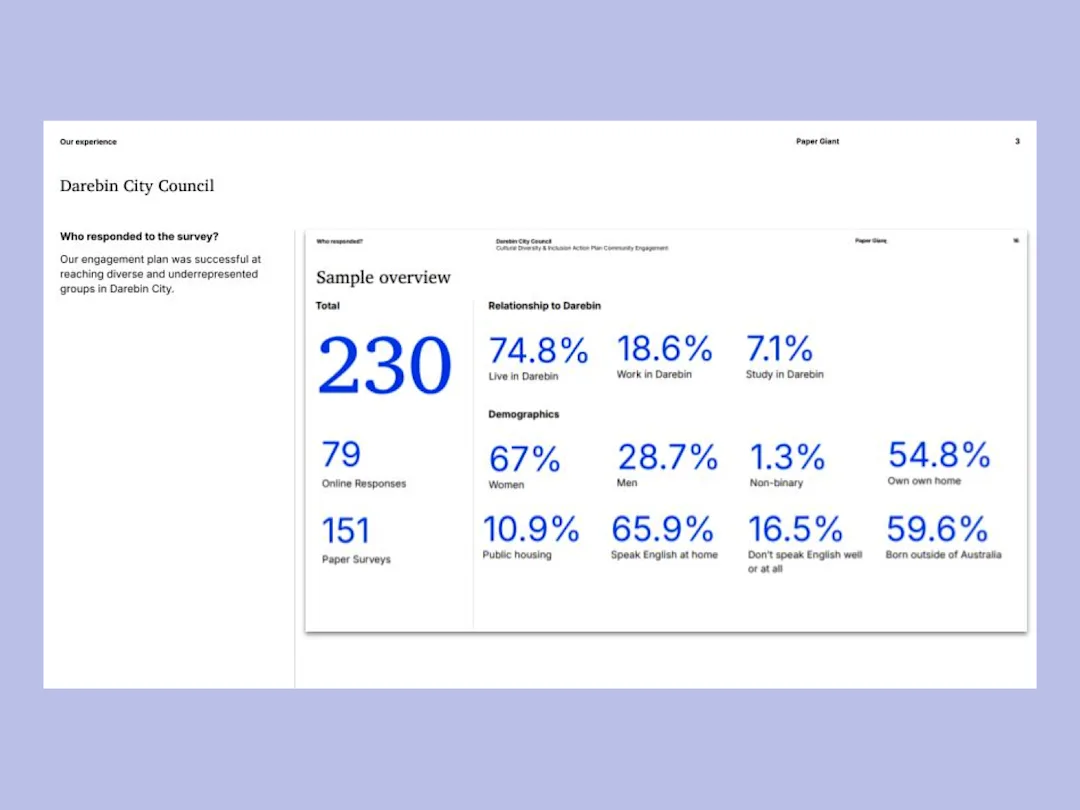
Who responded to the survey?
Our engagement plan was successful at reaching diverse and underrepresented groups in Darebin City.
Reaching rather than welcoming
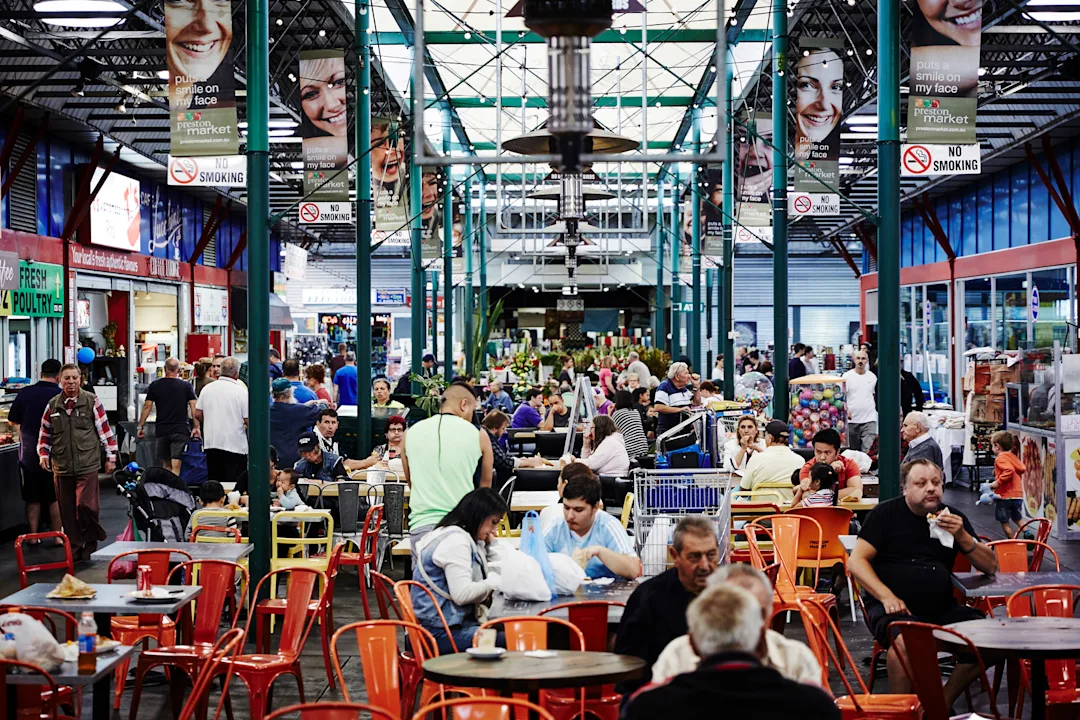
We designed an engagement strategy that flipped traditional consultation on its head. Instead of expecting communities to navigate government processes, we went where people already gather — neighbourhood houses, cultural centres, Preston Market, and community events during Refugee Week. Our multilingual approach captured 230 voices through paper and online surveys, targeted workshops, and Advisory Committee consultations.
We deliberately reached those typically excluded from council engagement: 60% born overseas, 17% with limited English proficiency, and 11% living in public housing. We discovered that workplace discrimination drives economic exclusion (47% of all discrimination cases), that public housing residents face the highest discrimination yet report the strongest belonging, and that limited English speakers achieve only 47% belonging compared to 65% for native speakers.
From insights to action
We worked with council to turn these insights into a Cultural Diversity & Inclusion Action Plan structured around social inclusion, economic involvement, places and spaces, and civic engagement. The plan converts community voices into concrete actions — from installing prayer facilities to establishing employer partnerships that tackle discrimination at its largest source.
Council now has an evidence base that guides resource allocation and provides measurable benchmarks for inclusion progress. Our engagement process created genuine community ownership, with residents seeing their lived experiences directly reflected in council priorities and action.