Systems Mapping & Change
We help organisations see the interconnections within complex systems and identify where to intervene for the greatest impact. Through participatory workshops and visual thinking, we produce system maps, causal loop diagrams, and intervention roadmaps that turn complexity into clarity and action.
Making complexity visible
Complex challenges rarely have a single cause — and they never have a single solution. Systems mapping makes the hidden connections between people, processes, policies, and pressures visible, so teams can see the full picture before deciding where to act.
We use systems mapping to help organisations:
- Reveal root causes rather than treating symptoms in isolation
- Identify high-impact intervention points where targeted effort creates outsized change
- Build shared understanding across teams and stakeholders who each hold part of the puzzle
- Navigate uncertainty by understanding how different forces interact and influence outcomes
How we map systems and drive change
Our approach combines participatory workshops with rigorous visual analysis to build maps that teams actually use. We bring together diverse perspectives — from frontline staff to executives, from industry partners to community members — because no single viewpoint captures the whole system.
What emerges from this work:
- System maps that visualise relationships, feedback loops, and dependencies
- Causal loop diagrams that reveal how variables reinforce or counteract each other
- Stakeholder ecosystem maps that clarify roles, influence, and alignment
- Intervention roadmaps that prioritise where to focus effort for lasting change
From energy markets to community safety
We have applied systems mapping across sectors where complexity is the norm — energy, justice, government, and infrastructure. The challenges differ, but the pattern is the same: multiple actors, competing priorities, and interconnected forces that resist simple fixes.
Whether mapping a national energy data ecosystem or understanding how communities engage with crime prevention, our approach starts by listening to the people who live and work within the system. Their knowledge is the raw material for maps that are grounded in reality, not theory.
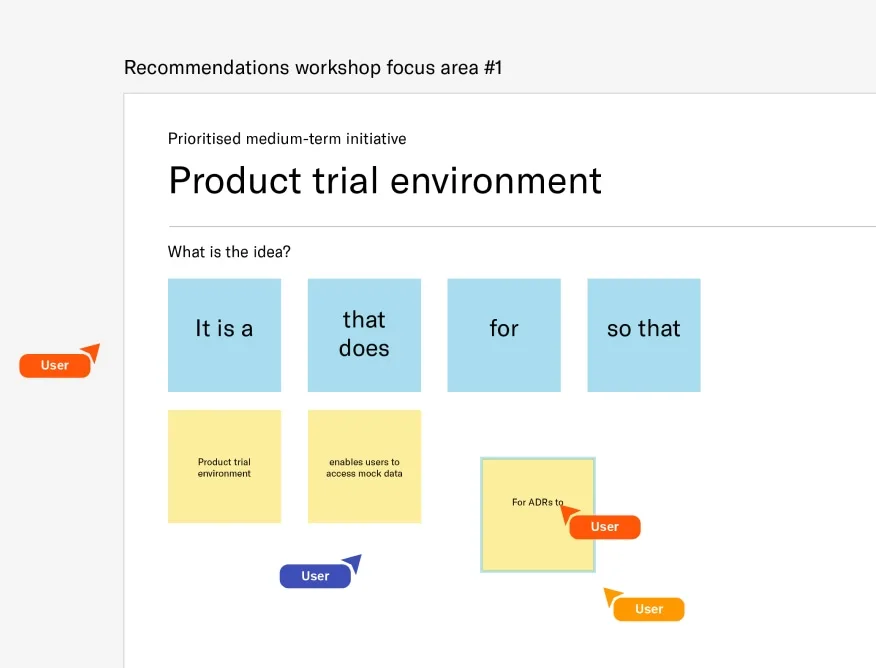
When AEMO needed to understand what was blocking innovation in Australia's energy data system, we mapped the forces at play across the entire ecosystem — revealing barriers and co-designing practical actions with industry stakeholders.
Turning maps into strategic action
A map is only valuable if it changes how people make decisions. That is why our systems mapping work always connects to action — identifying the specific leverage points where intervention will have the greatest effect.
We work with teams to pressure-test their assumptions, explore scenarios, and build consensus around where to focus. The result is not just a visual artefact but a shared strategic framework that guides investment, policy, and program design across complex stakeholder landscapes.

When the Victorian government needed to understand how communities actually engage with crime prevention, we used systems thinking to map the key moments, actors, and information flows — turning complex stakeholder perspectives into a clear model for more effective communication.
Understanding risk across interconnected systems
Some systems challenges carry national consequences — and demand mapping at a scale that matches. In sectors like energy security, where policy decisions ripple across supply chains, markets, and communities, systems mapping helps leaders see emerging risks before they become crises.
We bring together diverse voices through structured workshops, creating space for industry and government to build a shared picture of how risks interact and compound. This collaborative process means the resulting maps carry buy-in, not just insight.
When the Department of Industry, Science, Energy and Resources needed to assess emerging risks to Australia's energy security, we brought industry and government leaders together in national workshops to map interconnected threats and build shared understanding.
Clarity that drives better decisions
Organisations that can see their system clearly make bolder, better-informed decisions. Our systems mapping work has helped government departments redesign policy, energy regulators unlock innovation, and cross-sector coalitions align around shared priorities.
The value is not the map itself — it is the shared understanding it creates across teams, the intervention points it reveals, and the confidence it gives leaders to act on complexity rather than be paralysed by it.
We help organisations see complexity clearly and act on it confidently. Get in touch to explore how systems mapping can inform your next move.


