ArticlesMarch 26th, 2026
Service design in local government: What we've learned from a decade of practice

The council that couldn't tell if its new service was working
A few years ago, one of Victoria's fastest-growing municipalities launched a concierge service at their customer service centre. Someone would greet visitors, work out what they needed, and point them to the right team. Months later, the council still couldn't say whether it was actually making a difference.
Staff thought it was going well. Residents seemed happier. But nobody had measured anything, and there was no way to catch problems before they became baked in. We see this a lot in local government — councils put genuine effort into designing or redesigning a service, then move on without ever really finding out if it worked.
We've been working with Australian councils for over a decade. Learning how to close that gap — between launching something and knowing whether it's landing — has shaped how we approach every local government project now.
Why local government is a unique design challenge
Local government is where policy meets people. Councils are responsible for everything from waste collection to planning permits, library programs to aged care, pet registration to community grants. The range of services is huge, and the teams delivering them are usually stretched thin.
This creates a design context that's different from state or federal government. Ratepayers can walk into a service centre and tell you what they think. Staff often wear multiple hats. Elected officials bring political dynamics that can shift priorities between cycles. Everything is closer to the ground.
For design practitioners, this means methods need to be adapted. Long discovery phases don't work when the team needs something usable before the next budget round. And most councils don't have a dedicated design or digital team sitting around waiting to implement a service blueprint. The work has to fit the resources people actually have, and it has to outlast the project team that created it.
Building evaluation into service design from day one
When we partnered with the City of Casey to assess their concierge service, we didn't start with surveys. We started by asking what success would actually look like — for visitors, for staff, and for the organisation's broader strategic goals.
Together, we defined clear service goals and designed a performance framework that tracked meaningful signals: customer wait times, resolution rates, visitor satisfaction. But the framework wasn't static. Because the concierge service was designed to scale, the evaluation framework needed to grow with it. We structured it around three phases — baseline measurement in the first eight months, tracking performance as visitor numbers grew over the next year, and preparing for longer-term strategic changes in the year after that.
Two things made this work stick. First, Casey created two dedicated roles to own the framework — people whose job it was to act on the data and drive continuous improvement. Second, we designed a polling and reporting schedule that balanced getting frequent enough feedback with avoiding survey fatigue among customers. Evaluation became part of how the service operated, not something bolted on after the fact.
Co-design that works across fourteen directorates
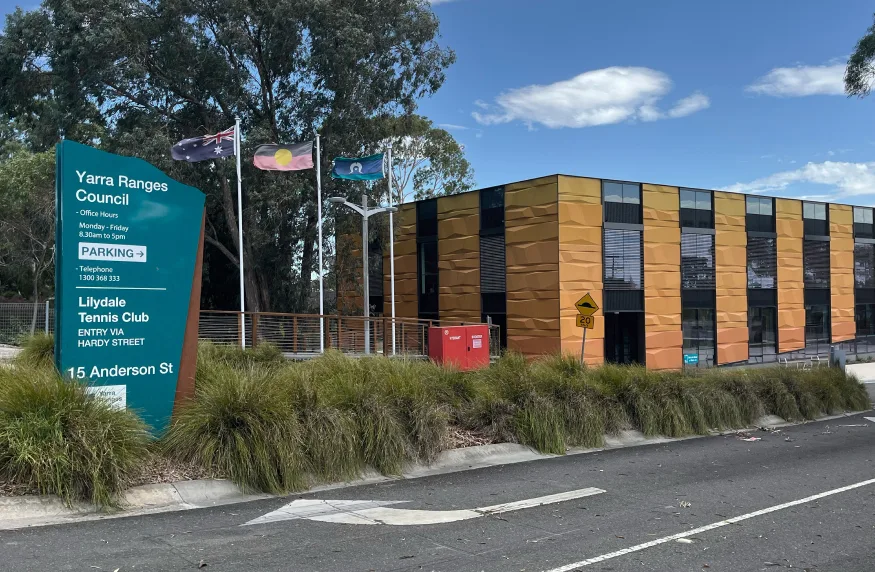
At Yarra Ranges Council, the challenge was different. They needed a digital and technology strategy that the whole organisation could get behind — not just the IT department. With over sixty staff participating across fourteen of sixteen directorates, this was one of the most genuinely cross-organisational co-design processes we've facilitated in local government.
We brought executives, managers, and operational staff into the design process together. For many, it was the first time they'd been involved in shaping technology strategy. The sessions surfaced something important: staff across the organisation had sophisticated ideas about digital possibilities, but the language of "digital transformation" was alienating. They didn't need a crash course in cloud architecture. They wanted to see how technology could actually help them do their jobs and serve their communities.
The final strategy deliberately used plain language and avoided jargon. If only the digital team can read it, it's not a shared strategy. The roadmap described practical next steps that staff could action immediately, with horizons reaching into the next half-decade.
As one council executive told us: "You've done a magnificent job connecting the pieces for us."
Five things we've learned about service design in local government
After a decade of this work, here's what we keep coming back to.
1. Evaluation is design work. Too many councils treat evaluation as an afterthought — something that happens after the "real" design work is done. But designing how you'll measure success is itself a design challenge. Get it wrong, and you'll either measure the wrong things or measure nothing at all.
2. Co-design in councils must cross silos. Services in local government rarely sit within a single team. A resident's experience of getting a planning permit involves front-of-house staff, planning officers, compliance teams, and sometimes elected officials. If your co-design process only involves one directorate, you're designing a partial solution.
3. Language matters more than you think. Council staff are experts in their domains — community development, engineering, environmental health — but they're not necessarily fluent in design or technology language. Making strategy documents accessible isn't dumbing them down. It's making them usable.
4. Build in ownership, not just outputs. The most successful projects we've delivered in local government are the ones where the council took ownership of the framework, not just the report. Casey created dedicated roles. Yarra Ranges built their strategy with the people who'd implement it. Documents that land on desks without champions don't change anything.
5. Understand how decisions actually get funded. Every council has its own rhythm for planning and budgets. We've seen good recommendations stall because they arrived at the wrong time — after a budget had been locked in, or too late for a council plan review. Now we try to understand that timing early in a project so our recommendations land when someone can actually act on them.
What this means for councils considering design
If you're a council officer or executive thinking about using design methods, start with a question you actually need answered. Something like: why are residents dropping off halfway through this process? Why are we getting less uptake than expected? We've redesigned this service twice and it's still not working — what are we missing? How do we know if this new program is actually reaching the people it's meant for?
These are the kinds of questions service design is good at. They're about understanding what's happening from the perspective of the people using and delivering a service, then making changes based on evidence rather than assumptions.
The councils we've worked with that get the most value from design are the ones that treat it as an ongoing practice. They build evaluation in from the start, they grow internal capability over time, and they don't expect a single project to fix everything.
Local government is where design meets reality. After a decade, we're more convinced than ever that this is where it matters most.