ArticlesJune 18th, 2026
The conditions for civility: what a national coalition learned

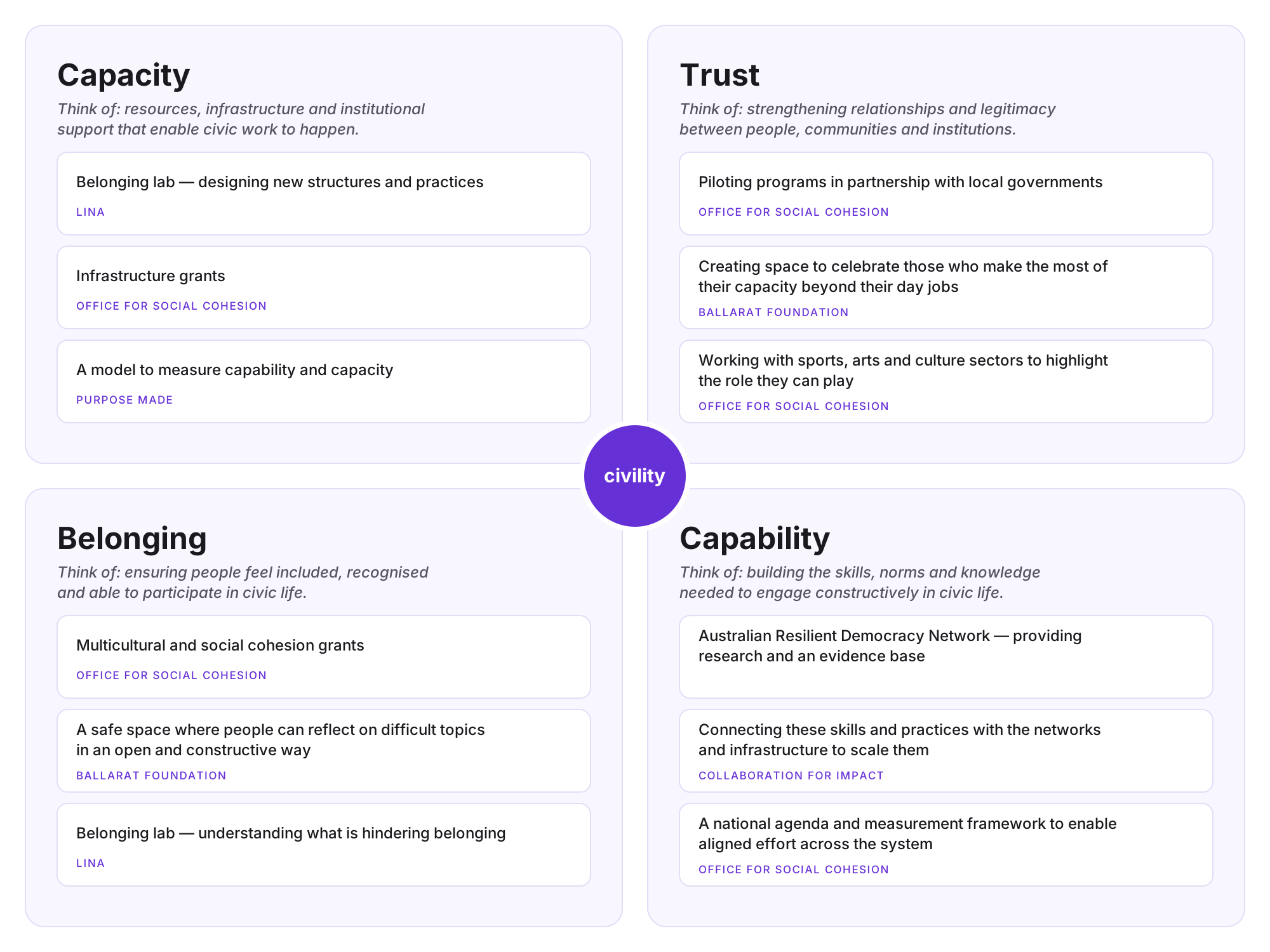
Coalition members’ initiatives mapped against the four conditions for civility.
In January I spent a month in long conversations with the thirteen members of a new national coalition on civility, convened by the Menzies Leadership Foundation. A community foundation, a federal social cohesion team, an ethicist, a network of local newsrooms, an organisation welcoming new migrants — each described, in its own language, work that was thriving locally and invisible nationally.
Over the six months that followed, the coalition met five times, started three local pilots — in Ballarat, Mparntwe (Alice Springs) and Tasmania — and built a shared picture of how civility works in Australia and what it would take to strengthen it. Along the way, each member worked up a proposal for something concrete that might help, from a live community-data tool to a new kind of community foundation. Paper Giant's role was to run the research, facilitate the meetings and pull the thinking together. We've written the project up as a case study; this piece is the reflection that sits alongside it — what the coalition found, and what we learned along the way.
Civility is four things at once
Ask thirteen practitioners what civility is and you won't get thirteen definitions. You get four, repeated in different accents. Across the interviews, the same framings kept surfacing.
Civility as an outcome. A destination — a more civil Australia. This lens points towards measurement: defining what "getting there" looks like and tracking progress against it.
Civility as a process. Not a destination but a day-to-day practice that can be developed and improved. This lens suggests building habits, skills and routines.
Civility as a disposition. An attitude towards difference — a stance individuals and communities can hold. At the coalition's Ballarat event, people described it as something you can feel in a room.
Civility as an infrastructure. A systemic asset: the web of organisations, policies, relationships and institutions that scaffold a civil society.
The coalition's finding wasn't any single framing. It was that the field needs all four, held together. Each lens implies different work — measurement regimes, capability programs, community practice, system investment — and a funder who only sees one will fund only one kind. Looked at this way, the field's fragmentation starts to look less like an accident than a consequence of partial views.
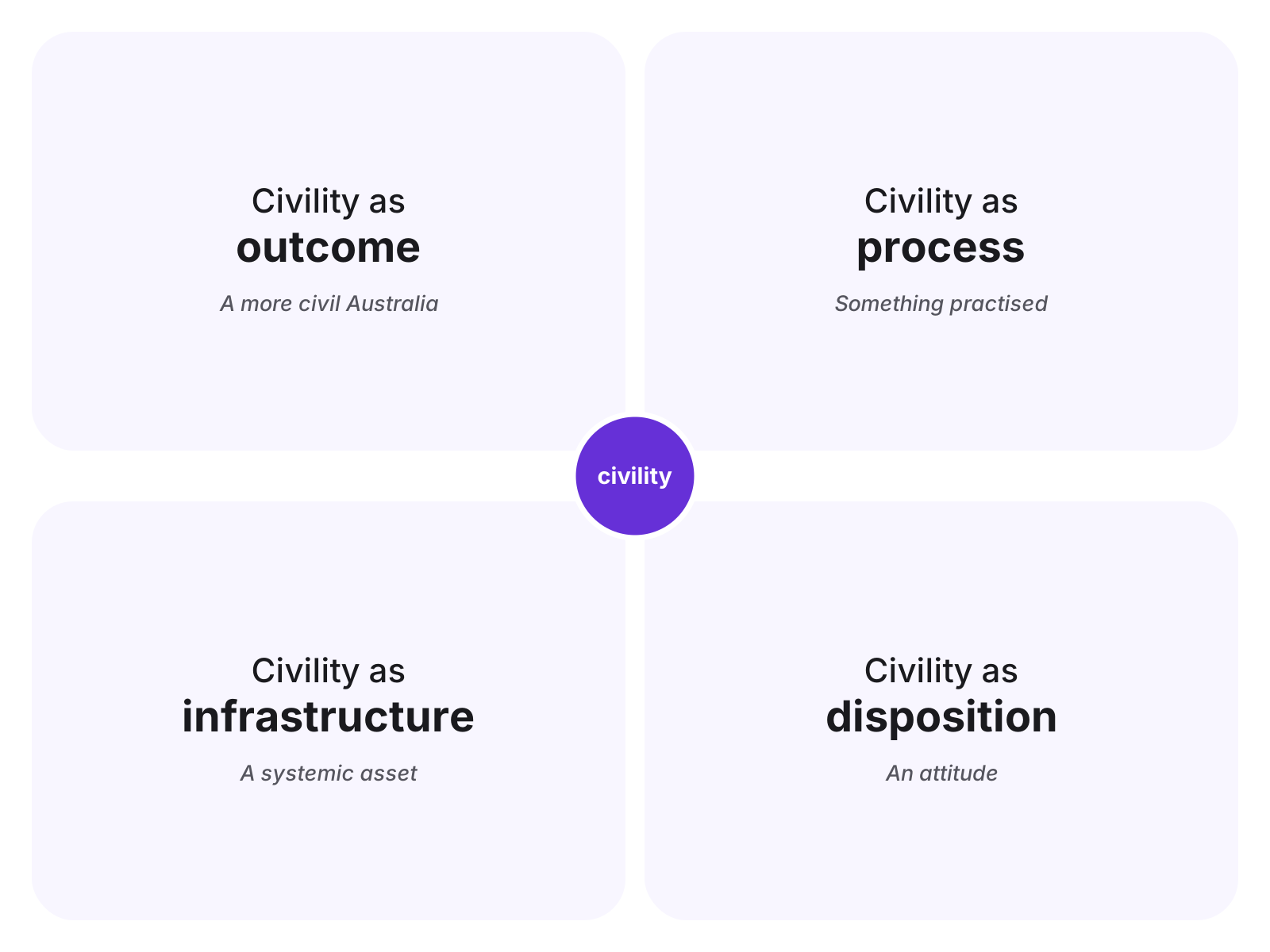
Four framings of civility — outcome, process, disposition and infrastructure. Complementary lenses, not competing definitions.
The conditions civility depends on
Underneath the framings, four conditions kept appearing as the things civility actually depends on.
Capacity — the resources, infrastructure and institutional support that let civic work happen at all. The bandwidth of a society.
Trust — the relational strength and legitimacy between people, organisations and institutions, both formal and community-led.
Capability — the skills and literacy to engage constructively in civic life, from critical thinking to emotional regulation to civics education.
Belonging — people feeling included, recognised and able to participate. Without belonging, the other three can't take hold.
What makes this a framework rather than a list is the relationship between the conditions. They need each other, and once present they reinforce each other — civility as a practice starts to regenerate the conditions that enabled it. When the coalition mapped its members' work against these conditions, every one of them already had organisations working on it, mostly without knowing who else was there. That map became one of the coalition's most-used artefacts: a way for a newsroom network, a leadership foundation and a federal policy team to find themselves in the same picture.
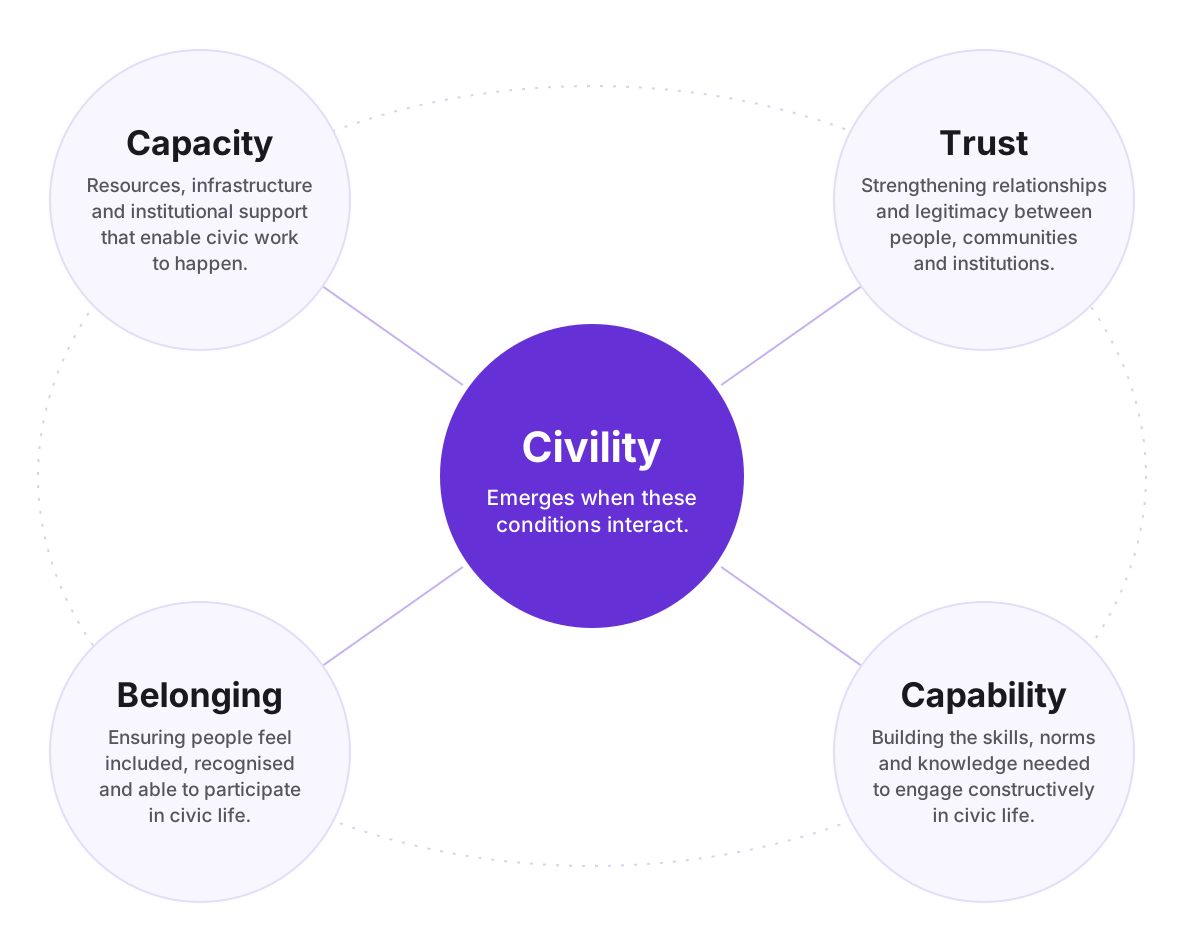
Capacity, trust, capability and belonging — the four conditions civility rests on. Each reinforces the others.
The tensions are the territory
Some of the most revealing material came from naming what pulls practitioners in opposite directions. Five tensions recurred: the pressure to move fast against the slow work of building trust; national scale against local fit; structural change against interpersonal practice; holding aspiration against voicing critique; and being open about the work against protecting what isn't ready.
We treated these as realities to work with, not problems to solve — and that reframing did real work in the room. Once the tensions were named as shared territory rather than individual failings, a member could say "we're at the speed end of speed-versus-trust this quarter" without it sounding like a confession.
Where the field's energy is
By the fourth meeting we'd asked each member to bring one concrete proposal — a specific thing they thought could strengthen civility, worked up on a single page. Looking across the nine that came in, the group sorted the field's needs into four areas: sharing what's happening and what works; coordinating who does what, and how it all gets funded; backing local projects on the ground; and helping good work spread from one place to another. Before the final meeting, members marked where their own organisation's energy sat across those four.
The energy turned out to be spread evenly across all four — a good sign the picture described something real, since every part of it had people already working on it. And asked to pick just one, most chose coordination: who decides, who's accountable, and where the money comes from and on what terms. Organisation after organisation described work that starts as a single project and quickly becomes about connecting, governing and resourcing everyone else's. A reflection from the Menzies Leadership Foundation put the underlying point sharply: "the lever is how we reimagine citizen agency and autonomy, and the capital stack that allows us to build the infrastructure in service of that."
For anyone funding social cohesion work, that's the lesson worth sitting with. The field isn't short of projects. It's short of the shared funding and decision-making that would let the projects add up.
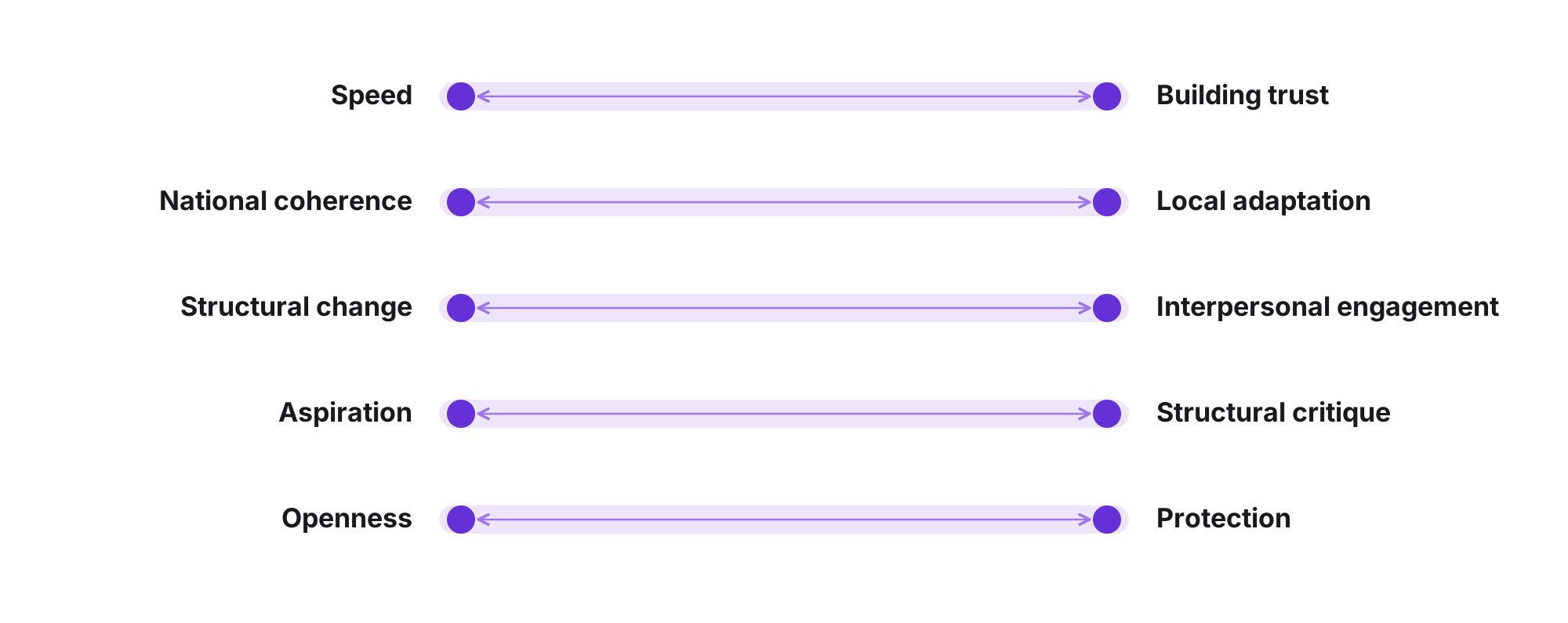
Five tensions coalition members navigate — named as shared territory to work with, not problems to solve.
What we learned about making meaning together
The substance above didn't come from a literature review or a strategy offsite. It was made collectively, and the method matters as much as the findings — because shared meaning turned out to be the precondition for everything else the coalition wants to do.
A few things we'd carry into any process like this:
Start from individual sense, not group consensus. The one-on-one conversations came before the group first met as a whole. The picture we offered back was built up from what we'd heard, with a standing invitation: if something didn't resonate, that disagreement was itself useful data. People react honestly to a picture of themselves; they posture in a definitional debate.
Hold multiple truths structurally. Presenting four framings as simultaneous lenses — rather than running a process to pick one — meant nobody's worldview had to lose for the work to begin. The frameworks gave the group somewhere to stand together without demanding agreement on everything.
Give the group things to think with. Meaning solidified fastest around things we could point at: the map of who was working on what, the proposals members drafted between meetings, the session where each proposal got four minutes in front of the group before anyone discussed it. Talk evaporates; things accumulate.
Let pace be a decision, not a failure. Our original plan had the final meeting converging on an idea to design together. We chose not to force it; the group asked for room to get the next phase right, and the survey had told us members were still working out their commitments honestly. A reflection from Purpose Made named the balance: keep holding space for things to emerge, and pair it with a clear direction — "know the directional outcome we're working towards."
Respect what participation costs. The time members give carries a real cost, particularly for smaller not-for-profits, and the group was clear that any next phase needs a considered pace and clarity about how people's time is paid for. Meaning-making is work; treat it like work. We've written before about how the logistics of engagement decide who can take part — the same holds at this scale.
As a member from the Office for Social Cohesion put it during the retrospective: nobody has the whole solution, so we have to keep having the difficult conversations.
What happens next
The coalition closed its first phase with three things: a shared way of seeing the work, the four conditions, and nine concrete proposals its members had designed together — and with deliberate openness about what the second phase should be. The Menzies Leadership Foundation committed to sharing the coalition's work publicly, with every member seeing it first; to keeping the group going for members who want to build something, with seed funding under consideration; and to a public event later in the year. Our work now is to pull six months of conversations, drafts and maps into a single picture the field can use, the way we've helped diverse systems find a shared story before.
A member from the Ballarat Foundation described the possibility best in the final discussion: make something coherent out of what we've done, put it out into the world, and see what signals come back.
This is that beginning. If the conditions or the four framings resonate with your work — or grate against it — I'd genuinely like to hear about it. That reaction is the next data point.