Victorian Department of Education
Uncovering the information needs of Victorians navigating early childhood education
We partnered with the Victorian Department of Education to understand how parents, students, and workers experience early childhood education information online. Through in-depth interviews with 15 Victorians across three distinct cohorts, we created personas, journey maps, and UX recommendations to help the Department better serve its diverse audiences.
Outcomes
- Detailed personas for three priority cohorts — parents and carers, ECE students, and ECE workers — each grounded in qualitative research
- User journey maps capturing the highlights, pain points, and key moments for each cohort's experience
- An experience spectrum framework mapping users across knowledge level and research habits
- Four design principles (Consolidate, Orientate, Relate, Connect) to guide ongoing web improvements
- A recommended information architecture restructure and high-fidelity wireframes for key page types
- Page-specific UX feedback based on real user reactions to existing Department web pages
Services
Sectors
Understanding a complex information landscape
The Victorian Department of Education's early childhood education (ECE) web pages serve three very different groups: parents and carers navigating kindergarten for their children, students pursuing ECE careers, and workers already in the industry. Each group arrives with different levels of knowledge, different goals, and different ways of engaging with online content. The Department needed to understand these distinct needs to improve their digital experience — making it easier for every Victorian to find the information that matters most to them.
Listening to 15 voices across Victoria
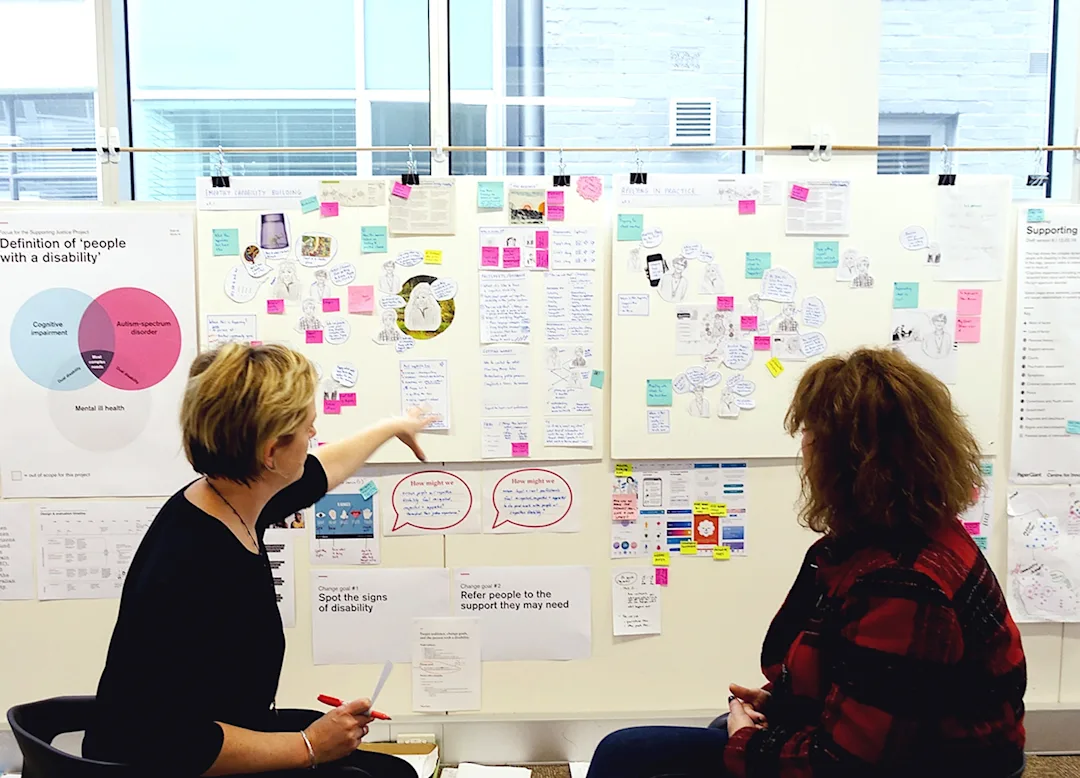
We conducted remote, 60-minute interviews with 15 participants drawn from all three cohorts — five parents and carers, four ECE students, and six ECE workers. We deliberately recruited for diversity: our participants included people from culturally and linguistically diverse backgrounds, an Aboriginal participant, regionally located Victorians, and neurodiverse people. Each interview was split into two halves — first, we walked through the participant's personal ECE journey using a visual summary on screen-share, then we observed them navigating the Department's existing web pages, capturing their impressions, frustrations, and habits in real time.
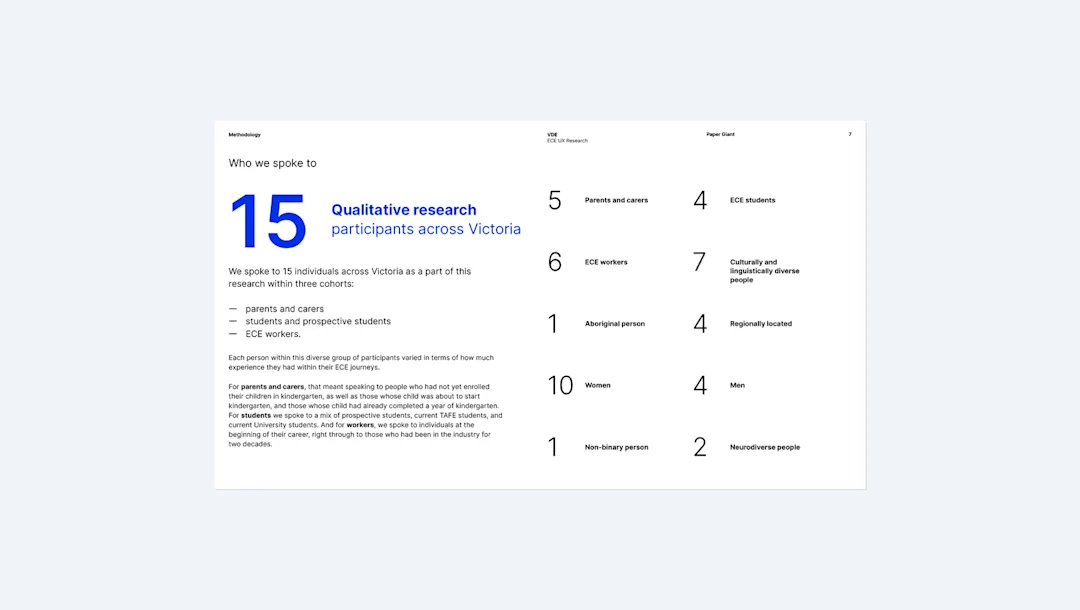
We spoke to 15 qualitative research participants across Victoria, including parents, ECE students, and ECE workers — with deliberate diversity in cultural background, location, and ability.
Three personas, three journeys
From the research, we developed detailed personas for each cohort. Parents and carers want the best start for their child but find the kindergarten landscape confusing — navigating enrolment, costs, and competing options. ECE students are driven by passion but struggle to find clear information about career pathways, placements, and what the job is really like. ECE workers are deeply committed to children's development but face challenges around professional development access, workplace culture, and feeling supported. Each persona captures distinct motivations, needs, and pain points — and each is accompanied by a journey map that traces the real experience from first awareness through to their current stage.
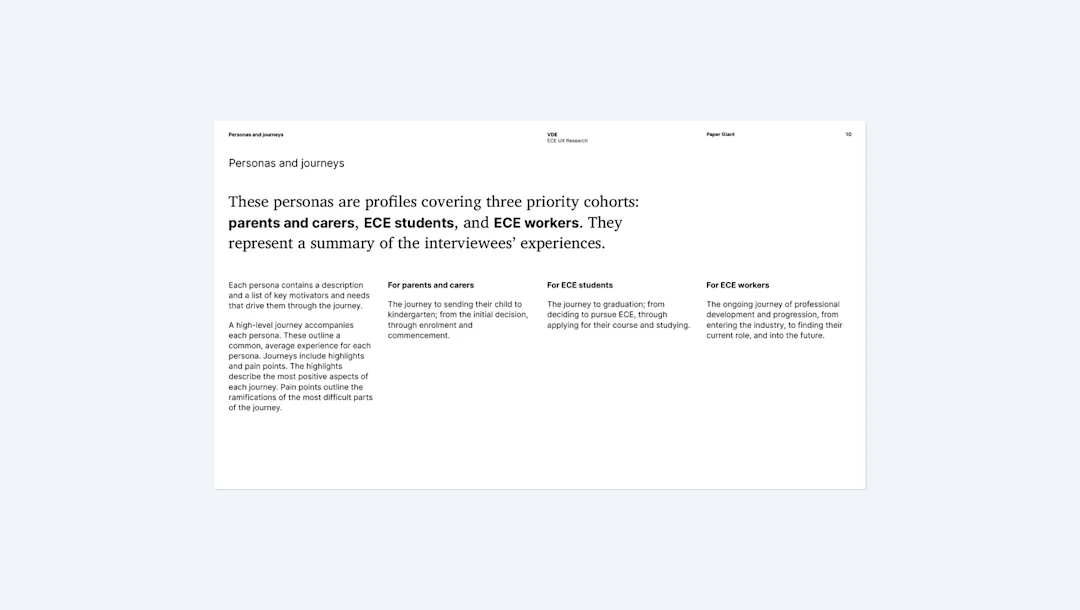
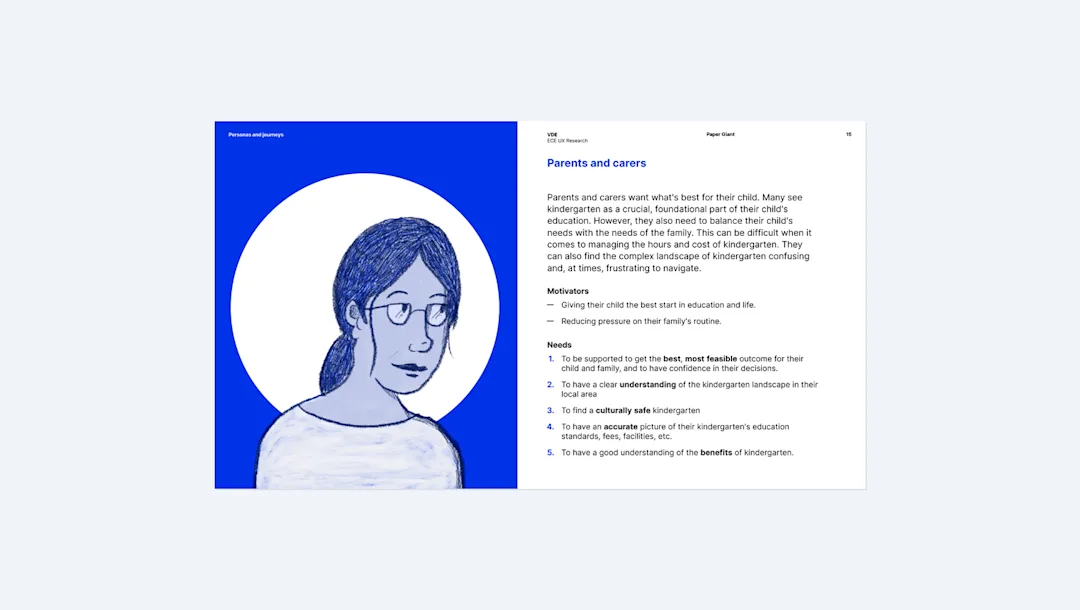
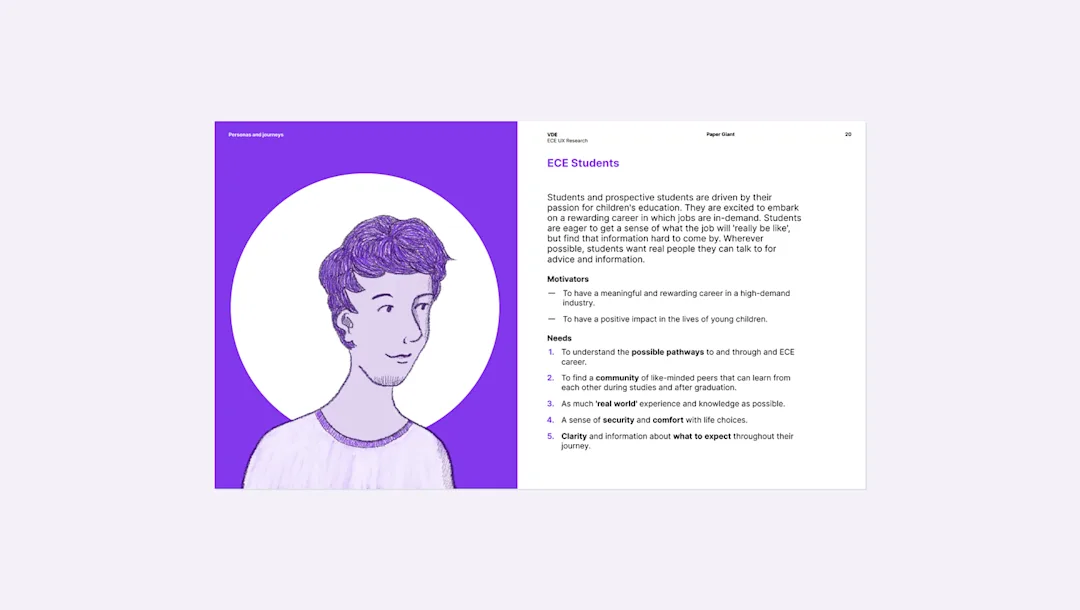
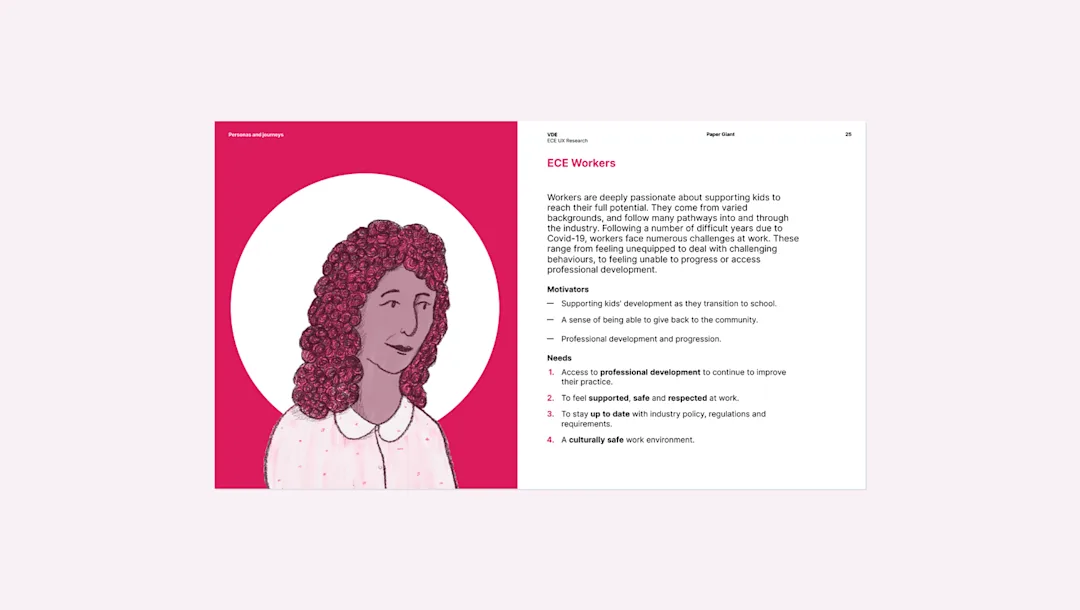
We developed detailed personas for three priority cohorts — parents and carers, ECE students, and ECE workers — each with distinct motivations, needs, and pain points drawn from in-depth interviews.
Two spectrums that shape every experience
A key insight was that participants don't sit neatly in one box. We identified two spectrums that cut across all three cohorts: level of knowledge (from inexperienced to experienced) and online research habits (from quick skimmers to deep readers). These spectrums mean the same person might shift their behaviour depending on context — a confident parent might skim when they're time-poor, then read deeply when making a big decision. This framework helped us design recommendations that serve people wherever they sit, rather than assuming a single user type.
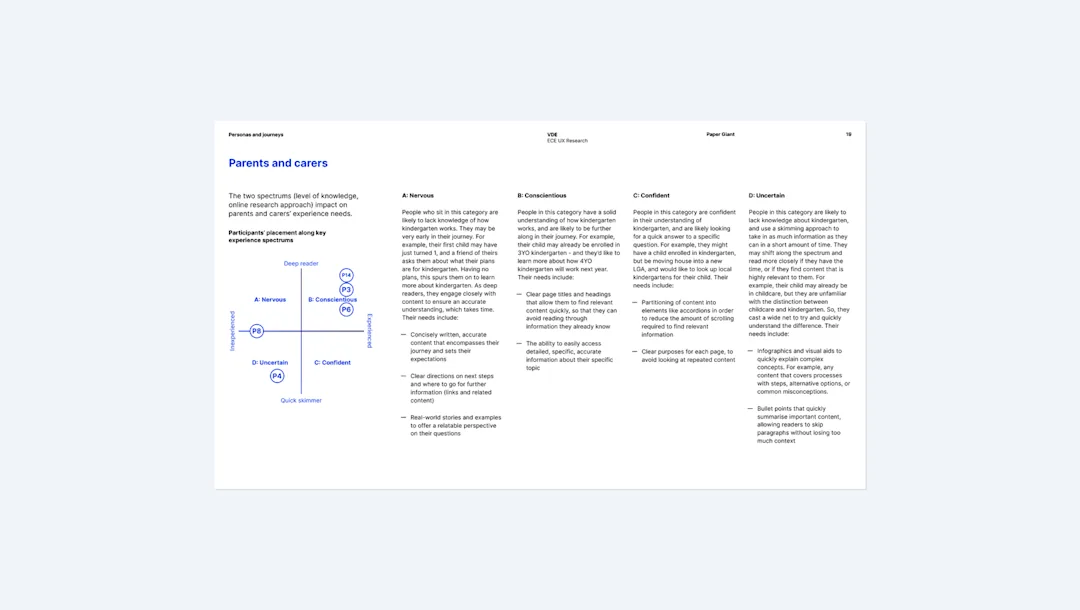
The experience spectrum framework maps each participant across two dimensions — level of knowledge and online research habits — revealing that users need content designed for multiple modes of engagement.
From insights to action: four design principles
We distilled our findings into four design principles that give the Department a clear framework for improving their ECE web pages. Consolidate — simplify the information architecture so related content lives together. Orientate — structure pages to support users' understanding, leading with what matters most. Relate — use headings, accordions, and visual aids that help people find themselves in the content. Connect — link outward to institutions, kindergartens, and tools that help people take their next step. We brought these principles to life through high-fidelity wireframes showing how stage pages, hub pages, and information pages could be redesigned to better meet user needs.