University of Melbourne
Helping researchers discover funding opportunities they'd otherwise miss
Australian researchers were competing for the same narrow pool of grants each year, wasting effort and missing opportunities. We partnered with the University of Melbourne to design and build a tool that connects academics to a much wider range of relevant funding, so they can spend less time searching and more time researching.
Outcomes
-
A working product that surfaces relevant grant opportunities for individual researchers using algorithms and machine learning — broadening access beyond the usual competitive pools
-
A prioritised roadmap for future development, so the University of Melbourne team can keep building on what we started together
Avoiding missed opportunities
Researchers across Australia are often applying for the same narrow range of research grants each year. This results in those grants becoming more competitive and harder to win — and a lot of researchers' effort being wasted in the process.
The University of Melbourne wanted to change that. Together, we set out to understand what researchers actually need when they're looking for funding — and to build a tool that connects them to a much wider range of grant opportunities they might never have found on their own.
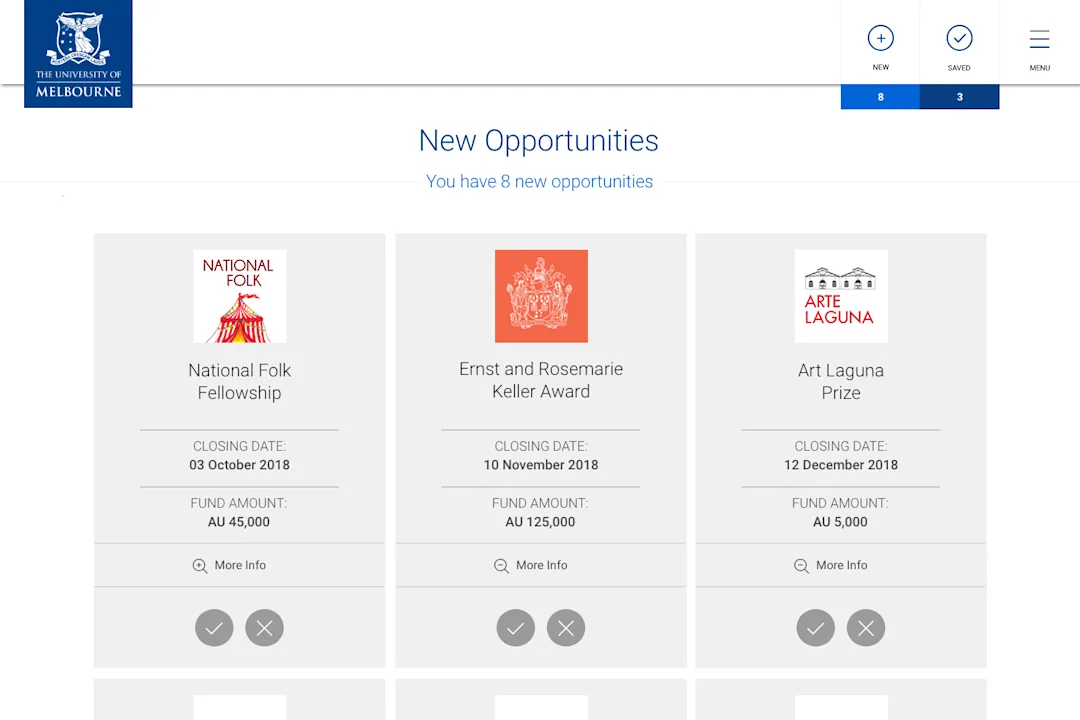
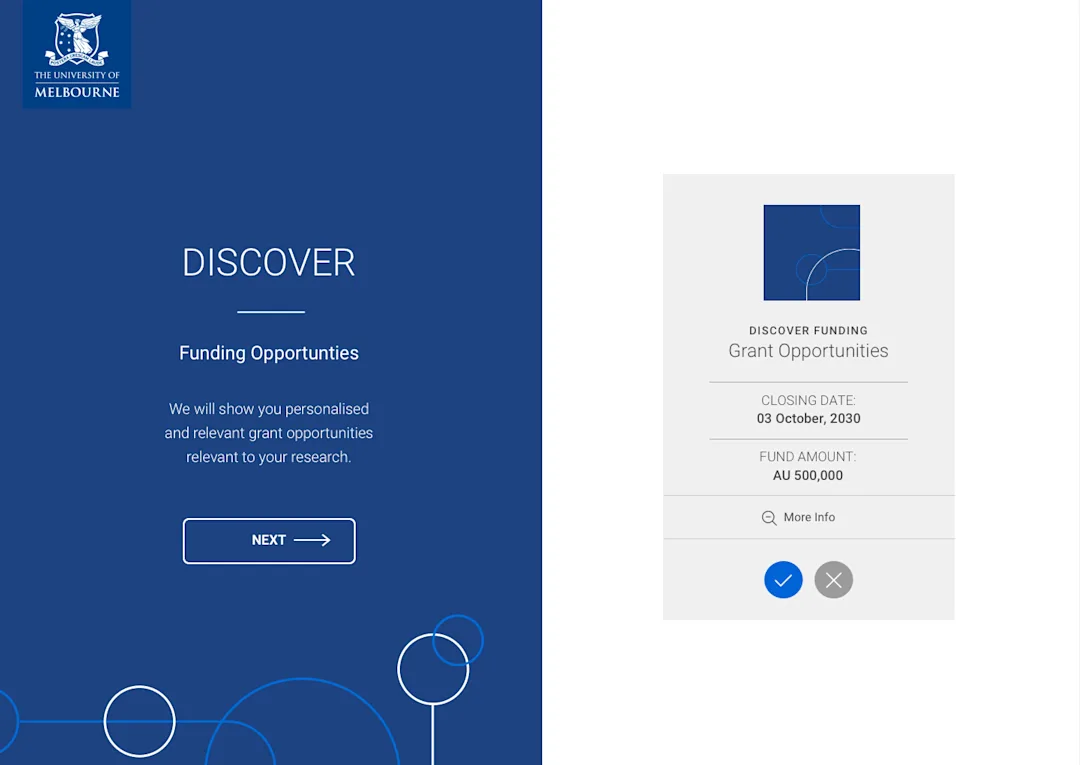
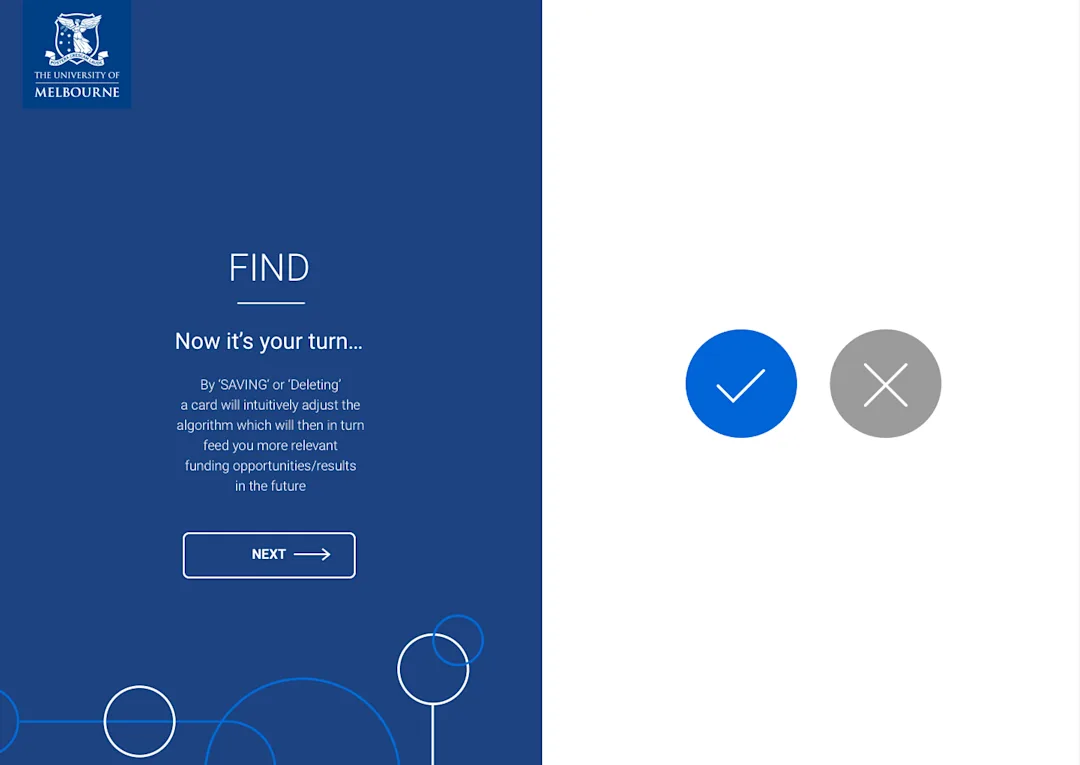
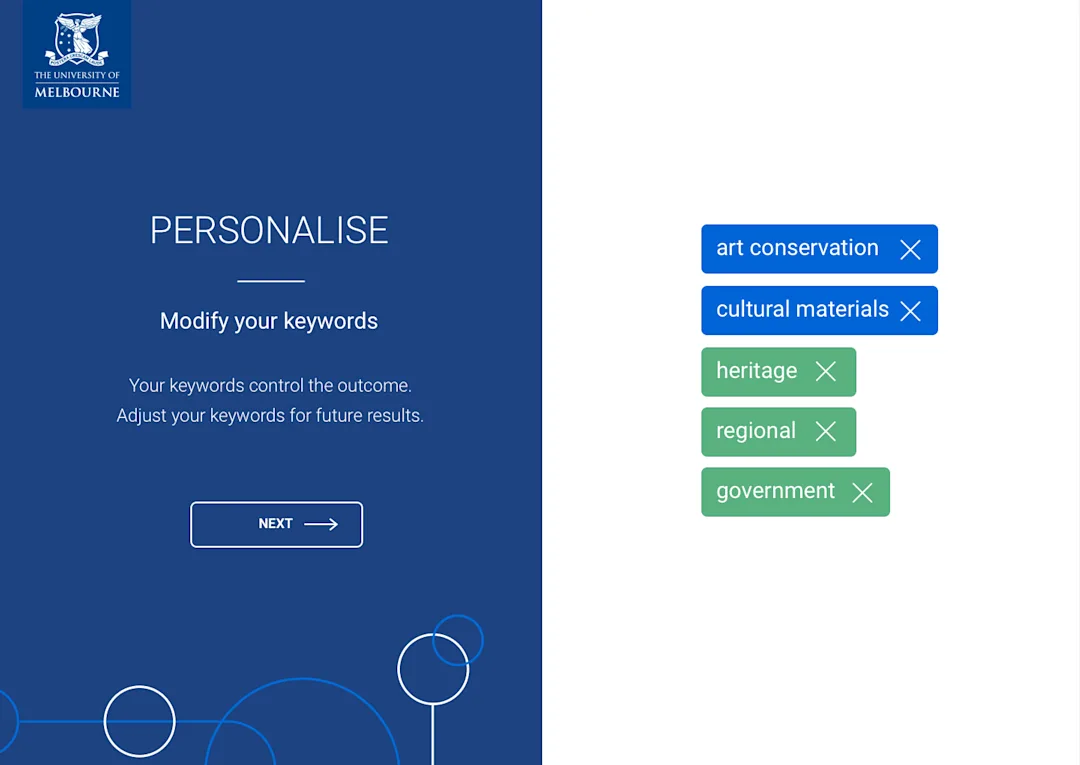
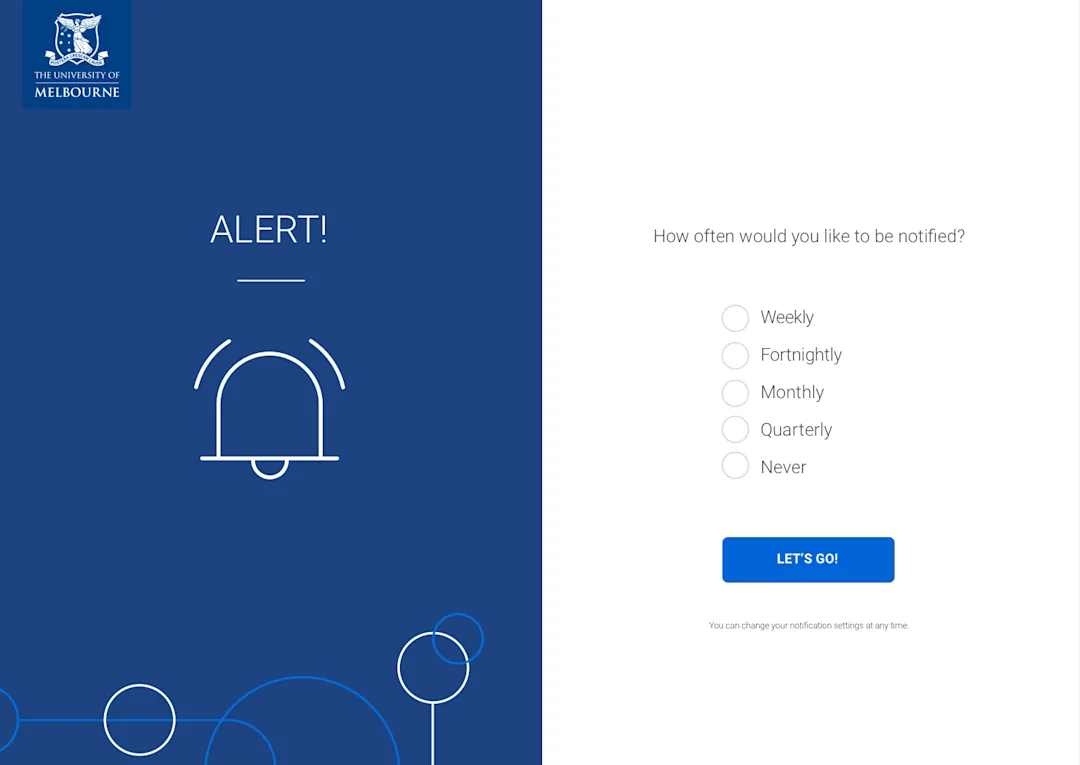
Clickable prototype of opportunities tool.
Testing and building at the same time
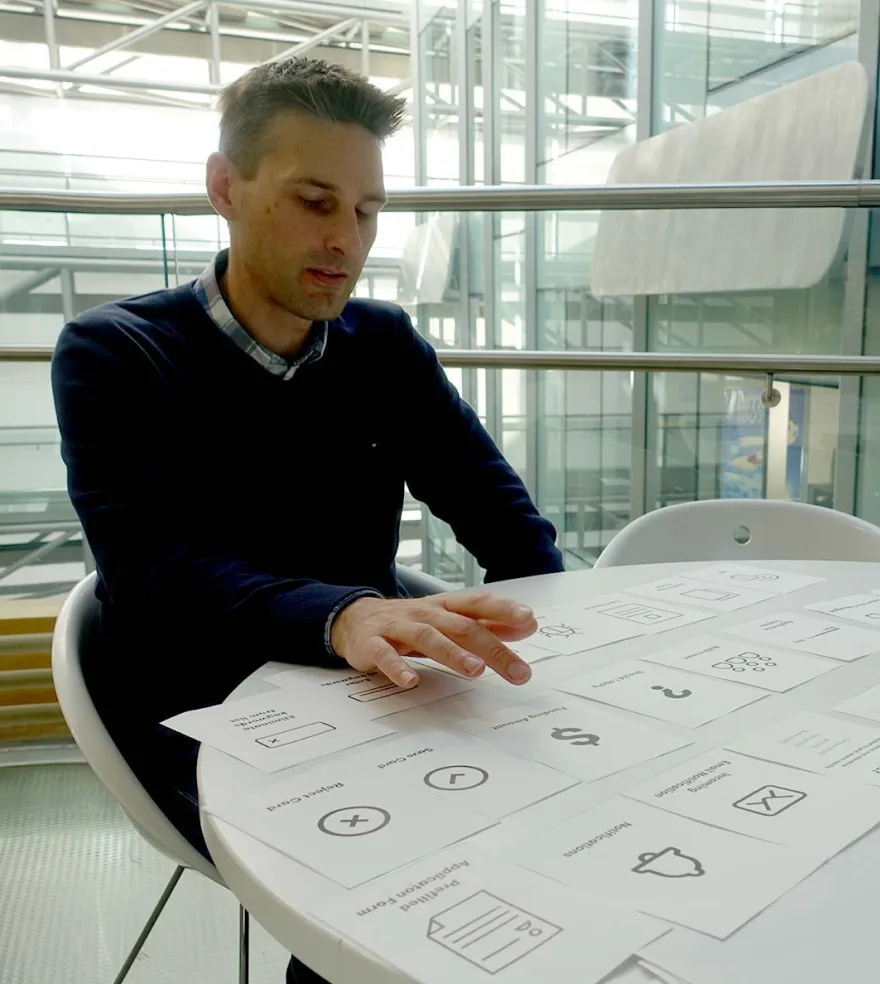
We developed the tool and conducted our research simultaneously, using a mix of clickable and live prototypes to test new aspects of the experience with researchers as we went.
This let us identify what mattered most to users early — researchers told us they were spending hours each week trawling databases and still only finding grants within their own discipline. They needed a tool that could surface relevant opportunities across fields, without the manual search. We iteratively built on these insights in each round of interviews.
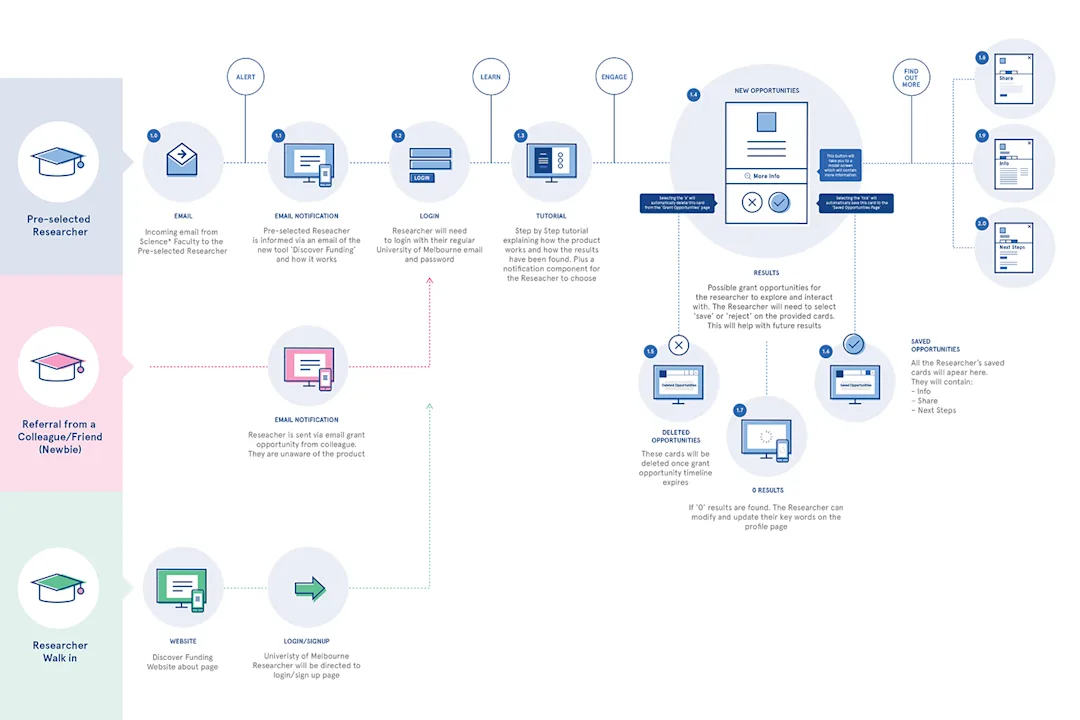
User journeys created during the project
From prototype to pilot
We mapped out clear user journeys and integrated grant data from multiple sources with algorithmic learning, so the tool continually refines the opportunities it surfaces for each researcher.
We built and tested front-end templates rapidly, moving from concept to a working pilot running with three faculties across the university — putting the tool in front of real researchers and gathering feedback to shape what came next.