SERV
Using design to help Victoria's property data authority rethink its strategy
We partnered with SERV to develop an experience strategy for LANDATA, Victoria's property data platform. Rather than redesigning a website, we used design outputs — concept mockups, user journeys, and strategic provocations — as tools to help leaders examine their assumptions about how property data should work. The result was a strategy that reshaped how the organisation thinks about its digital future.
Outcomes
- Digital experience strategy reframing LANDATA from a website redesign into a strategic platform vision
- Visual concept designs used as provocations to help leadership examine strategic assumptions
- Two-platform architecture (public shop + professional warehouse) clarifying how SERV serves distinct user groups
- Series of strategic provocations exploring LANDATA's future beyond the immediate redesign
- Four guiding principles establishing a durable design direction for all future development
- Experience roadmap sequencing research, design, and delivery for the next phases
Services
- Strategic Insight
- Digital & AI
- Customer experience
- Strategic Design
Sectors
Three channels, no shared direction
LANDATA had been running for over a decade across three independent channels, each built for different user groups but none designed to work together. The experience was fragmented — external users struggled to find products and complete purchases, while internal staff managed repetitive processes across disconnected systems. But the deeper issue wasn't the interface. It was that no one had stepped back to ask what LANDATA's digital experience should actually be.
SERV needed more than a website redesign. They needed a strategic foundation — a clear vision for how their channels should come together, who they should serve, and what the experience should feel like.
Making strategy tangible through design
We ran a collaborative discovery process with SERV stakeholders, mapping the current state across all three channels — product walkthroughs, user journey mapping, pain points, and system constraints. But the real value wasn't in documenting what existed. It was in using design to make the future state concrete enough to discuss.
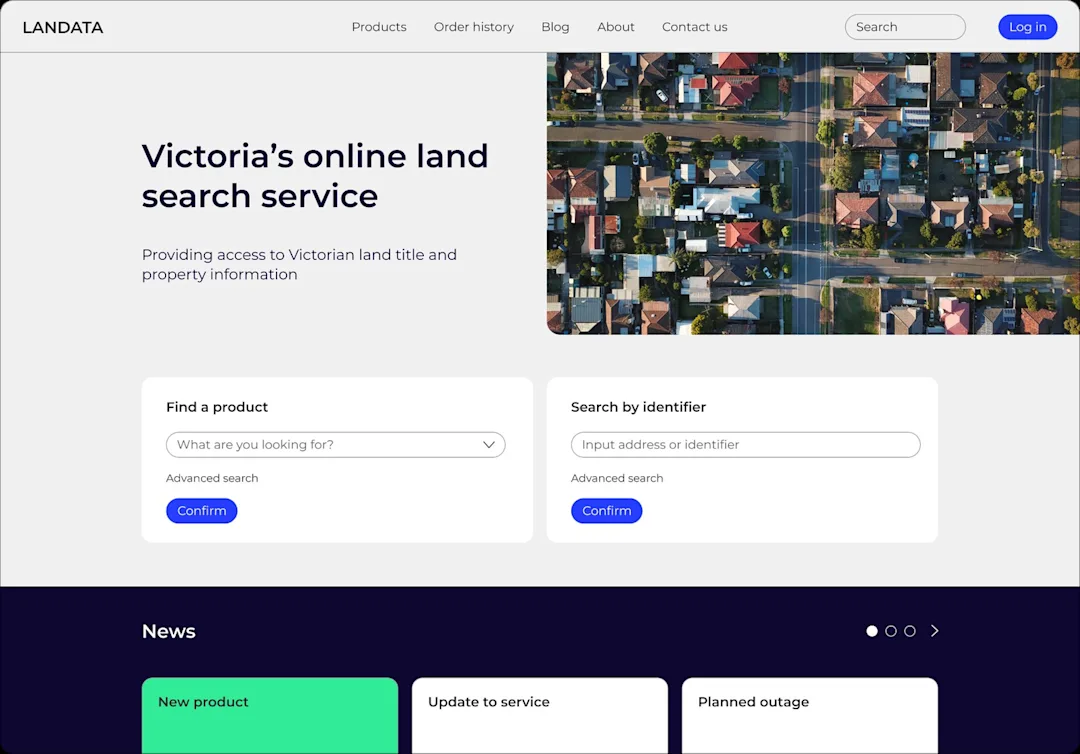
We developed visual concepts — detailed mockups of how a reimagined LANDATA could look and work — not as a specification for build, but as a provocation. When leaders could see a fully realised homepage, a product purchase flow, or a professional dashboard, they could engage with strategic questions they'd struggled to answer in the abstract: What should our relationship with brokers look like? Do we serve the general public differently to government? Where does LANDATA's remit begin and end?
A concept for a public-facing LANDATA "shop" — designed not as a final specification, but as a strategic tool to help leaders examine what a modern property data experience could look like
Two doorways, one strategic question
Our research revealed that LANDATA serves fundamentally different user groups with different needs — and that trying to serve them all through one interface was a strategic choice that had never been deliberately made. We proposed a two-platform structure as a way to force the conversation: a public "shop" for general users who need to find and purchase property data without an account, and a professional "warehouse" for account holders and brokers who manage ongoing workflows.
The two-platform framing wasn't just an information architecture recommendation. It was a lens for examining harder questions about SERV's operating model — how they price products, how they relate to their broker network, and what role LANDATA plays in Victoria's broader property data ecosystem.
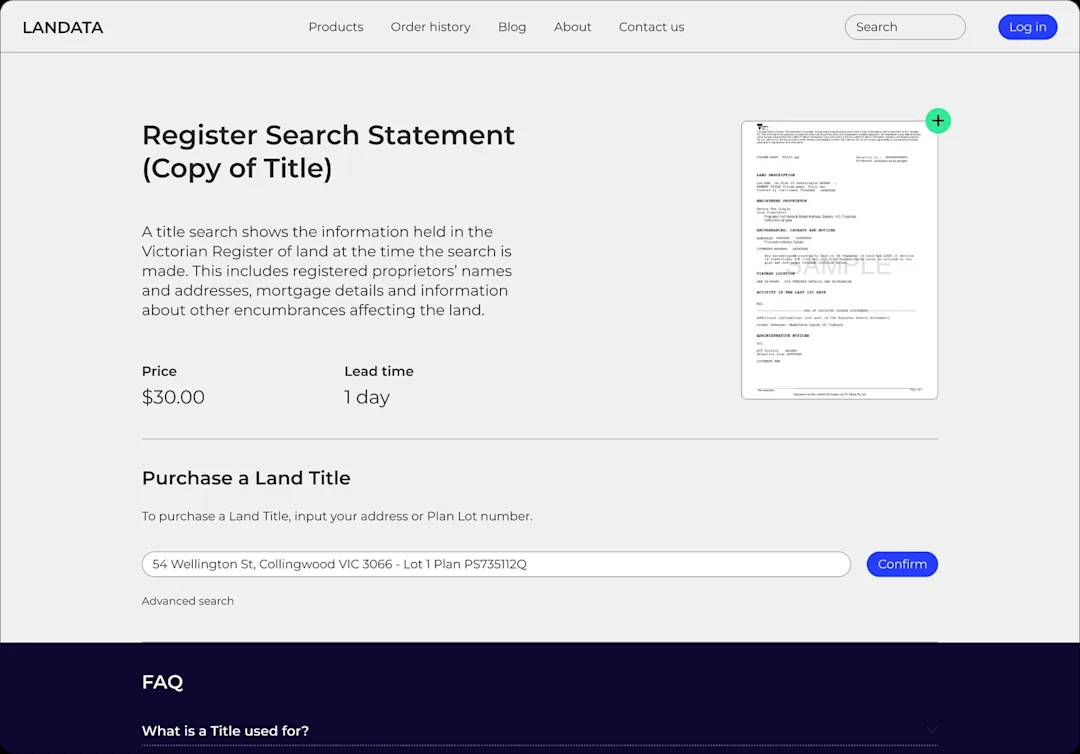
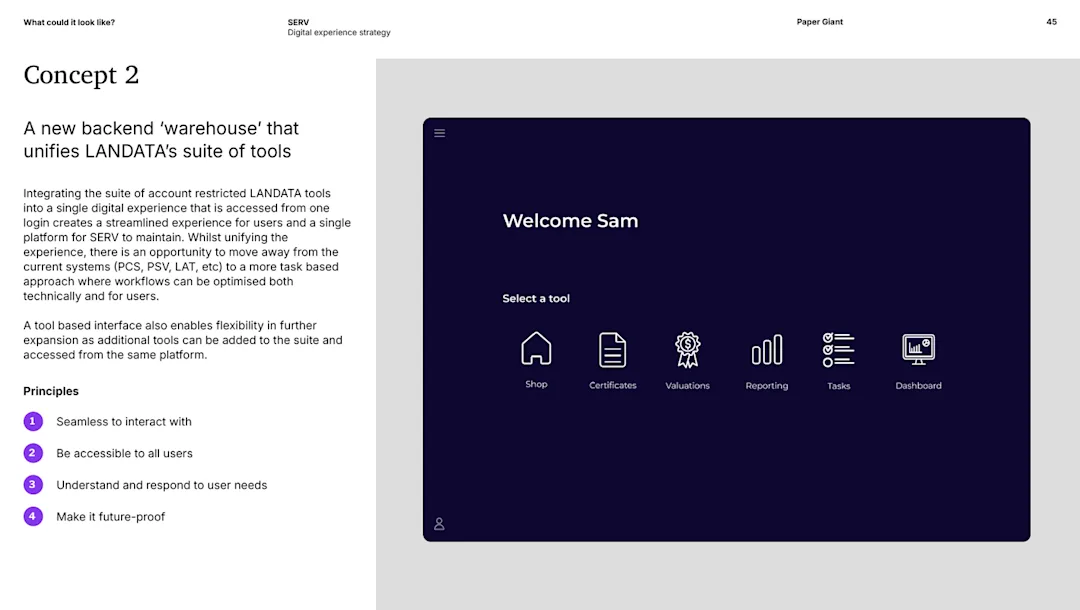
Two platforms, two doorways — a public shop for purchasing property data (left) and a professional warehouse for account holders managing ongoing workflows (right)
Two platforms, two doorways — a public shop for purchasing property data (left) and a professional warehouse for account holders managing ongoing workflows (right)
Provocations that opened up the future
Alongside the core strategy, we developed a series of provocations — speculative concepts designed to stretch the organisation's thinking beyond the immediate redesign. What if LANDATA moved from selling documents to presenting integrated digital data? Could a map-based interface create a compelling enough experience to justify the investment? What would it mean to expand beyond Victorian property data into a national platform or a broader data marketplace?
These provocations weren't recommendations. They were designed as thought starters — each paired with considerations and real-world case studies — to help SERV's leadership think about where LANDATA could go, not just what it needed to fix. The strategy document became a tool the organisation could keep returning to as its ambitions evolved.
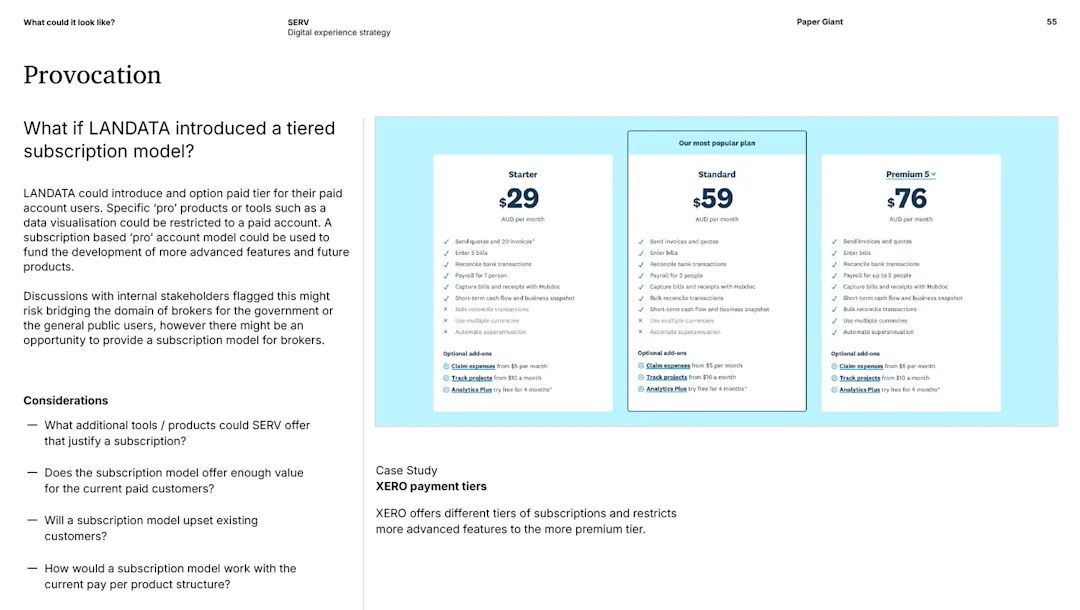
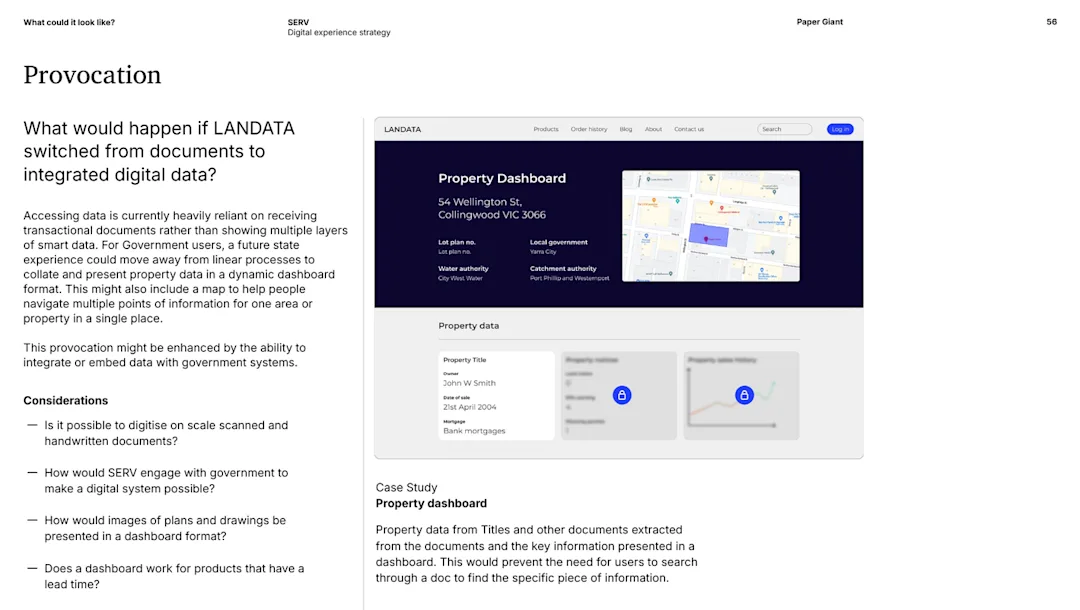
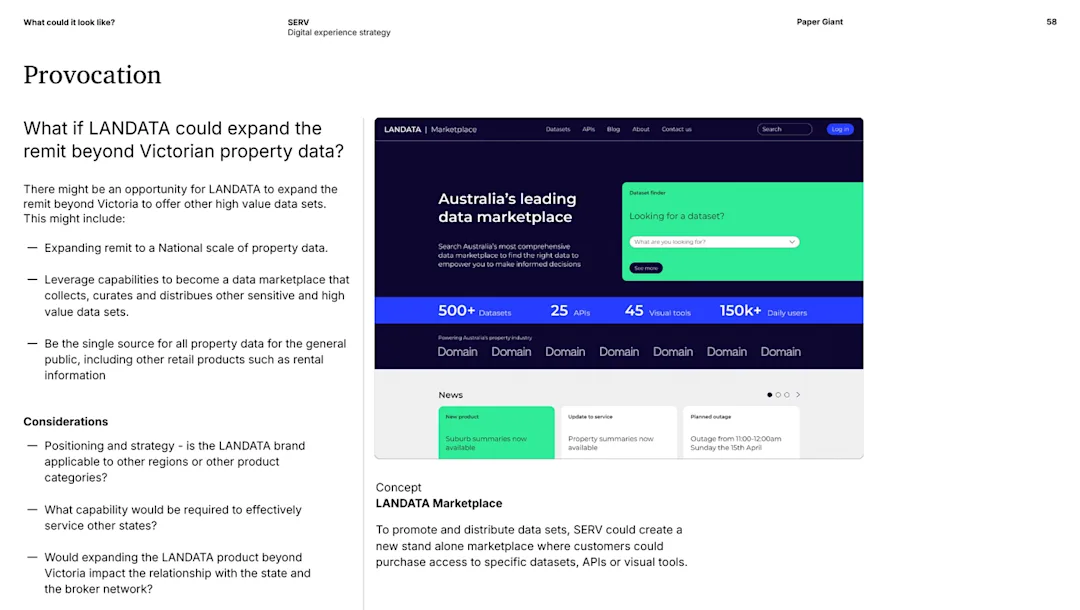
Strategic provocations — speculative concepts paired with considerations and case studies, designed to stretch the organisation's thinking about where LANDATA could go
A strategy that keeps working
The experience strategy gave SERV something they hadn't had before: a shared, visual articulation of where LANDATA was heading and why. Detailed user journeys defined what needed to change and for whom. Four guiding principles — seamless, accessible, responsive, future-proof — gave the team a framework for making design decisions long after our engagement ended. And an experience roadmap sequenced the work, starting with user research to validate the concepts before committing to build.
By using design as a strategic tool rather than a production process, we helped SERV move from "we need a new website" to "we need to rethink how we deliver property data to Victoria."