The Sexual Assault and Family Violence Centre
Helping The SAFV Centre reshape its services around what clients told us
We worked with The Sexual Assault and Family Violence Centre to learn how clients experience its services. We spoke with victim-survivors in a way designed to keep them safe. Together we built a map of the client journey in seven stages, six personas (short profiles of typical clients) and a tool that shows how the parts of a person's identity overlap. We then sorted 22 ideas for change into a plan for the future service.

Outcomes
- A map of the current client journey in seven stages, built and checked with clients and staff
- Six personas (short profiles of typical clients) based on two things: how quickly a person can trust the service, and how easy it is for them to reach it
- A new tool that shows how the parts of a person's identity overlap, with a builder staff can keep using
- 22 ideas for change, sorted into a plan for the future service across now, next and later
- A safe, trauma-aware way of working that tested the centre's own lived experience recommendations
Services
- Design research
- Co-design
- Service Design
Sectors
The Jury recognises this project as a methodologically rigorous example of trauma-informed research that successfully centres the voices of victim-survivors of sexual assault and family violence.
— Jury, 2026 Australian Good Design Awards
Hearing from clients directly
The Sexual Assault and Family Violence Centre (SAFV) supports victim-survivors across the Barwon and Wimmera regions of Victoria. Its picture of what clients go through came mostly from what staff saw and from system data. Leaders wanted to hear it from clients themselves. Who are they? How do they feel at each step? Where does the service work for them, and where does it fall short?
SAFV asked us to build a map of the client journey with them, from first hearing about the service to the support that follows care. They also wanted tools the centre could keep using after the project ended. The research covered both parts of the service: case management and therapy.
Research designed to be safe first
We designed every part of the project with SAFV staff before it reached a client. We ran planning workshops with managers and interviewed key staff. With the people who work with clients every day, we agreed who to invite, what to ask and how to seek consent. We followed Safe and Equal's Family Violence Experts by Experience Framework, and tested ideas from SAFV's own lived experience working group.
We then held 14 interviews with clients and partner organisations. Each one began with a short calming exercise. We checked consent throughout, and the centre's support dog could sit in. Clients who took part later joined workshops to check the journey map and suggest changes.
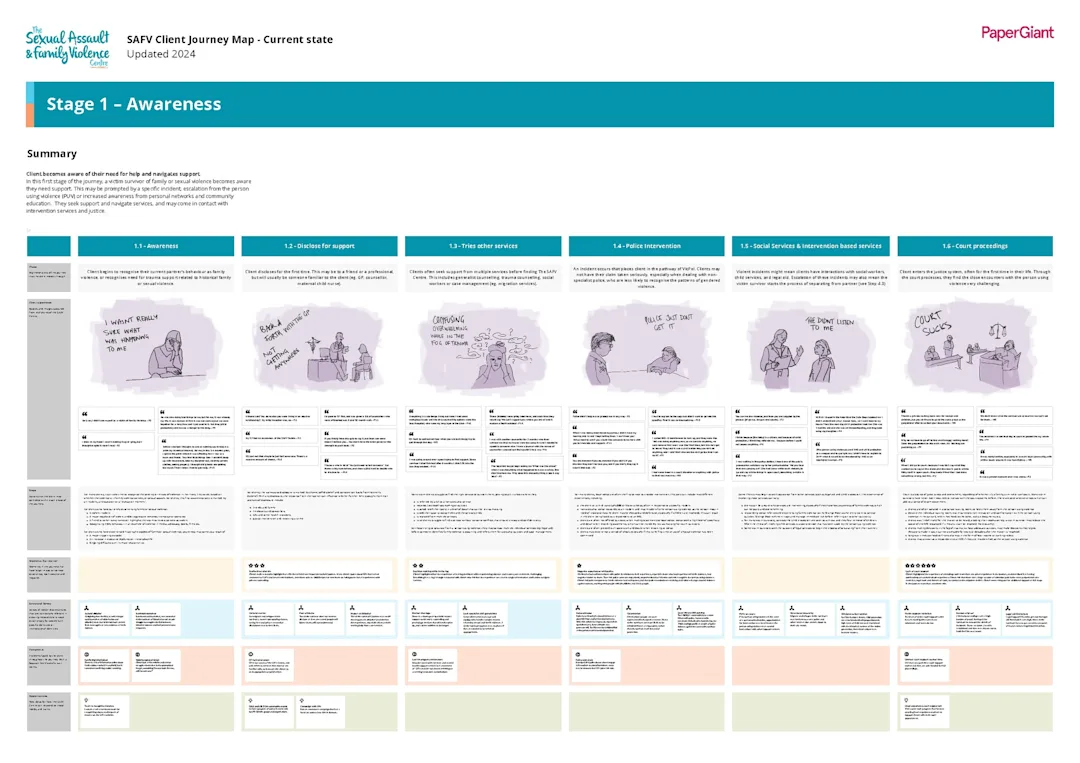
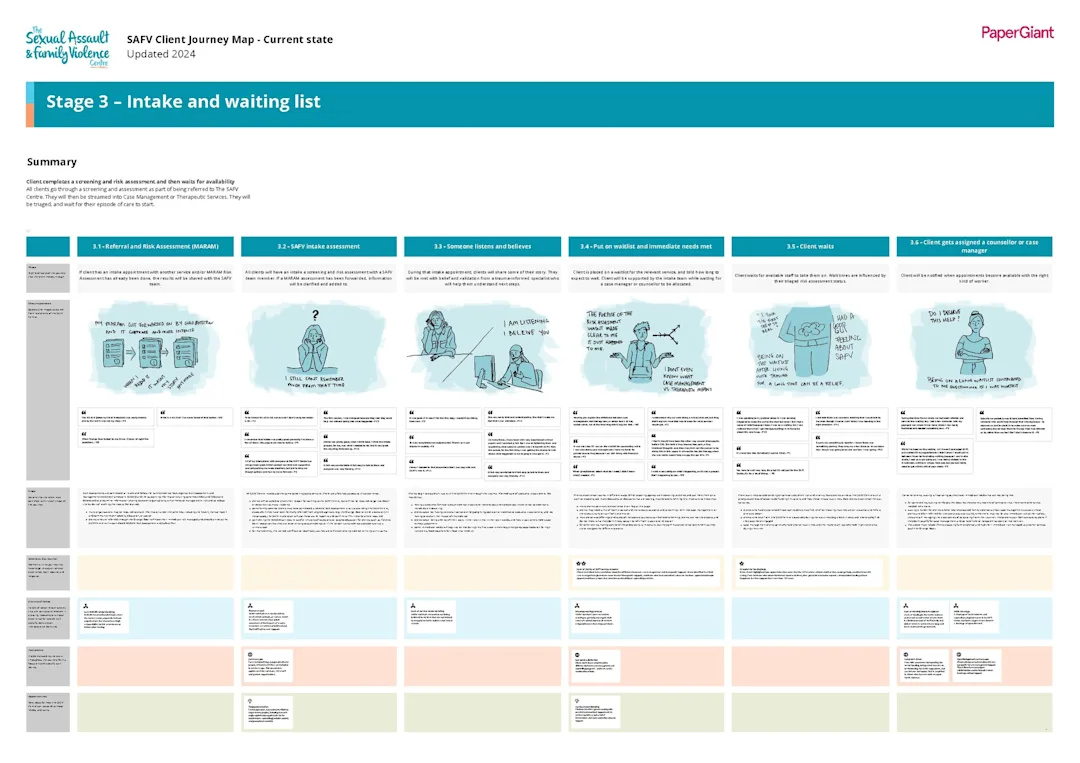
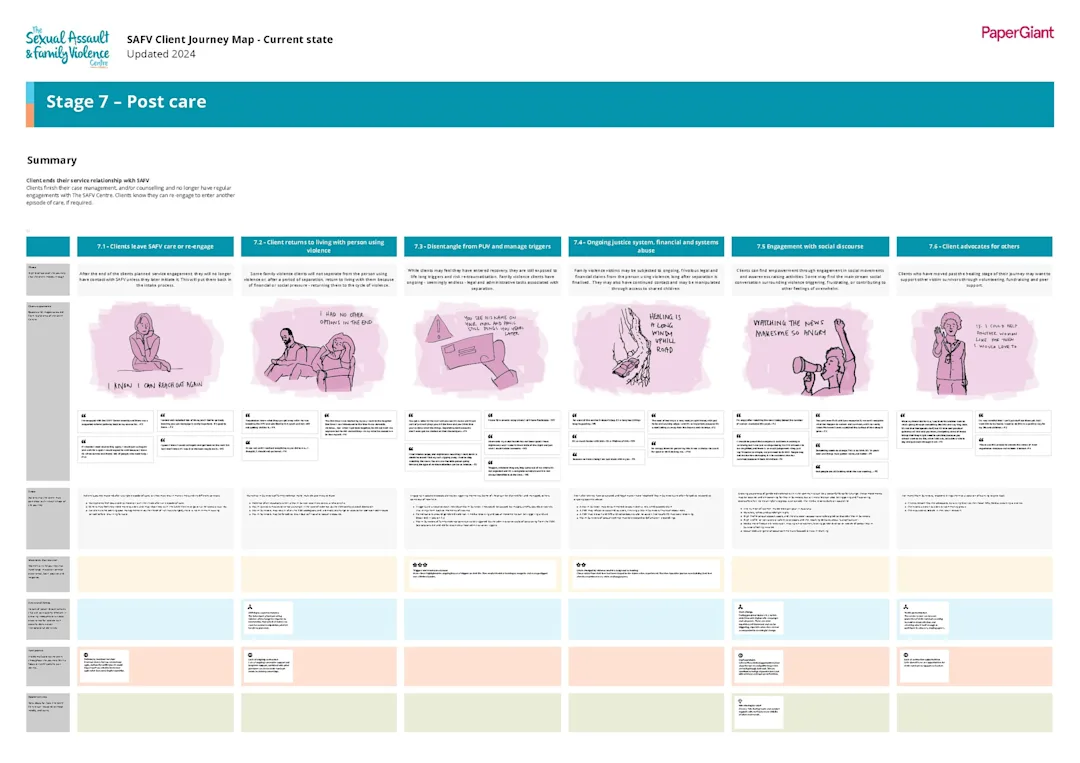
Three of the seven stages of the client journey map: hearing about the service, intake and waiting, and support after care. Each stage shows what clients do and feel, what gets in their way, and ideas for change. We tested the map with clients in person and online, then printed it for the centre's walls.
Two things shaped every client's journey
When we looked across the interviews, two things explained most of the differences between clients. The first is how quickly a person can come to trust the service. Earlier experiences with other services, the justice system or the centre itself shape this. The second is how easy it is for a person to reach out and keep coming back. That depends on the practical tools, confidence and support they have.
We placed each participant on these two measures. Six groups appeared, and these became six personas: short profiles of typical clients. They range from people who arrive frustrated after poor experiences elsewhere, to people who are not sure SAFV is for them at all, including men, trans people and young people.

The six personas. Each has its own icon made of overlapping shapes, showing how the parts of a person's identity combine. Together they cover clients who find the service easy to reach but hard to trust, through to clients unsure it is for them.
I think the majority of men wouldn't think they could access it. I rang out of desperation. When I told people I was going to call SAFV they said are you sure it's not just for women? I rang anyway.
— Research participant
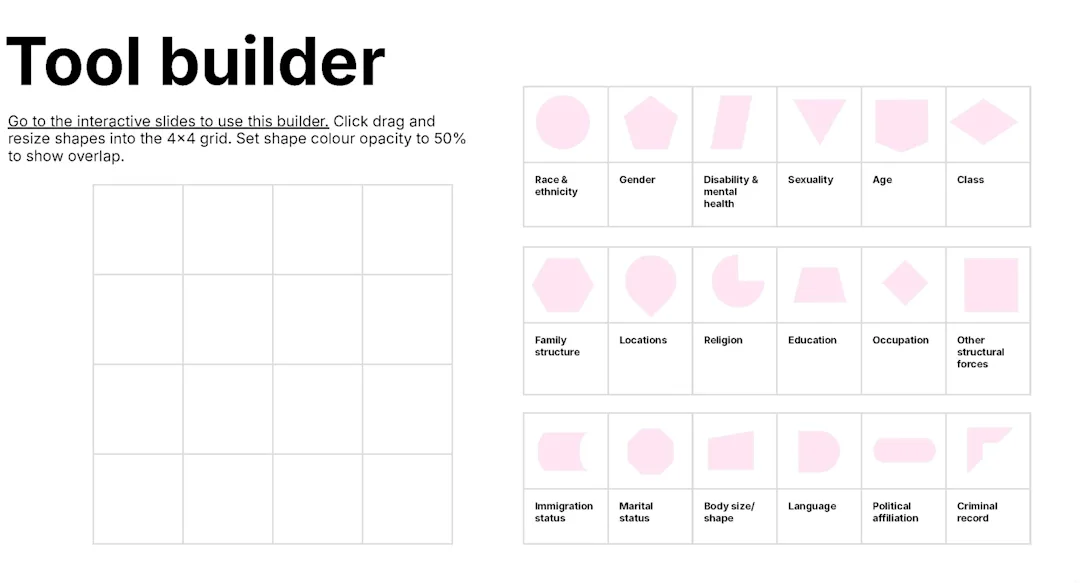
The profile builder. Each shape stands for one part of a person's identity, such as race, disability or family set-up. Squares mark outside pressures like involvement with the justice system. Staff drag, resize and overlap the shapes on a grid to build a profile for a new client.
A plan for change, built with the people it affects
Alongside the journey map and personas, we made a tool that shows how the parts of a person's identity overlap. Things like race, disability, living in a regional area, colonisation or child protection involvement can combine to shape how someone experiences the service. The tool gives staff a quick visual way to see this. It comes with a builder, so staff can create new profiles as they meet new clients.
Clients and staff together came up with 22 ideas for change. We sorted them into a plan for the future service under three commitments the centre set: listen (champion lived experience), include (be intersectional) and advocate (empower clients). Quick wins such as plain-language leaflets and a statement of inclusion sit alongside bigger projects like evening appointments and a trial of a peer worker for court support.