Melbourne Convention and Exhibition Trust
Shaping the Future Experience of Geelong's New Convention Centre
Geelong is getting a major new convention and exhibition centre — and the team behind it needed more than an architectural brief. We partnered with the Melbourne Convention and Exhibition Trust to define what the venue should feel like for the people who'll use it. From event organisers and local businesses to Traditional Owners and visitors, we mapped the experiences, services and technologies that will set this centre apart.
Outcomes
-
Market and trends analyses to position the centre within the national and international landscape
-
Meaningful engagement with Traditional Owners to progress First Nations partnerships and recommendations
-
User stories capturing future-state moments across the full visitor and customer experience
-
Bespoke service design principles and visual concepts translating research into actionable direction for the centre's design and operations
Sectors
A new venue with regional significance
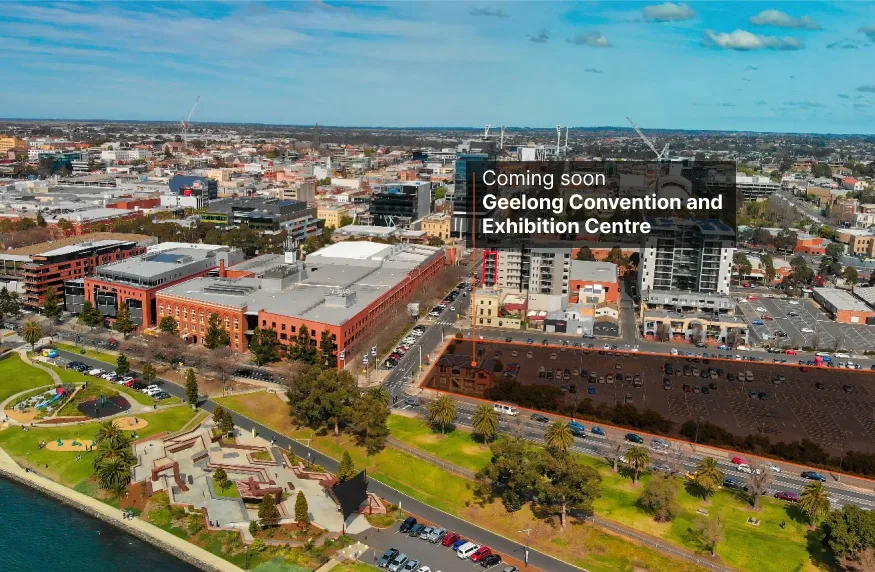
The Geelong Convention and Exhibition Centre will be a major driver of jobs and economic growth for the City of Greater Geelong and surrounding areas. An entire local ecosystem — accommodation providers, event organisers, caterers, technicians, transport operators and more — will support its success.
We worked with MCET, who will operate the future centre, to define the experiences, services, technologies and features that will make it genuinely attractive to customers while establishing a clear point of difference from other major event spaces across Australia.
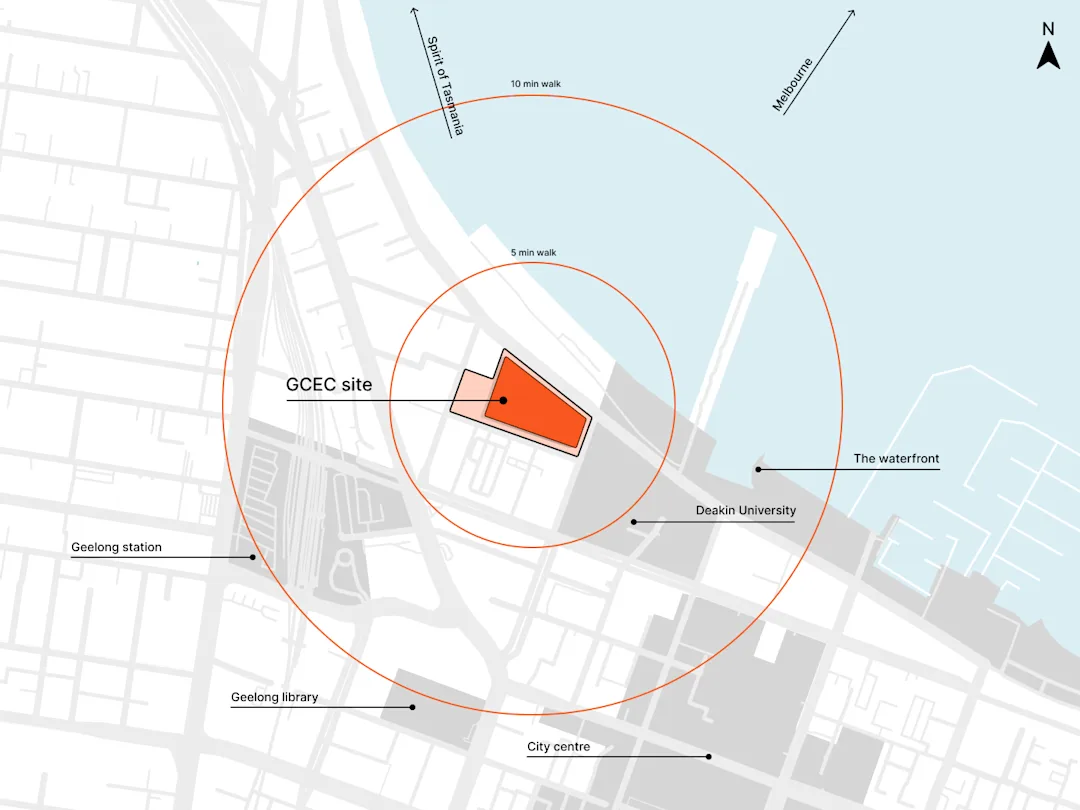
The Geelong Convention and Exhibition Centre is positioned in close proximity to key Geelong landmarks.
Grounding the vision in community needs
We took a placemaking approach — blending human-centred design with deep community and industry engagement. Rather than starting with assumptions about what the centre should offer, we went directly to the people who'll rely on it.
Through workshops and interviews with local stakeholders, we built a detailed picture of the physical, technological, cultural and environmental experiences the centre needs to deliver. This gave MCET a clear, evidence-based foundation for every decision that follows — from architectural briefs to operational planning.
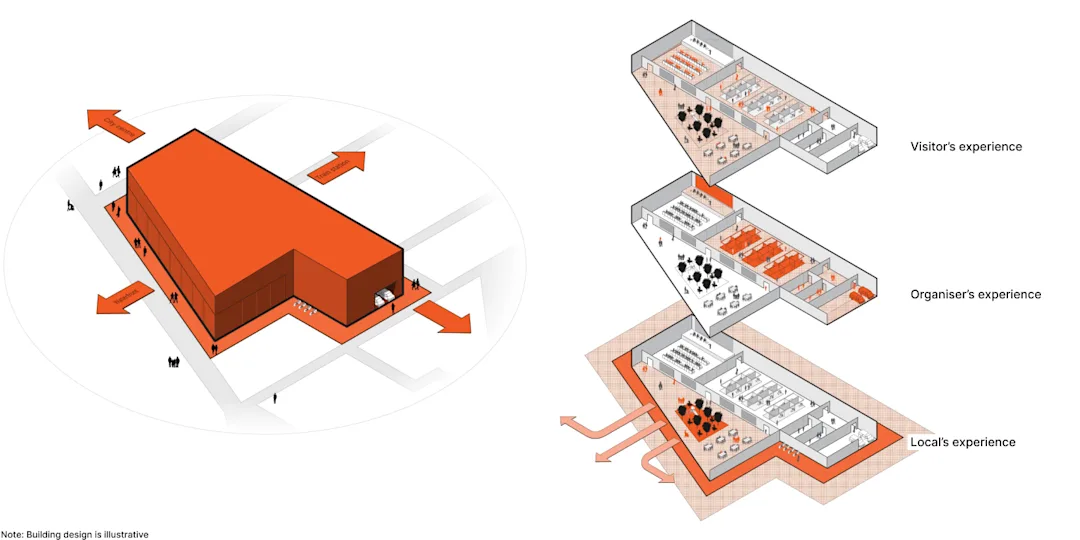
We analysed the user experience from multiple perspectives including visitors, delegates, organisers and locals.
Centring Indigenous history and culture
Incorporating Indigenous sensibility and ways of knowing into the centre's vision builds connection to Country — and will differentiate it at national and international scales. We facilitated deep listening and sustained dialogue with the First Nations community of Djilang, including the Wadawurrung Traditional Owners Aboriginal Corporation (WTOAC), to support genuine consultation. This work gives MCET a foundation to progress meaningful partnerships with Traditional Owners and Indigenous communities as the centre takes shape.
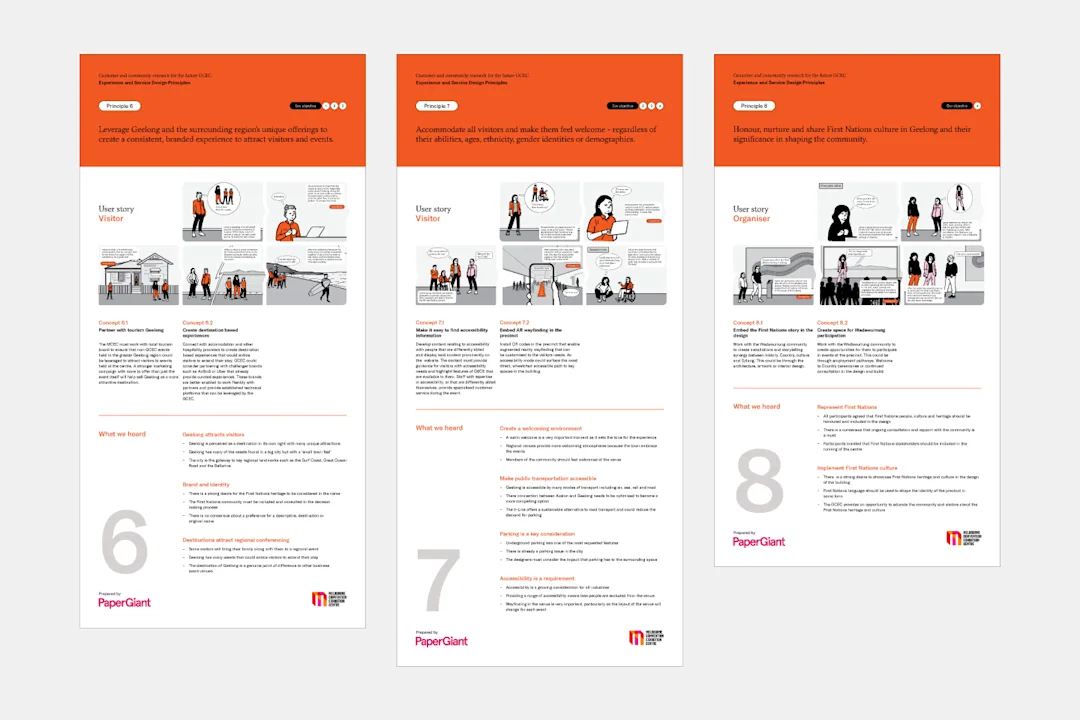
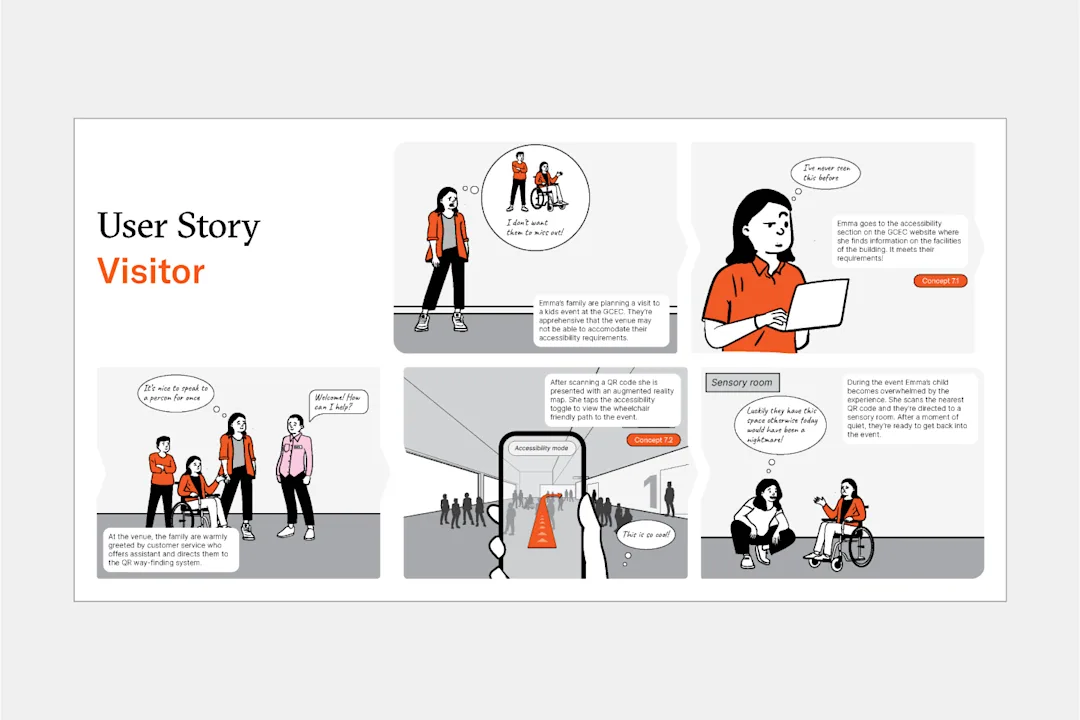
Bringing the future experience to life
Research insights only matter if they translate into action. We developed bespoke service design principles and a set of visual service design concepts that bring the future customer and visitor experience to life — making the vision tangible and shareable across teams, architects and partners. These tools give MCET a practical blueprint for operationalising the centre's experience from day one.