Family Safety Victoria
Helping services across Victoria respond to family violence through MARAM
Family violence services in Victoria are guided by the MARAM Framework — a set of standards for how organisations assess risk and manage referrals. But many prescribed organisations were struggling to understand where they stood and what steps to take next. We worked with Family Safety Victoria to design a maturity model and toolkit that cuts through the complexity, giving services a clear path from initial commitment through to best practice.

Outcomes
- A clear understanding of how different organisations experience the MARAM Framework — including user personas that capture the diversity of contexts
- New tools and resources that make the MARAM user experience more navigable
- A four-stage organisational maturity model that underpins the entire toolkit
- Strengthened self-audit capability, so organisations can independently assess their progress and plan next steps
The challenge — making a complex framework actionable
The Family Violence Multi-Agency Risk Assessment and Management (MARAM) Framework sets out how services across Victoria should identify, assess, and manage family violence risk. It's critical work, but the framework is detailed and the organisations it applies to vary enormously — from large health services to small community organisations.
We partnered with Family Safety Victoria to create a maturity model that would support prescribed organisations to identify where they're at and measure their progress against clear benchmarks.
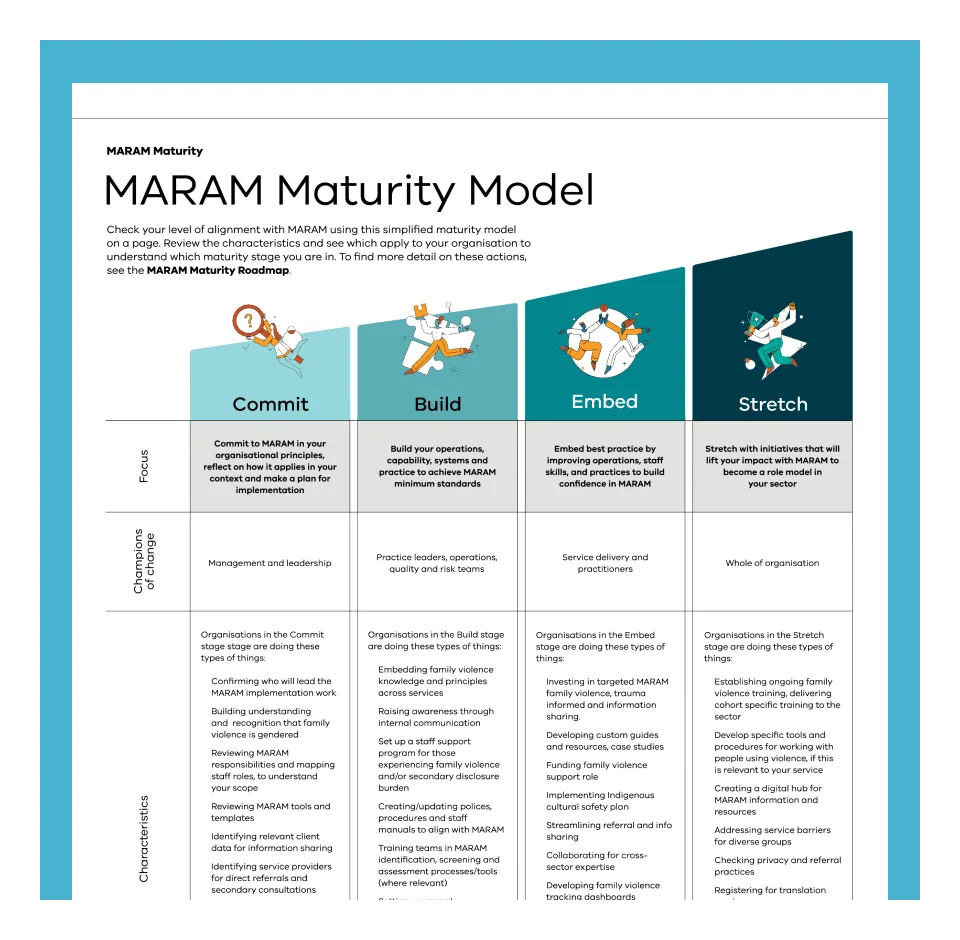
We designed a maturity model for users of MARAM based on four stages: Commit, Build, Embed and Stretch
What we heard from the people using MARAM
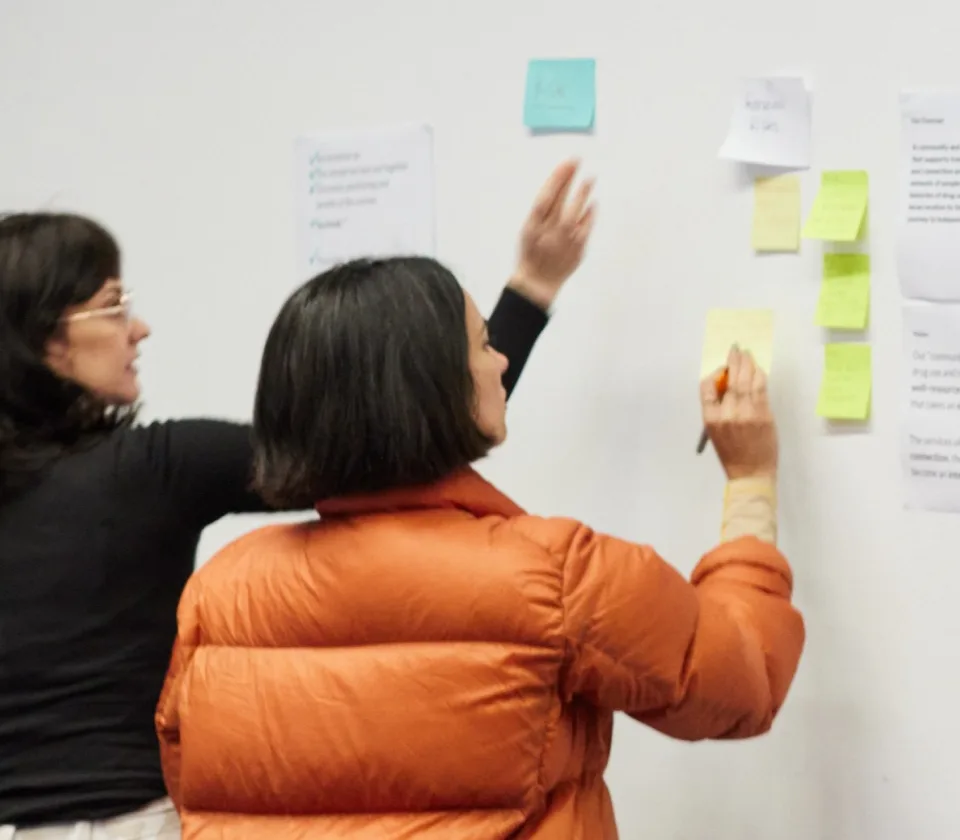
We ran a range of co-design activities with people who use MARAM day to day — the practitioners and leaders responsible for embedding it in their organisations.
Two findings stood out. First, people wanted simplification. The existing organisational development tools felt overwhelming, and users needed help cutting through the detail. Second, context matters. A small community service and a large hospital have very different starting points — and MARAM tools need to help each of them quickly understand how the guidance applies to their specific situation.
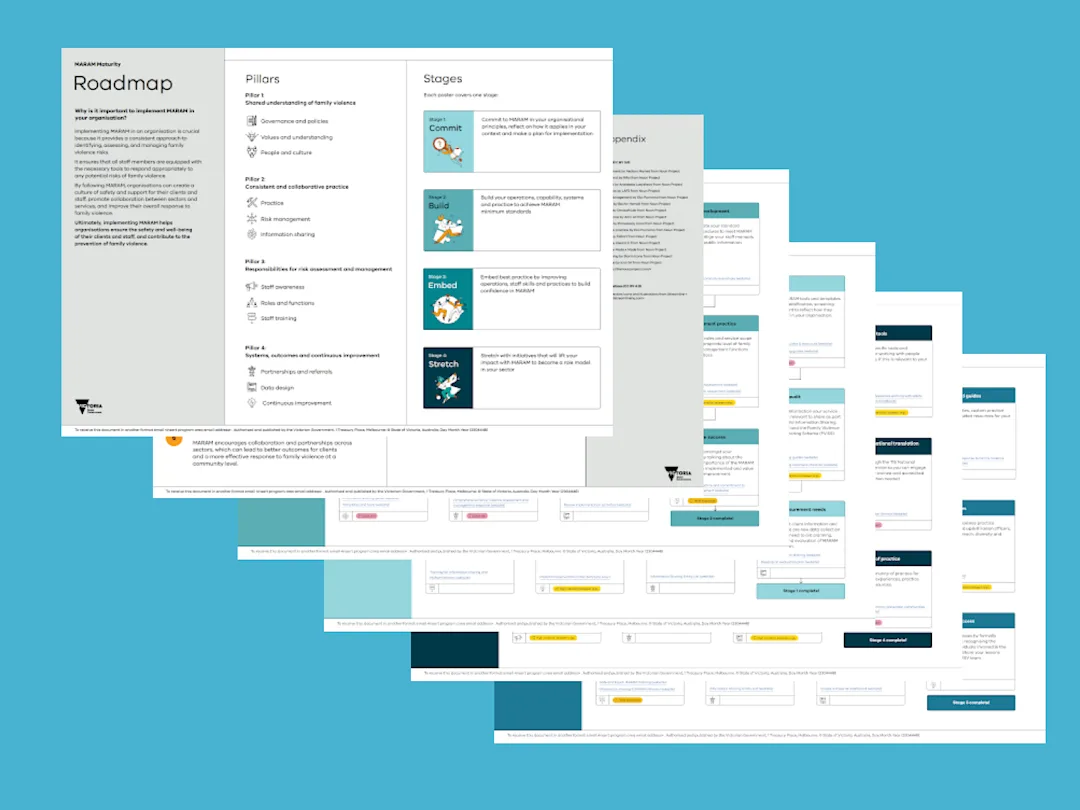
Designed to be printed or viewed digitally, the Roadmap is a series of 6 posters that outline the journey to improving MARAM alignment.
Four stages of maturity — from commitment to impact
Our research and co-design process revealed that what organisations need changes as they progress. Early on, they need support to build commitment and understand their scope. Once they're ready to start implementing, they need to know the critical path to minimum compliance. Only then does additional guidance about best practice and elevating impact become useful.
We translated this into four clear maturity stages: Commit, Build, Embed, and Stretch. Each stage gives organisations a way to locate themselves on the journey and understand what comes next.
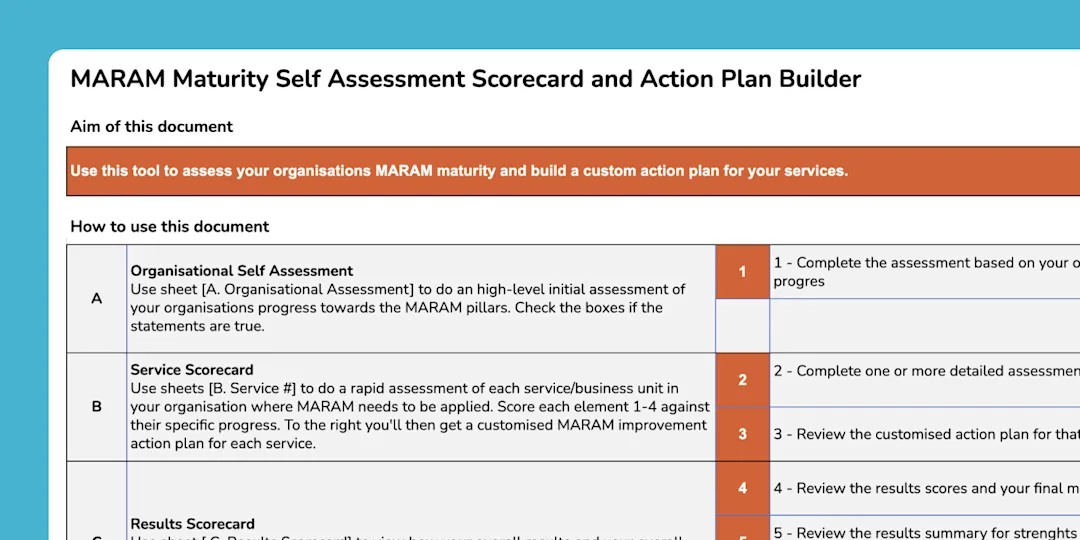
Users told us their preferred format for organisational auditing was a spreadsheet.
Together we developed and designed an interactive spreadsheet, where users can self-assess their organisation across multiple services.
The spreadsheet delivered assessment features similar to an assessment form, delivered through formulas, conditional formatting and cross referencing.
A toolkit designed to meet organisations where they are
We created four interconnected tools as part of the kit, each enabling organisations to assess their MARAM maturity and plan their improvement strategy.
The tools move from simplified to detailed — progressively offering more depth across the same maturity information. This means a time-pressed manager can get a quick read on where their organisation stands, while a dedicated implementation lead can dive into a comprehensive assessment. Organisations approach the tools based on what they actually need, rather than wading through everything at once.
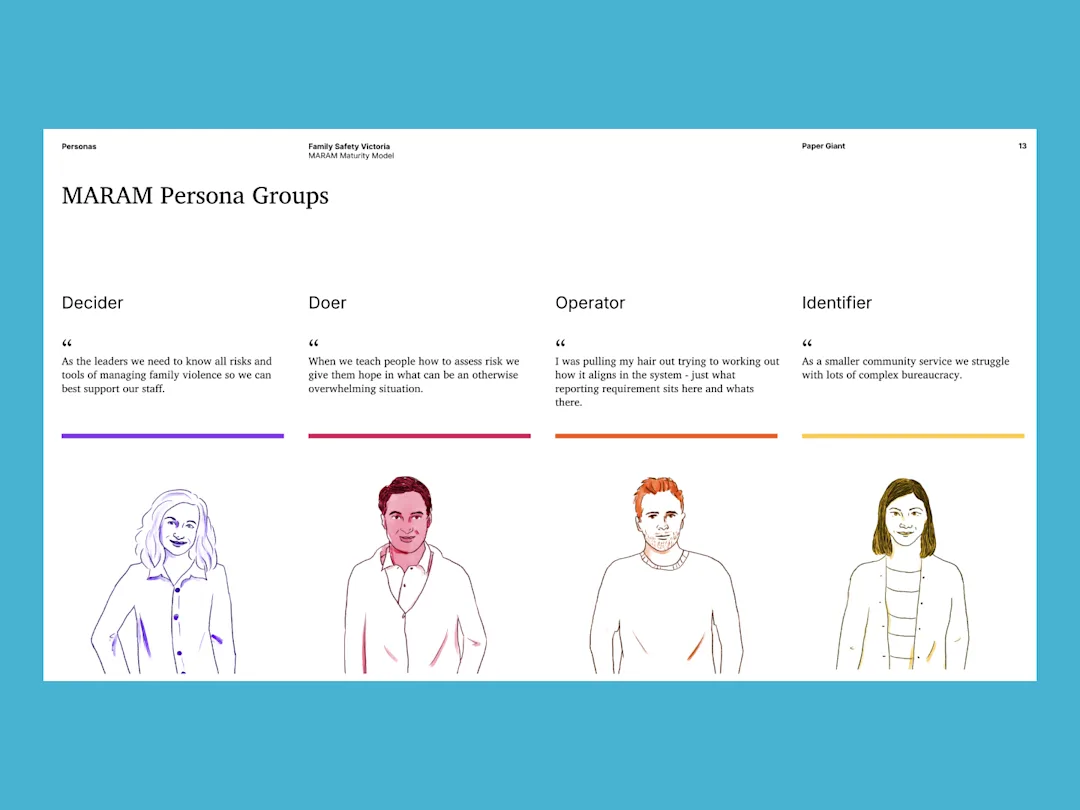
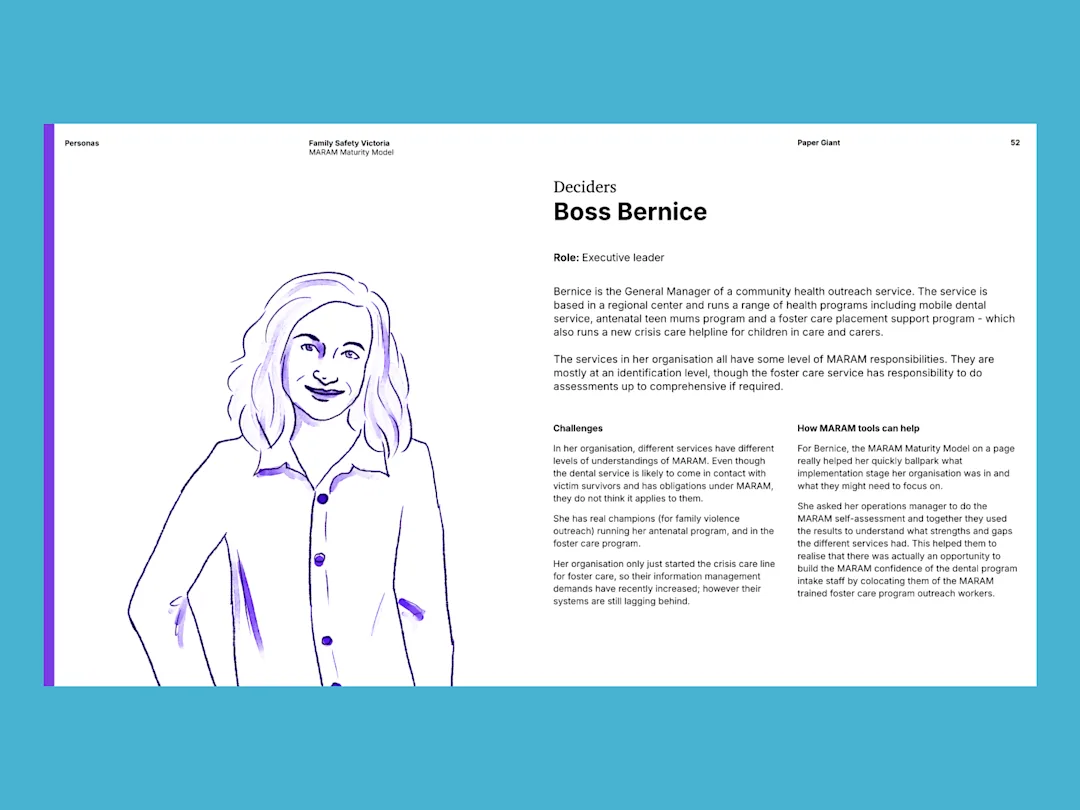
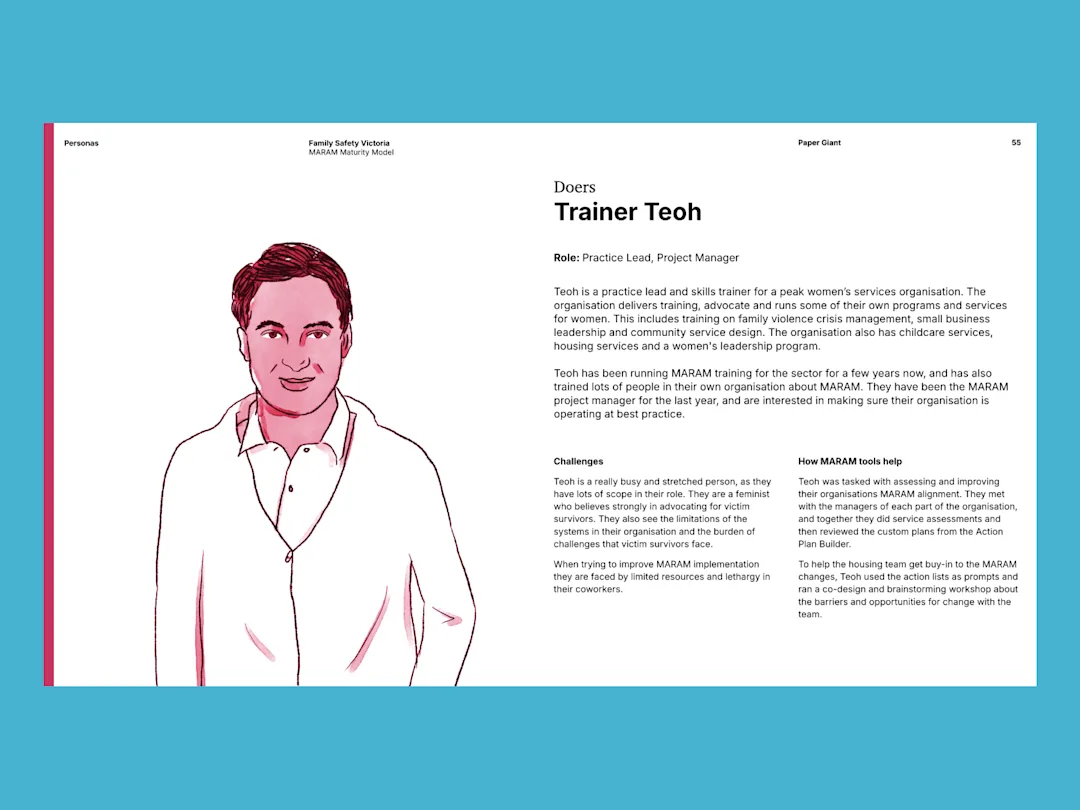
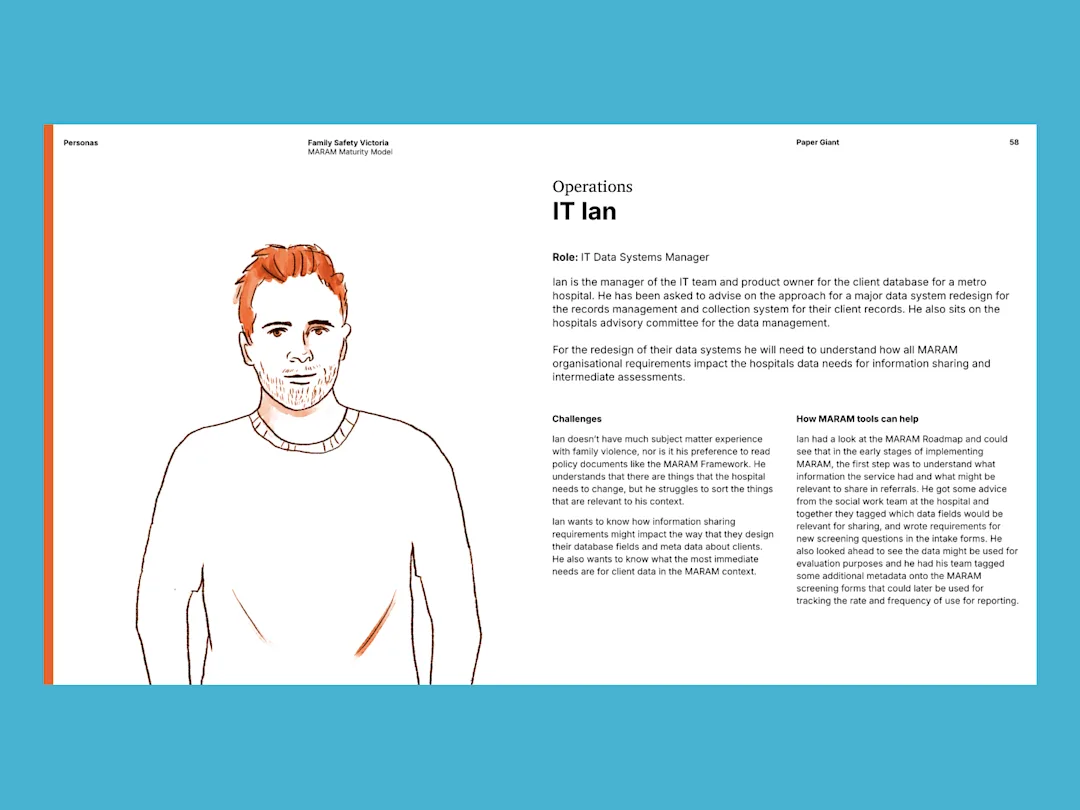
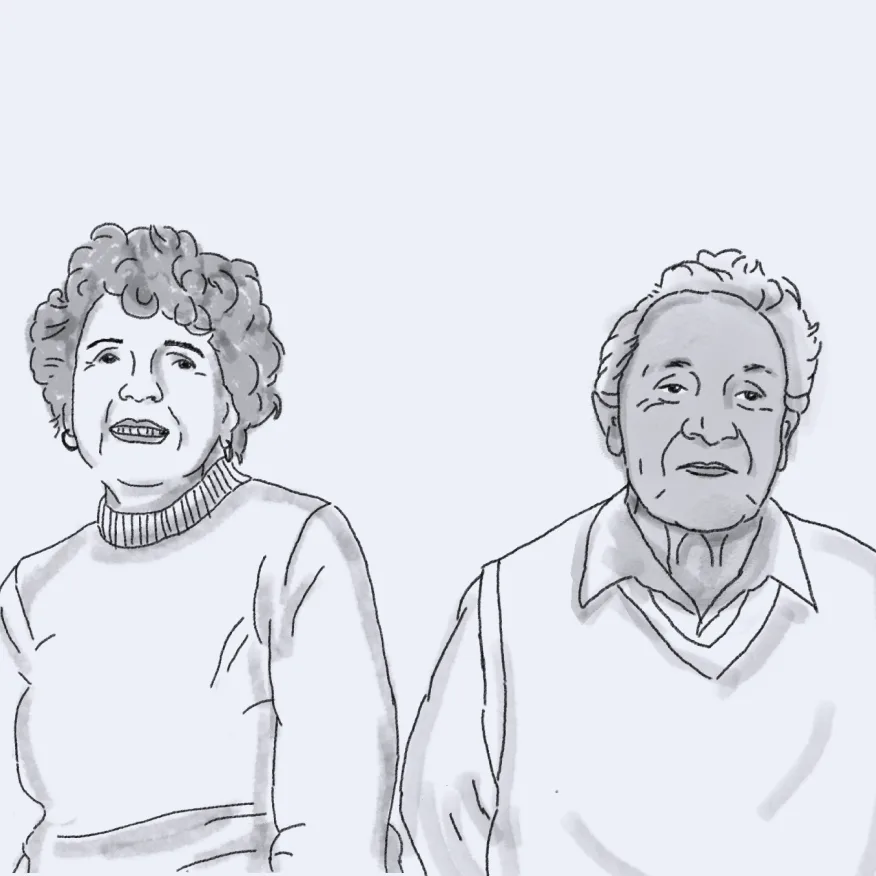
To support the delivery of research findings we also identified a clear set of MARAM user personas. Personas are characters created from research findings to capture the ways in which individual users interact with a service, product or concept.