Design research in the justice system
The justice system wasn't designed for the people inside it
People encounter courts, corrections, and legal services at some of the most difficult moments of their lives. They're navigating family breakdown, criminal charges, victim trauma, or the aftermath of incarceration. Yet the systems around them were built for administrative efficiency -- not for human experience.
Design research changes that. We listen to the people who actually use and work within the justice system to uncover where it fails them:
- Processes that confuse -- court procedures written in legal language that leaves people unsure what's happening, what's expected of them, or what comes next
- Services that exclude -- support programs that never reach the people who need them most, because nobody mapped the barriers to access
- Reforms that miss -- policy changes that look good on paper but land differently in courtrooms, prison units, and community legal centres
Understanding these gaps is the first step toward closing them. Our research gives justice organisations the evidence they need to design services that actually work for the people moving through them.
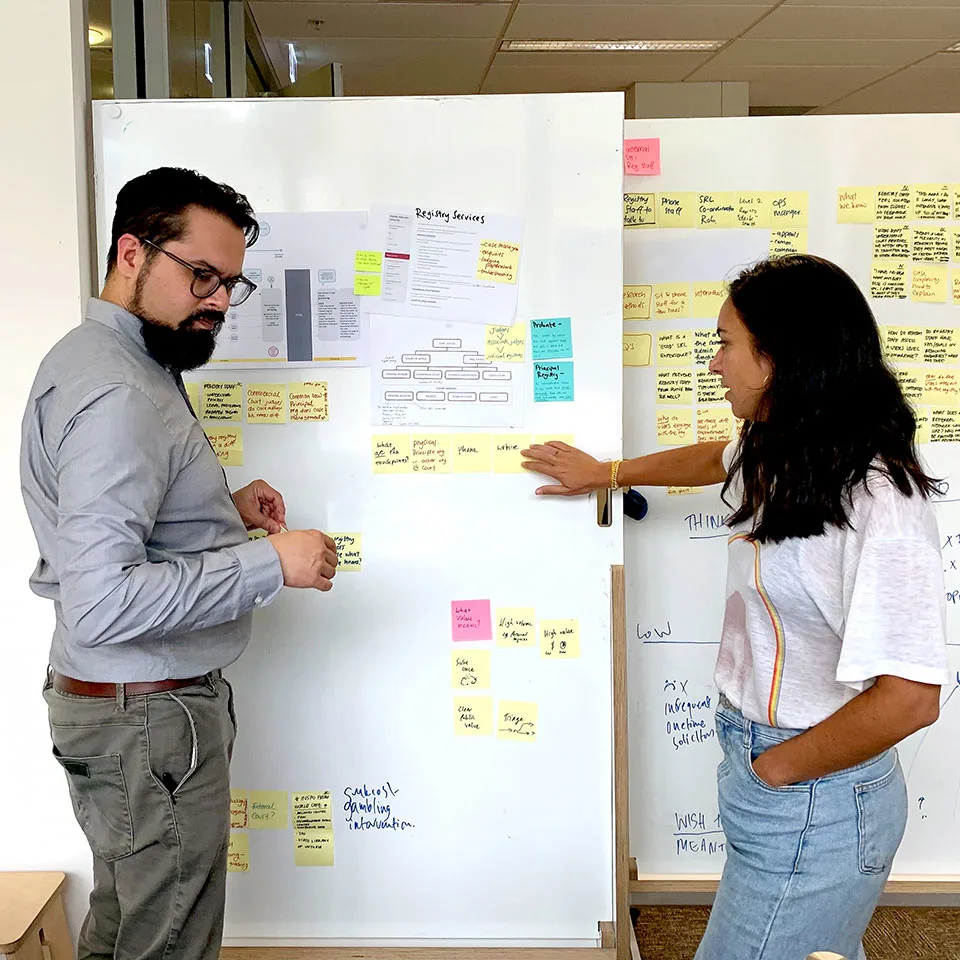
We partnered with the Supreme Court of Victoria to understand how court users actually experience the institution — from the moment they search online to the day they leave the building. The user archetypes and UX strategy we developed are now used as a staff training tool, giving registry and court staff a shared language for the people they serve.
Research that puts safety and dignity first
Justice research demands more than good methodology -- it demands care. We're working with people who have experienced trauma, incarceration, family violence, and systemic disadvantage. Every research decision we make must prioritise their safety and dignity.
We bring trauma-informed practice to every engagement. That means designing research processes around the needs of participants, not the convenience of the project:
- Informed consent that's genuinely informed -- we explain what participation involves in plain language, check understanding, and make it easy to withdraw at any point
- Flexible methods -- we adapt interviews, observation, and workshops so participation never re-traumatises, using approaches developed with clinical and legal advisors
- Cultural safety -- we work with Aboriginal and Torres Strait Islander communities, people from culturally diverse backgrounds, and people with disability using methods that respect their expertise in their own experience
Rigour and care aren't in tension. The most reliable evidence comes from research environments where people feel safe enough to share what really happens.
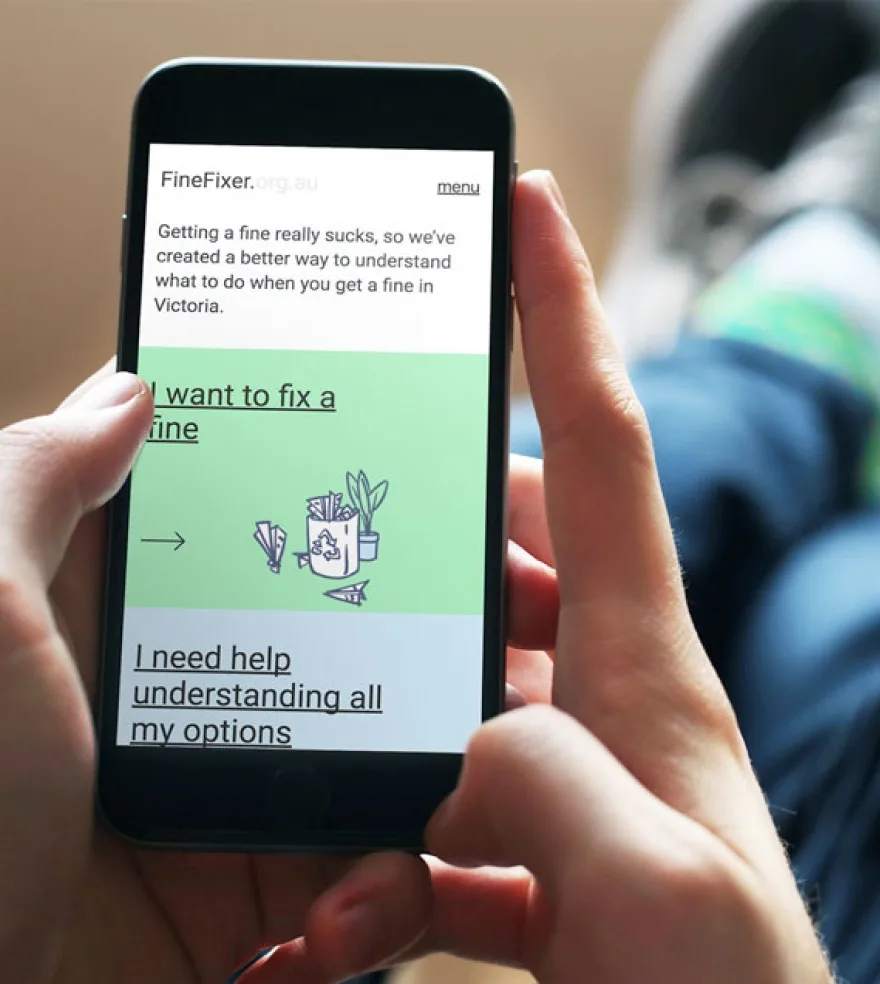
We worked with Moonee Valley Legal Service and Legal Aid NSW to redesign how people resolve fines — mapping the emotional and practical journey from receiving a fine to resolving it. The research revealed how fear, confusion, and administrative complexity push people toward worse financial and legal outcomes, and shaped a digital tool that helps them find a better path.
Inside courtrooms, service centres, and custodial settings
We don't just talk to people about the justice system -- we go where the system actually operates. Our researchers conduct contextual research inside courtrooms, registries, legal aid offices, and custodial facilities to see how processes work in practice, not just on paper.
This in-situ approach reveals things interviews alone cannot:
- The gap between policy and practice -- how a new court process is meant to work versus how it actually unfolds when the waiting room is full and interpreters aren't available
- Workarounds that signal failure -- the unofficial fixes that frontline staff create because the official process doesn't serve the people in front of them
- Moments that matter most -- the points in a court journey where confusion, fear, or lack of support cause people to disengage entirely
We map how people actually move through legal processes -- court users, families, victims, people in custody, and the staff who serve them -- to show justice organisations what the system looks like from the inside.

We evaluated the impact of Victoria's Court Dogs program for the Office of Public Prosecution — assessing how facility dogs support victims and witnesses giving evidence in criminal proceedings. Our research captured the experiences of prosecutors, witness assistants, and court staff to understand whether and how the program reduces trauma for people at the most difficult point in their justice journey.
Evaluating whether reforms are landing as intended
New programs, diversion pathways, and court reforms are launched with good intentions -- but good intentions aren't evidence. We partner with justice departments and legal services to evaluate whether changes are actually improving outcomes for the people they were designed to help.
Our evaluation work combines what people experience with what the data shows:
- Program evaluations -- assessing whether initiatives like court support programs, restorative justice pilots, or digital services are reaching the right people and delivering real outcomes
- Policy impact assessment -- measuring how legislative or procedural changes are experienced on the ground by court users, legal practitioners, and frontline staff
- Co-design with the sector -- working alongside judges, registrars, lawyers, social workers, and community organisations to develop recommendations that are both evidence-based and practically implementable
Every deliverable connects what we heard to what should happen next. User journey maps, service evaluations, accessibility audits, and policy recommendations -- all grounded in the lived experience of people navigating the system.


