Designing with and for people with disability
People with disability navigate systems that weren't built with them
Every day, people with disability encounter services designed around assumptions about how bodies and minds work. Forms that assume fine motor control. Consultations in rooms without wheelchair access. Digital services that forget not everyone interacts with a screen the same way.
The result isn't just inconvenience — it's exclusion:
- Hidden barriers that force people to find workarounds or give up entirely
- Compliance-first design that meets minimum standards but misses the lived reality
- Consultation processes that treat people with disability as feedback sources rather than design partners
True inclusion means designing with people, not just for them. It means understanding how services are actually experienced — and building from that reality.
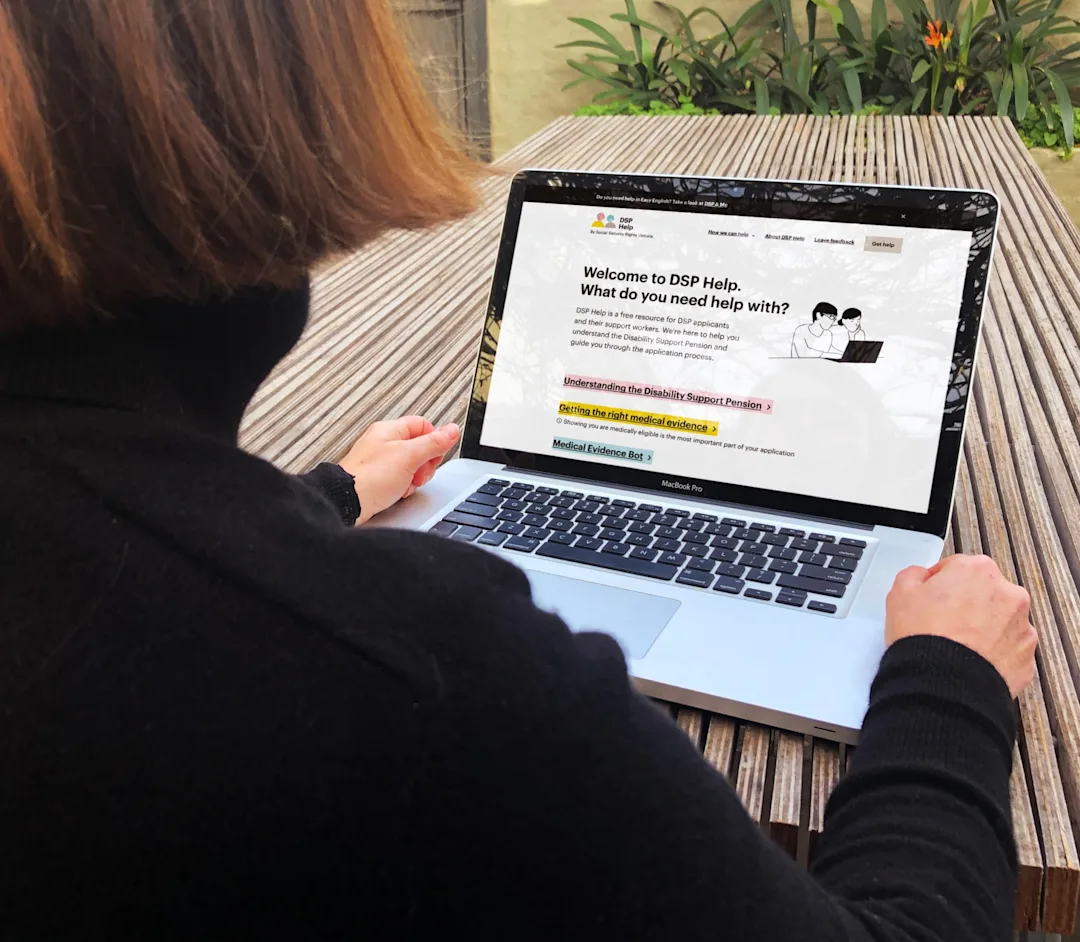
We partnered with Social Security Rights Victoria to design DSP Help — an online resource and chatbot that demystifies the Disability Support Pension application process. By mapping the hidden assessment criteria that cause most applications to fail, we created a tool that gives applicants the specific information and medical evidence guidance they need to succeed.
We start every project with the people most affected
Our approach begins with partnership, not consultation. We recruit and work alongside people with disability as co-designers — shaping the questions, the process, and the solutions together.
This means adapting our methods from the start:
- Accessible research formats — visual and tactile materials, multiple ways to participate, flexible session structures that respect energy and communication needs
- Support networks included — working with carers, support workers, and intermediaries when that's what makes someone comfortable and confident
- Trust before questions — building genuine relationships so people share what matters, not just what's easy to say
We also go slower in some places and faster in others. Some participants need more time. Some need fewer words. Some need to draw instead of talk. Our job is to make space for all of that.
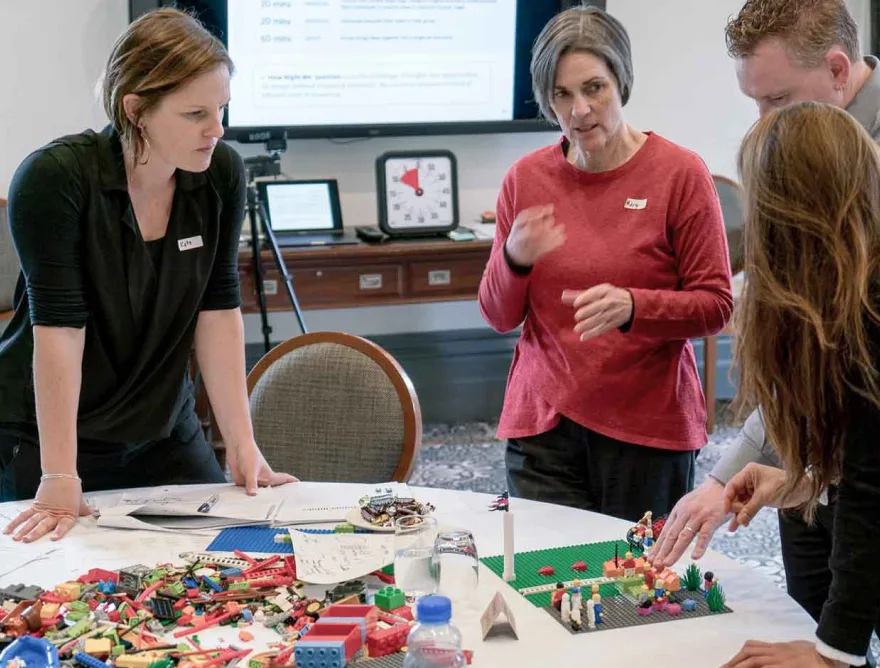
We worked with Scope Australia — the country's largest disability service provider — to redesign their customer intake experience as the NDIS transformed how people choose and receive services. Through co-design with staff and customers, we mapped the current state, identified quick wins, and created design principles to guide consistent growth.
Designing for the NDIS era
The NDIS transformed how disability services are funded, chosen, and delivered — and many organisations are still catching up. People with disability now have more choice about who provides their services, but navigating those choices remains overwhelming. Providers, meanwhile, must redesign decades-old service models around individual need.
We've worked across both sides of this transition:
- Helping providers redesign intake and service delivery so that people with disability experience genuine choice, not just a different form to fill in
- Creating tools that give applicants real power — turning opaque government processes into navigable, human-centred resources
- Co-designing new service models that reflect how people actually want to receive support, tested and refined through real-world pilots
This isn't theoretical work. Every project is grounded in the practical reality of how disability services operate today — and what needs to change.
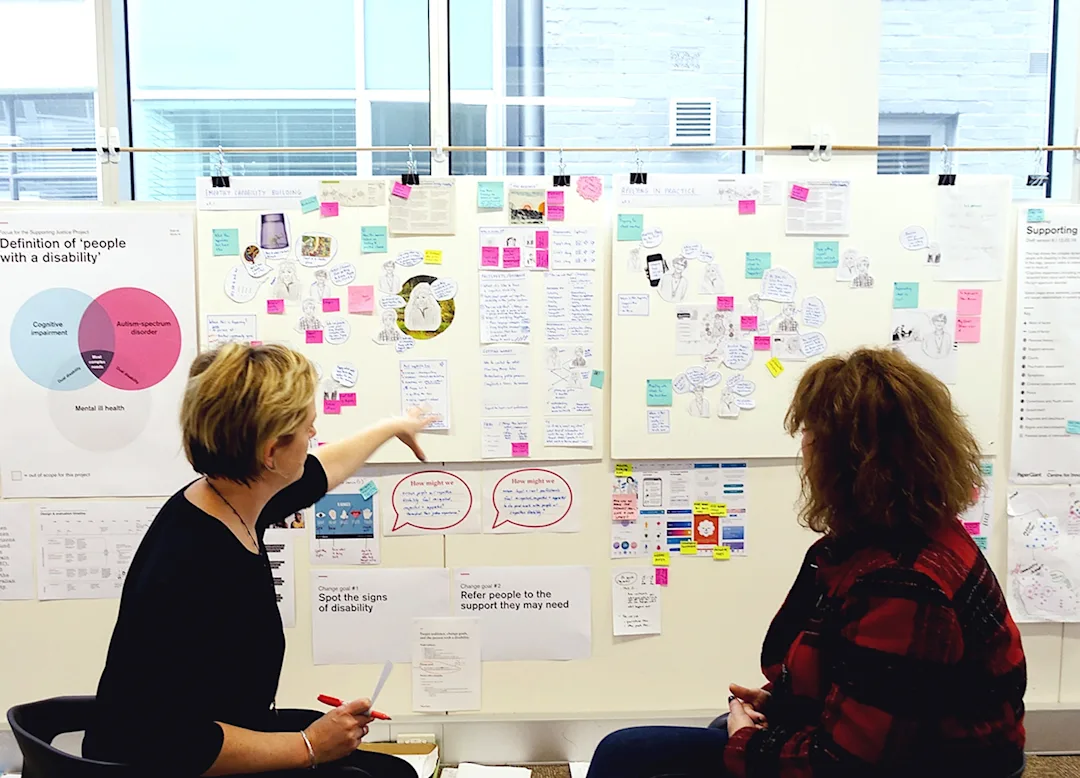
We collaborated with the RMIT Centre for Innovative Justice to create the Supporting Justice resource — a tool designed through inclusive collaboration with people with cognitive disability who have experienced the criminal justice system. The project demonstrated how accessible co-design methods can surface insights that traditional consultation never reaches.
Beyond compliance — designing for dignity
Accessibility standards tell you the minimum. Dignity-centred design tells you what actually matters. When we work with people with disability, we hear about the moments that erode trust — being asked to repeat painful stories, waiting in unsuitable spaces, receiving communications that assume someone else will read them.
We focus on the experiences that standards don't measure:
- Emotional accessibility — ensuring services don't require people to perform their disability to receive support
- Decision-making autonomy — designing so that people with disability hold genuine control, not just nominal choice
- System-level change — creating service blueprints, evaluation frameworks, and staff training that sustain inclusive practices beyond a single project
Our work produces practical outputs your team can act on — service maps that reveal hidden barriers, co-designed solutions tested with real users, and clear recommendations for what to do next.


