ArticlesOctober 6th, 2026
Four of our projects have won 2026 Australian Good Design Awards
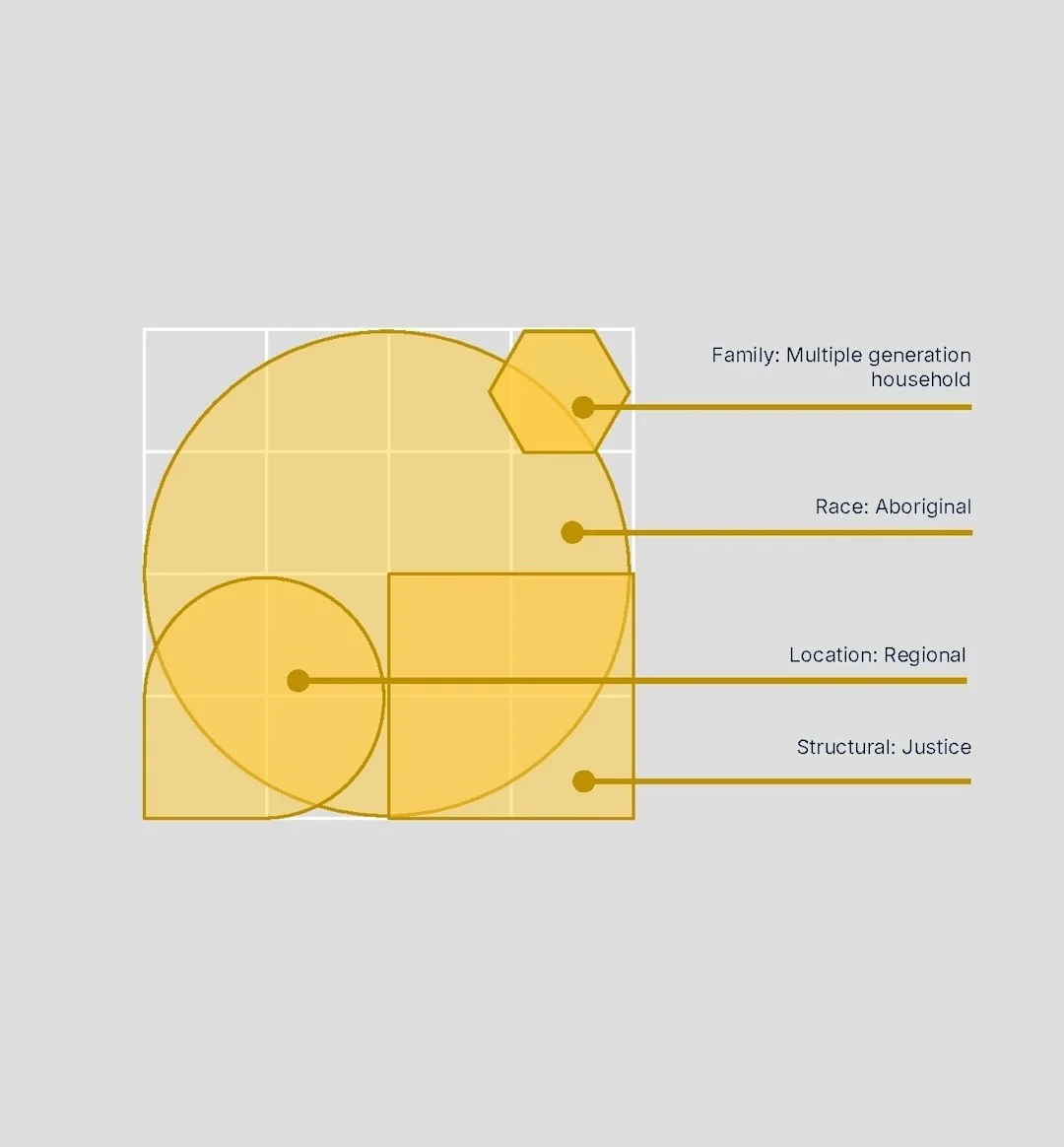
An intersectionality profile from our work with The SAFV Centre, one of the four winning projects. It shows how the parts of a person's identity overlap.
Four of our projects have been named winners in the 2026 Australian Good Design Awards, Australia's longest-running international design awards.
The awards recognise work with four clients:
- Social Impact: mapping the experiences of victim-survivors with The Sexual Assault and Family Violence Centre
- Design Strategy: an internal communications strategy with the Transport Accident Commission
- Design Strategy: products and strategy to electrify Victorian homes with the State Electricity Commission
- Design Research: inclusive testing of next-generation myki readers with the Department of Transport and Planning
Each project depended on a client who wanted to hear from the people their service is for, and on the people who gave their time to tell us. Thank you to all of them.
What we're most proud of here is the breadth. These awards recognise work on family violence services, internal communications, household energy and public transport. It's good to see careful research valued in such different places.
— Dr Chris Marmo, CEO and Co-Founder, Paper Giant
Social Impact: mapping victim-survivors' experiences with The SAFV Centre
The Sexual Assault and Family Violence Centre supports victim-survivors across the Barwon and Wimmera regions of Victoria. Its leaders wanted to hear directly from clients, adding to what they were learning from staff and system data.
We planned every step with SAFV staff so the research was safe first, then held 14 interviews with clients and two with partner organisations. Clients checked the results in workshops. Together we made a map of the client journey in seven stages, six personas (short profiles of typical clients) and a tool that shows how the parts of a person's identity overlap.
What the jury said: "The Jury recognises this project as a methodologically rigorous example of trauma-informed research that successfully centres the voices of victim-survivors of sexual assault and family violence. The Jury commends the team for conducting participatory research with exceptional care, producing six evidence-based personas, co-created journey maps, and an original intersectionality profile tool that has become embedded in SAFV's everyday practice. The Jury was particularly impressed by the innovative visual language developed to represent compound identities and structural disadvantage, noting that the interactive builder transforms this from a fixed deliverable into permanent organisational capability. The Jury congratulates Paper Giant on demonstrating how user-centred and inclusive design can transform service delivery for vulnerable populations. Well done."
Design Strategy: rethinking internal communications with the TAC
Staff at the Transport Accident Commission were receiving a lot of email and still finding it hard to locate what they needed. The internal communications team wanted more room for its own strategy alongside the last-minute requests.
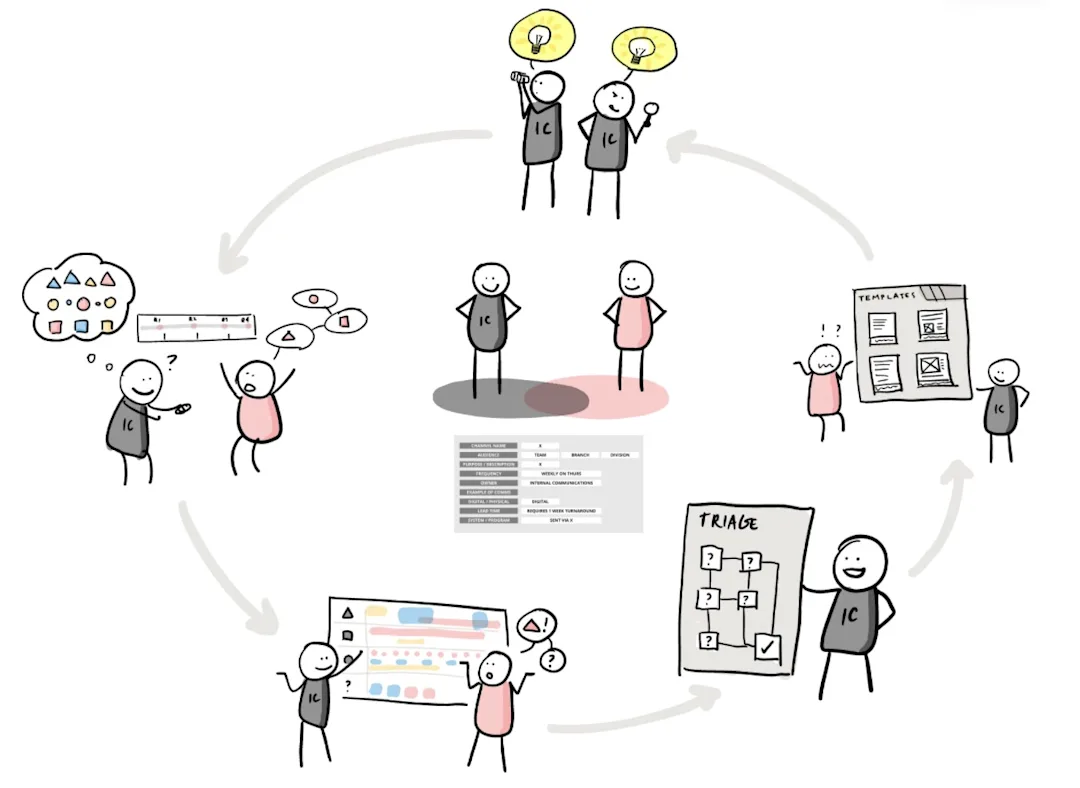
We spoke with more than 70 people across every division and learned that the same person plays different communication roles at different times. So we built the strategy around five roles people move between, such as sharing information or acting on it, instead of where they sit in the organisation. Then we coached the team as they put it into practice. They now run their own 90-day planning.
What the jury said: "The Jury recognises Paper Giant's rigorous design-led approach to transforming internal communications at the Transport Accident Commission, noting the successful reframing of traditional IC models through human-centred research with over 70 stakeholders. The coaching-led implementation model, which embedded capability rather than simply delivering documentation, impressed the Jury as a thoughtful and empowering approach to organisational change. The work demonstrates strong strategic thinking through its dual-phase design process and role-based communication architecture, with the Jury commending the team's deliberate investment in building internal capability that genuinely equips the organisation to sustain transformation beyond the engagement."
Design Strategy: helping the SEC plan for household electrification
Victoria brought back the State Electricity Commission in 2023. Part of its job is to help households switch from gas to electric and lower their bills.
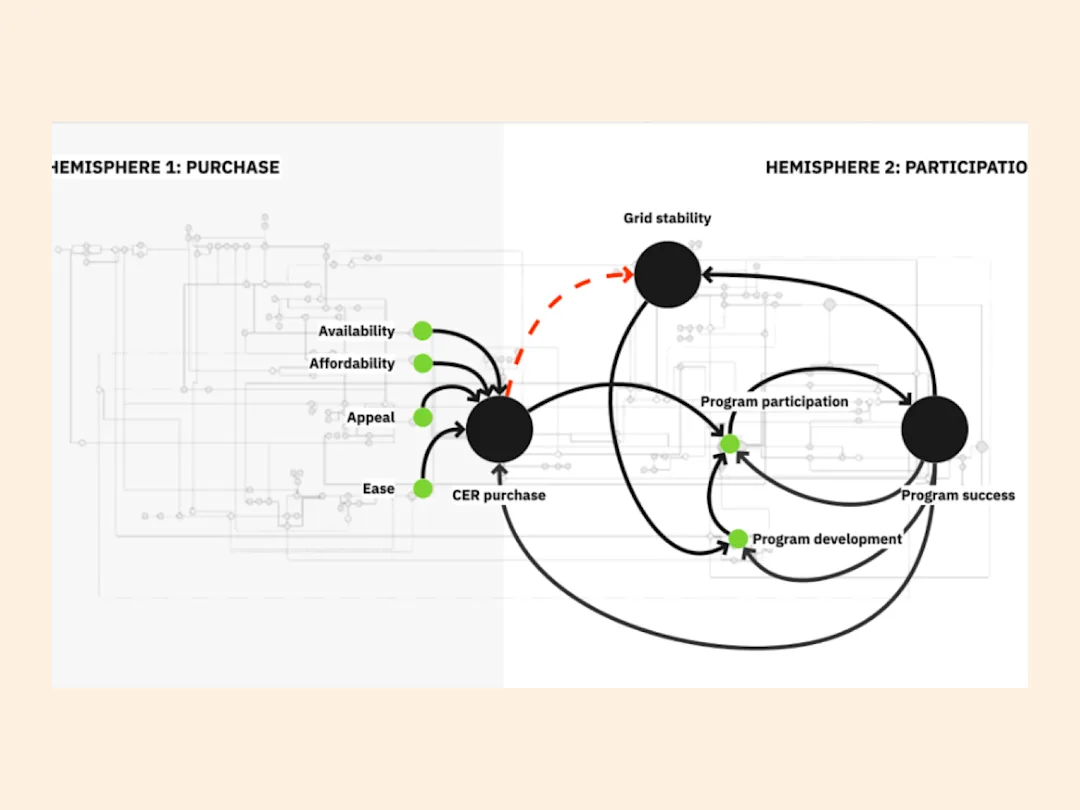
As a new public organisation, the SEC needed to learn how people decide to replace a hot water system or a heater, and who else shapes that decision. Across three pieces of work we interviewed homeowners, mapped the energy system with the people who work in it, and designed how the SEC's first digital product, the Powerup Platform, would work for households.
What the jury said: "The Jury recognises this exemplary demonstration of how human-centred design strategy can build foundational capability for a revived public institution. The depth and rigour of the research approach, spanning consumer insights, systems mapping and digital product strategy, produced novel frameworks that fundamentally reframed the electrification challenge for Victorian households. The Jury was particularly impressed by the tangible impact already achieved, including the beta launch of the Powerup Platform and the creation of actionable customer decision-making tools that gave the State Electricity Commission a unified strategic language. The work stands as a strong endorsement of design-centric methodology delivering measurable organisational change and compelling evidence-based propositions to accelerate household electrification across Victoria."
Design Research: testing new myki readers with the people who use them
As Victoria prepared its next generation of myki readers, the Department of Transport and Planning needed to know which designs would work for everyone who taps on.
We set up a test space that looked and sounded like public transport and invited 44 people to try the new readers. Almost half were people with disability. What we saw and heard became our recommendations on which device and which screen design would work best.
What the jury said: "The Jury commends Paper Giant for this highly successful example of inclusive public infrastructure design research that demonstrates strong systems thinking and tangible public benefit. The rigorous design research approach takes into account inclusivity and community feedback, with the combination of methods offering valuable insight into final design outcomes. The Jury recognises the well-executed inclusive research process, robust mixed-method testing and strong consideration of accessibility and participant diversity. This positive example of applied design research integrates inclusive practice, realistic testing environments and actionable outcomes within a complex public-sector context, with its scale of implementation and commitment to accessibility positioning the project as impactful work that will directly influence transport infrastructure used by millions of Victorians."


